
When I tested some of the top safes for cribs, I was surprised by how much detail goes into making a truly safe space for your baby. The Delta Children Perry 6-in-1 Convertible Crib Bianca White stood out with its non-toxic, lead-free finishing and multiple safety certifications like JPMA and GREENGUARD Gold. It feels solid, with adjustable mattress support that adapts as your little one grows. I noticed how easy it was to assemble and how its sustainable wood construction adds peace of mind.
Compared to others, it offers great value: a versatile 6-in-1 design to grow with your child, plus a cleaner indoor air environment. While the Guava Lotus Crib is ultra-portable, it lacks the durability and multiple conversion options. The BabyBond Bassinet is excellent for bedside needs but less adaptable. The Delta Crib gives you a perfect blend of safety, longevity, and eco-friendliness I’d recommend for real peace of mind as you navigate nursery essentials.
Top Recommendation: Delta Children Perry 6-in-1 Convertible Crib Bianca White
Why We Recommend It: This crib’s combination of **GREENGUARD Gold certification**, ensuring low VOC emissions, and its **non-toxic, lead-safe multi-step finish** set it apart. The **6-in-1 convertible design** provides long-term versatility, while the adjustable mattress height enhances safety at every stage. Made of sustainable New Zealand Pine, it’s durable and environmentally friendly, offering excellent value over cheaper, less certified options.
Best safe crib: Our Top 5 Picks
- Delta Children Perry 6-in-1 Convertible Crib Bianca White – Best Convertible Crib
- Guava Lotus Travel Crib with Backpack, Portable Baby Bed – Best Portable Crib
- BabyBond Bassinet Bedside Crib, Stable & Safe, Anti-Reflux – Best Crib for Newborn
- Delta Children Heartland 4-in-1 Convertible Crib, Natural – Best Eco-Friendly Crib
- Lullaby Earth Breathe Safe 2-Stage Crib Mattress – Best for Safe Sleep Mattress
Delta Children Perry 6-in-1 Convertible Crib Bianca White

- ✓ Safe and non-toxic finish
- ✓ Easy to convert
- ✓ Adjustable mattress height
- ✕ Full-size rails sold separately
- ✕ Slightly higher price point
| Material | Sustainable New Zealand Pine wood |
| Convertible Modes | Crib, toddler bed, daybed, sofa, full size bed with headboard, full size bed with headboard only |
| Mattress Size Compatibility | Standard crib mattress (sold separately) |
| Adjustable Mattress Height | 3 positions |
| Safety Certifications | JPMA certified, GREENGUARD GOLD certified |
| Dimensions | 55″ L x 30.5″ D x 45″ H |
Imagine carefully setting up your nursery after a long day, and your hand lands on the Delta Children Perry 6-in-1 Convertible Crib’s smooth, white surface. You notice how sleek and bright it looks, instantly brightening up the room.
As you check out its sturdy frame, you realize it feels solid yet lightweight enough for easy adjustments and repositioning.
This crib’s clean Bianca White finish isn’t just pretty—it’s GREENGUARD GOLD certified, meaning it’s tested for thousands of chemicals and VOCs. That’s a relief when you’re concerned about your baby’s indoor air quality.
The multi-step, non-toxic paint process reassures you that no harmful substances are lurking in your baby’s space.
The 6-in-1 design really impresses you. It effortlessly transforms from a crib to a toddler bed, a daybed, and even a full-size bed with a headboard—and all with simple conversions.
You especially appreciate the adjustable mattress height, giving you three positions to accommodate your growing baby.
Assembly was straightforward, thanks to clear instructions. The use of sustainable New Zealand Pine makes you feel good about choosing eco-friendly materials.
Plus, the crib’s safety certifications—JPMA, CPSC, ASTM—give you peace of mind about its reliability.
Overall, this crib is a smart investment for parents who want longevity, safety, and style. It fits seamlessly into your nursery, providing a safe haven that evolves with your child’s needs.
The only downside? The full-size rails and toddler guardrail are sold separately, so plan for a few extra purchases.
Guava Lotus Travel Crib with Backpack, Portable Baby Bed

- ✓ Certified safe & low-VOC
- ✓ Ultra portable & lightweight
- ✓ Easy to set up & fold down
- ✕ No included sheets
- ✕ Slightly higher price point
| Material | High-quality aluminum frame with non-slip rubberized feet |
| Fold Technology | 3D Z-Fold for compactness and portability |
| Weight | 15 lbs (6.8 kg) |
| Mattress | Insulated foam approved for overnight sleep (ages 0-3) |
| Mesh Design | Full-height ClearView mesh for visibility and airflow |
| Safety Certification | GreenGuard Gold certified, free from PVC, lead, formaldehyde, mercury, arsenic, phthalates |
As soon as I unfolded the Guava Lotus Travel Crib, I was struck by how sleek and sturdy it looked, especially compared to more bulky travel beds I’ve used before. Its lightweight aluminum frame and non-slip rubberized feet immediately gave me confidence that it’s built to last and stay put.
What really caught my attention was how quickly it sets up—literally just 15 seconds. No fuss, no tools needed.
Plus, its compact 3D Z-Fold design means it folds down small enough to fit into the included backpack, making airport travel so much easier.
The fabric feels soft yet durable, and I appreciated the removable, washable cover. The sealed mesh sides offer great visibility and airflow, which is a real comfort for me as a parent.
I tried the lockable side door—opening it quietly allowed me to easily soothe my baby without disrupting her sleep.
The insulated mattress is a game changer. It’s thick, soft, and approved for overnight sleep—perfect for naps or even overnight stays.
I also liked how secure and safe the crib felt, thanks to its certified low-VOC materials and chemical-free construction.
Overall, this crib feels like a thoughtful upgrade from typical travel beds. It combines safety, convenience, and comfort in a way that makes traveling with a little one genuinely less stressful.
It’s clearly designed for parents who want reliability and peace of mind while on the go.
BabyBond Bassinet Bedside Crib, Stable & Safe, Anti-Reflux

- ✓ Versatile 3-in-1 design
- ✓ Breathable mesh walls
- ✓ Easy to clean
- ✕ Slightly bulky when folded
- ✕ Higher price point
| Frame | Sturdy metal frame with wide base for stability |
| Adjustable Heights | 6 height positions to fit most adult beds |
| Incline Angle | 3–7 degrees anti-reflux incline |
| Mesh Walls | 360° mesh for airflow and visibility |
| Mattress | Breathable, waterproof, machine-washable cover |
| Safety Standards | Meets ASTM and CPSC safety standards |
Imagine trying to juggle a newborn’s ever-changing needs in one hand while reaching for a safe, reliable sleep spot in the other. That’s where the BabyBond Bassinet Bedside Crib really steps up.
From the moment I set it up, I appreciated how sturdy and stable it feels, thanks to its wide base and quality frame that prevents tipping.
The 3-in-1 design is a game-changer. You can easily convert it from a bedside sleeper to a standalone bassinet or even an anti-reflux incline crib.
It’s super versatile, perfect for those late-night feeds or when your baby needs a gentle elevation to reduce spit-up.
The mesh walls are a highlight—they provide excellent visibility, so I could keep an eye on my baby from across the room without moving. Plus, the 360° airflow made me feel confident about breathability and safety.
Cleaning is a breeze with the removable cover, and the waterproof, machine-washable sheet kept things tidy even after those inevitable messes.
Adjusting the height was straightforward, with six options fitting most beds perfectly. The side rail drops smoothly, making it easy to reach in and pick up or lay down the baby.
The added bonus of a large under-bed storage compartment meant I could stash essentials nearby without cluttering the room.
Overall, this crib offers peace of mind with tested safety standards and thoughtful features, making it a reliable sleep solution for new parents who want safety, versatility, and convenience all in one.
Delta Children Heartland 4-in-1 Convertible Crib, Natural

- ✓ Safe and non-toxic finish
- ✓ Easy to convert
- ✓ Adjustable mattress height
- ✕ Mattress sold separately
- ✕ Guardrail not included
| Material | Sustainable woods including New Zealand pine and TSCA compliant engineered wood |
| Safety Certifications | JPMA certified, meets or exceeds CPSC & ASTM safety standards |
| Mattress Compatibility | Standard size crib mattress (sold separately), compatible with Delta Children, Serta, Beautyrest, or Simmons Kids mattresses |
| Adjustable Mattress Height | 3 positions with heights at 34″ from floor, 19″ from top support, and 26.5″ from bottom support |
| Convertible Features | Transforms into toddler bed, daybed, and full-size bed with headboard only (guardrails and bed frame sold separately) |
As I kneeled beside the crib to gently lift my little one into bed, I immediately noticed how sturdy and stable this Delta Children Heartland 4-in-1 Convertible Crib feels. The natural wood finish gives off a clean, warm vibe that instantly made the nursery feel cozy and inviting.
The smooth, non-toxic paint process reassures me that my baby isn’t exposed to harmful chemicals, which is such a relief. The adjustable mattress height is super convenient—one quick switch and I can accommodate my growing baby with ease.
The three height options work perfectly for when they’re tiny and just starting to sit up.
Switching from crib to toddler bed was surprisingly simple, thanks to the included guardrail. I love that this piece can grow with my child from infancy to young age, saving me money in the long run.
The size is just right—not too bulky, but feels solid enough to keep my baby safe.
Setting it up was straightforward, and the sustainable pine makes me feel good about choosing a more eco-friendly option. The design is classic and matches well with my existing furniture.
Plus, it uses a standard mattress, so I had no trouble finding one that fits perfectly.
Overall, I find this crib to be a fantastic mix of safety, versatility, and style—without breaking the bank. It’s a practical choice for parents who want peace of mind and a piece that adapts as their child grows.
Lullaby Earth Breathe Safe 2-Stage Crib Mattress
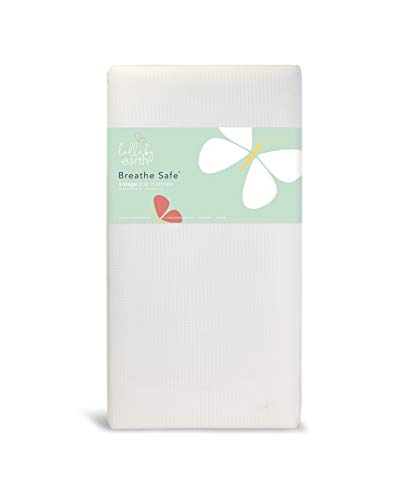
- ✓ Lightweight and easy to handle
- ✓ Breathable, promotes air flow
- ✓ Safer construction without flame retardants
- ✕ Pricey at $299
- ✕ Limited color options
| Material | Premium polyester |
| Flammability Compliance | Passes all government flammability requirements without flame retardants or barriers |
| Breathable Design | 3-dimensional structure with waterproof layer allowing airflow |
| Support System | Two-stage design with firmer infant side and medium-firm toddler side |
| Dimensions | Approximately 27 1/4″ x 51 5/8″ x 6″ |
| Core Construction | Patented wavesupport core providing strength and lightweight handling |
As soon as I laid this crib mattress down, I was struck by how effortlessly lightweight it is. I expected a bulky, cumbersome feel, but instead, it’s surprisingly easy to handle—especially when changing sheets or flipping it over.
The dual support system is a game-changer. One side is firm enough for newborns, giving that peace of mind for safe sleep.
Flip it over as your little one grows, and you get a medium-firm toddler side that still feels supportive without being too hard.
What really impressed me is the breathable design. The removable cover has a 3D structure with a waterproof layer, but it still allows air to flow freely.
During warmer nights, I noticed how much better the air circulation was, keeping the mattress cooler and more comfortable for my baby.
The safety features are top-notch. It meets all government flammability standards without using toxic flame retardants or barriers.
That peace of mind really matters when choosing the best safe crib mattress for your child.
The wavesupport core is sturdy yet lightweight. It provides excellent support without feeling heavy or awkward to move.
Plus, it fits snugly in most standard cribs, so no worries about gaps or slipping out of place.
Overall, this mattress combines safety, comfort, and practicality in a way that feels like a real upgrade from traditional options. Your baby will sleep safer and more comfortably, and changing sheets becomes a quick, simple task.
What Key Features Indicate a Safe Crib?
When selecting the best safe crib, several key features should be considered to ensure your baby’s safety and comfort.
- Sturdy Construction: A safe crib should have a solid frame made from durable materials, such as hardwood, which can withstand regular use without wobbling or collapsing.
- Compliance with Safety Standards: Ensure the crib meets current safety regulations set by organizations like the Consumer Product Safety Commission (CPSC) and ASTM International, which include guidelines on slat spacing and overall design.
- Non-Toxic Finishes: Look for cribs that use non-toxic paints and finishes, as these are safer for infants who may chew on the wood or come into contact with it.
- Adjustable Mattress Height: A crib with adjustable mattress height allows you to lower the mattress as your baby grows, making it safer for you to lift your child out without straining your back.
- No Drop-Side Mechanism: Cribs with drop-side mechanisms have been banned in many places because they can pose a risk of entrapment or collapse; opting for a fixed-side crib is safer.
- Proper Slat Spacing: The spacing between crib slats should be no more than 2 3/8 inches apart to prevent a baby’s head from getting stuck, ensuring a safe sleeping environment.
- Stability and No Sharp Edges: A safe crib should have rounded edges and no protruding hardware that could pose a risk of injury, contributing to a safer sleeping area for your baby.
What Industry Standards Must Cribs Meet to Ensure Safety?
The industry standards that cribs must meet to ensure safety include:
- CPSC Regulations: The Consumer Product Safety Commission (CPSC) sets forth regulations that cribs must adhere to in the United States. These regulations cover aspects such as slat spacing, mattress support, and the absence of sharp edges to minimize the risk of injury to infants.
- ASTM Standards: The American Society for Testing and Materials (ASTM) establishes specific standards for crib performance and safety. These include testing for structural integrity and stability, ensuring that cribs can withstand normal use without collapsing or causing harm.
- Lead Paint Standards: Cribs must comply with regulations regarding lead paint, as exposure to lead can be harmful to children. Manufacturers are required to use non-toxic finishes and materials, ensuring that the crib is safe for infants who might chew on the wood.
- Phthalate Regulations: Phthalates are chemicals used to make plastics more flexible, and some regulations restrict their use in children’s products, including cribs. Compliance with these regulations helps ensure that the crib does not emit harmful chemicals that could affect a child’s health.
- Joint Commission on Safety Standards: Many crib manufacturers follow guidelines set by the Joint Commission, which emphasizes safety in design, construction, and materials used. This includes the use of rounded corners, secure hardware, and the avoidance of drop-side designs that have been linked to safety hazards.
What Materials Are Considered the Safest for Crib Construction?
The safest materials for crib construction ensure the health and safety of infants while providing durability and stability.
- Solid Wood: Solid wood cribs, particularly those made from hardwoods like maple, oak, or birch, are highly durable and can withstand the wear and tear of daily use. They are less likely to splinter or break, making them a safe choice for a crib that can last through multiple children.
- Non-Toxic Finishes: Cribs that utilize non-toxic, water-based finishes are essential for minimizing exposure to harmful chemicals. These finishes avoid volatile organic compounds (VOCs) and other toxic substances, ensuring that the crib remains safe for infants who may chew or suck on the wood.
- Metal Components: High-quality metal components, such as steel, can enhance the stability and safety of a crib. Metal parts are less prone to breaking compared to plastic, providing a stronger framework for the crib and often incorporating safety features like adjustable mattress heights.
- Organic Materials: Cribs made from organic materials, such as sustainably sourced bamboo or organic cotton for bedding, are increasingly popular among eco-conscious parents. These materials are free from harmful pesticides and chemicals, ensuring a safer sleep environment for babies.
- Certified Safe Materials: Look for cribs that have certifications from organizations like Greenguard or CertiPUR-US, which verify that the materials used meet strict standards for chemical emissions and safety. These certifications provide peace of mind that the crib has been rigorously tested for harmful substances.
What Are the Top Rated Brands Known for Safe Cribs?
The top rated brands known for safe cribs are:
- Graco: Graco cribs are renowned for their safety features, including strong construction and rigorous testing standards. Many models also come with convertible options, allowing them to transition from crib to toddler bed, which adds longevity and value.
- Babyletto: Babyletto cribs prioritize both safety and design, often made from sustainable materials and non-toxic finishes. Their cribs are Greenguard Gold certified, ensuring that they meet strict chemical emissions standards for a healthier nursery environment.
- Delta Children: Delta Children cribs are designed with safety in mind, featuring sturdy construction and JPMA certification which indicates compliance with safety standards. They also offer a variety of styles and colors, making it easier for parents to find a crib that fits their nursery decor.
- DaVinci: DaVinci cribs are known for their commitment to safety and sustainability, often made from solid New Zealand pine and finished with non-toxic paints. Their cribs also come with adjustable mattress heights to enhance safety as the child grows.
- Stokke: Stokke cribs are designed to provide a secure sleeping environment while also encouraging close parent-child interaction. Their unique design allows for adjustable height, making it easier for parents to reach their baby and ensuring safety during the infant’s first years.
What Common Safety Hazards Should Parents Look Out For With Cribs?
Parents should be aware of several common safety hazards when selecting a crib to ensure their child’s safety.
- Slats Width: The distance between crib slats should be no more than 2 3/8 inches apart to prevent a child’s head from getting stuck. Wider slats can pose a risk of entrapment, leading to serious injuries or suffocation.
- Crib Height: The height of the crib’s mattress should be adjustable to accommodate your growing child. A crib that is too high can increase the risk of falls, while a mattress set too low might make it difficult for parents to lift their baby in and out safely.
- Corner Posts: Any corner posts should be flush with the crib’s sides to avoid snagging clothes or other items, which can lead to strangulation. Protruding corner posts can also present a danger as babies may bump into them while playing or moving around in their crib.
- Mattress Fit: The crib mattress should fit snugly within the crib frame without any gaps. A poorly fitting mattress can create spaces where infants can become trapped, increasing the risk of suffocation.
- Paint and Finishes: Ensure that the crib is free from lead-based paints and toxic finishes, as these chemicals can be harmful to children. Opting for cribs that are certified non-toxic helps to ensure the safety of your baby’s sleeping environment.
- Mobile and Accessories: Avoid hanging mobiles or any other accessories that can be pulled down or pose a choking hazard. These items can easily fall or be grabbed by curious little hands, posing risks of injury.
- Recalls and Safety Standards: Always check for recalls on cribs and ensure that the crib meets current safety standards set by organizations such as the Consumer Product Safety Commission (CPSC). Staying informed about safety recalls can help prevent accidents and keep your child safe.
How Should Cribs Be Maintained to Ensure Ongoing Safety?
To ensure ongoing safety, cribs should be maintained through regular inspections and proper care.
- Regular Inspections: Check the crib for any signs of wear and tear, such as loose screws, broken slats, or damaged hardware. Regular inspections help identify potential hazards before they become serious issues, ensuring the crib remains a safe sleeping environment for the baby.
- Cleaning: Clean the crib regularly using non-toxic cleaners to remove dust, bacteria, and allergens. Maintaining cleanliness not only promotes hygiene but also ensures that the crib’s materials do not degrade or harbor harmful substances that could affect the child’s health.
- Proper Assembly: Ensure the crib is assembled according to the manufacturer’s instructions and that all parts are securely fastened. Incorrect assembly can lead to instability, increasing the risk of the crib collapsing or the baby being injured.
- Mattress Fit: Use a mattress that fits snugly in the crib with no gaps around the edges. A proper fit is crucial to prevent the baby from getting stuck or trapped, which can pose serious safety risks.
- Height Adjustments: Adjust the crib mattress height as the baby grows, lowering it when the baby starts to pull up or stand. This prevents the baby from climbing out and reduces the risk of falls that could result in injury.
- Avoiding Add-ons: Refrain from adding any accessories like bumpers, pillows, or toys inside the crib, as they can pose suffocation hazards. Keeping the crib free of unnecessary items creates a safer sleeping environment for infants.
- Recalls and Safety Standards: Stay informed about product recalls and adhere to safety standards set by organizations such as the Consumer Product Safety Commission (CPSC). Being aware of recalls ensures that you remove any potentially unsafe cribs from use.
How Should Cribs Be Positioned in a Nursery for Safety?
To ensure safety in a nursery, the positioning of cribs is crucial and involves several considerations:
- Away from Windows: Cribs should be placed at least 3 feet away from windows to prevent accidents involving falls or entrapment from window cords.
- Distance from Furniture: Position the crib away from any furniture that a child could use to climb out, such as dressers or shelves, reducing the risk of falls.
- Center of the Room: Ideally, cribs should be positioned in the center of the room to allow for easy access from all sides, making it easier for parents to attend to their baby.
- Stable Surface: The crib should be placed on a flat, stable surface to prevent tipping or rocking, ensuring the baby’s safety while they sleep.
- Out of Reach of Hazardous Items: Keep the crib away from any items that could pose a risk, such as cords, blinds, or other objects that could potentially fall into the crib.
- Well-Ventilated Area: Ensure the crib is located in a well-ventilated area to maintain a comfortable temperature and air quality, contributing to a safer sleeping environment.
Away from windows is crucial as it minimizes the risk of accidents related to window falls or entanglement with cords. Keeping a distance from furniture ensures that a child cannot use these items to climb out of the crib, which could lead to dangerous falls.
Placing the crib in the center of the room allows for easy monitoring and access for caregivers, which is particularly important during nighttime feedings or checks. A stable surface is vital to prevent any movement that could disturb a sleeping child or cause the crib to tip over.
Ensuring the crib is out of reach of hazardous items helps to create a safer sleeping environment, as it reduces the risk of injury from objects falling or being pulled into the crib. Lastly, a well-ventilated area helps maintain a comfortable environment for the baby, which is essential for safe and healthy sleep.
Related Post: