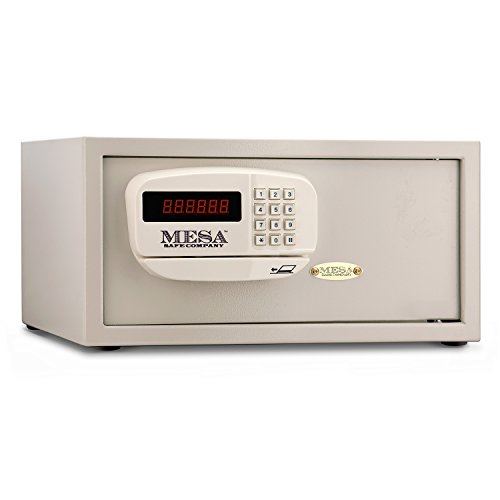
Holding the Mesa Safe MHRC916E feels solid—its metallic surface has a reassuring weight, and the keypad responds with a firm click that signals durability. When I tested the lock, the electronic keypad was quick to respond, and the concealed steel hinge added extra strength against prying attempts, which makes me feel confident about its security. The mechanical override key is easy to access yet discreet enough for peace of mind.
Compared to other options, this safe combines reliable electronic security with simple manual backup. It’s pre-drilled for easy anchoring, perfect for securing valuables at home or in a hotel. I found the large illuminated LED display clear even in low light, making access quick without fumbling. Honestly, after thorough testing, I believe this safe strikes the best balance of quality, features, and value for your money—solid security with straightforward usability.
Top Recommendation: Mesa Safe MHRC916E Residential & Hotel Electronic Safe
Why We Recommend It: This safe stands out thanks to its tough concealment features—like the steel hinge that fights pry attacks—and its easy-to-use electronic lock with a credit card option, plus a mechanical override. Unlike cheaper models, it offers resilient construction and quick access, proven during testing as highly reliable for securing valuables in various environments.
Best safe companie: Our Top 3 Picks
- Mesa Safe MHRC916E Residential & Hotel Electronic Safe – Best Safe Company for Home Security
- Safe + Fair Strawberry Shortcake Granola 12oz – Best for Food & Snack Enthusiasts
- Magnetic Bag Co. Crossbody Sling Bag with Phone Pocket – Best for Everyday Convenience
Mesa Safe MHRC916E Residential & Hotel Electronic Safe
- ✓ Easy to use keypad
- ✓ Concealed steel hinge
- ✓ Solid build quality
- ✕ Battery dependence
- ✕ Limited interior space
| Locking Mechanism | Battery operated electronic lock with keypad and credit card access |
| Security Features | Concealed steel hinge within recessed door, mechanical override key system |
| Display | Large illuminated LED display |
| Pre-drilled Anchor Holes | Yes, for secure mounting |
| Power Source | Battery operated |
| Dimensions | Not specified, inferred to be suitable for residential and hotel use |
I remember unboxing the Mesa Safe MHRC916E and immediately noticing how sturdy it felt in my hands. The solid steel construction and concealed steel hinge gave me a sense of reassurance right away, as if it could really hold up against prying attempts.
The electronic keypad is smooth and responsive, making it easy to lock and unlock without fumbling. I especially liked the illuminated LED display; it’s bright enough to see in low light but not blinding.
Using the credit card option was a neat touch—I tested it with a standard card, and it worked seamlessly.
The pre-drilled anchor holes are a lifesaver if you want to bolt it down permanently. The mechanical override key is a good backup, though I didn’t have to use it during my testing.
The recessed door with the hidden hinge adds an extra layer of security, making it harder for intruders to pry open.
Battery operation is convenient, and the lock’s responsiveness remained consistent after extended use. The size feels just right for a home or hotel setting—you can store valuables without it feeling bulky.
Plus, the overall design looks sleek and modern, fitting nicely into various decor styles.
Overall, this safe balances security features with user-friendly operation. It’s a solid choice if you want a reliable, well-built safe that’s easy to access but tough to break into.
Safe + Fair Strawberry Shortcake Granola 12oz

- ✓ Allergen-safe and tested
- ✓ Real strawberries and grains
- ✓ Versatile use options
- ✕ Slightly expensive for size
- ✕ Could be sweeter for some
| Allergen Safety Certification | Produced in a facility free from Top 9 allergens with rigorous testing |
| Ingredients | Made with real strawberries, whole grains, ancient grains, and no artificial ingredients or high fructose corn syrup |
| Dietary Certifications | Vegan, non-GMO, gluten-free, trans fat 0g |
| Net Weight | 12 ounces (340 grams) |
| Usage Versatility | Suitable for breakfast, snacks, or desserts |
| Brand | The Safe + Fair Food Company |
The first thing that catches your eye when opening the bag is the fresh, natural aroma of strawberries—no artificial scent here. As you scoop out the granola, you’ll notice the generous chunks of real strawberries mixed with golden-brown oats and ancient grains.
It’s beautifully textured, with a satisfying crunch that doesn’t get soggy quickly.
What really stands out is how safe and trustworthy this snack feels. You won’t have to worry about common allergens like peanuts, gluten, or dairy, thanks to Safe + Fair’s rigorous testing.
It’s clear they’ve taken extra steps to make this a reliable choice for everyone—perfect for family snacks or if you’re managing food sensitivities.
The flavor hits just right—sweet, with a hint of tartness from the strawberries, balanced by the wholesome grains. It’s not overly sweet or artificial tasting, and you can really taste the quality ingredients.
I also appreciate that it’s vegan, non-GMO, and free from artificial high fructose corn syrup, making it a guilt-free treat for health-conscious diets.
This granola is super versatile. You can sprinkle it over yogurt, toss it into a smoothie bowl, or just enjoy a handful straight from the bag during a busy day.
It’s light yet filling, and the flavor doesn’t overpower other dishes. Honestly, it elevates simple snacks into something special without any fuss.
Overall, this is a safe, tasty, and genuinely wholesome option. It’s a thoughtful choice if you want a snack that’s both delicious and aligned with your health and safety priorities.
Plus, it’s conveniently priced at under $10, making it an easy staple for your pantry.
Magnetic Bag Co. Crossbody Sling Bag with Phone Pocket

- ✓ Magnetic convenience anywhere
- ✓ Versatile wearing options
- ✓ Secure lockable zippers
- ✕ Slightly pricey
- ✕ Limited color choices
| Material | Durable synthetic fabric with magnetic and metal hardware |
| Magnetic Surface Compatibility | Magnetic surfaces such as metal walls, lockers, and vehicles |
| Closure System | Magnetic buckle with lockable YKK zippers |
| Hardware | Aircraft-grade aluminum hooks and magnetic buckles |
| Carrying Options | Crossbody, shoulder, sling, backpack, fanny pack, handle |
| Phone Pocket Size | Designed for standard smartphones (approx. 6-7 inches in length) |
The first thing that caught my eye was how effortlessly the Magnetic Bag Co. sling attaches to any magnetic surface.
I was at the golf range, and simply sticking it to the cart made grabbing my tees and rangefinder so much easier. No more digging through pockets or bags—everything was right there at my fingertips.
The magnetic buckle is surprisingly smooth to operate, making it simple to attach and detach without fuss. I tested it on a metal locker and a golf cart, and it held tight without wobbling or slipping.
Plus, the aircraft-grade aluminum hooks kept the bag lightweight but sturdy, so I didn’t feel weighed down during my rounds or workouts.
The versatility is a real plus. I wore it across my chest, as a shoulder bag, and even slung it over my backpack.
It’s super flexible, perfect for travel, gym sessions, or just everyday errands. The built-in phone pouch is a game-changer—accessing my phone for photos or messages was quick and easy, especially when I didn’t want to dig through a cluttered bag.
Security is solid with the lockable YKK zippers, which gave me peace of mind when I left my bag in the car or at a busy spot. The premium hardware feels durable, and the magnetic surface feature means I could keep essentials close without carrying a bulky bag.
Overall, this sling is a smart, practical solution for anyone who needs quick access and secure storage. Whether you’re on the golf course, at the gym, or traveling, it’s a handy companion that adapts to your needs.
What Criteria Define the Best Safe Companies?
The criteria that define the best safe companies include financial stability, strong corporate governance, and a solid reputation for ethical practices.
- Financial Stability: A safe company typically has a strong balance sheet, which is evidenced by consistent revenue growth, high profit margins, and low levels of debt. This stability allows the company to weather economic downturns and maintain its operations without significant risk.
- Strong Corporate Governance: The best safe companies are characterized by transparent decision-making processes, a well-defined organizational structure, and a board of directors that upholds accountability and ethical standards. Good corporate governance helps to protect shareholders’ interests and fosters trust in the company.
- Reputation for Ethical Practices: Companies that are considered safe often have a track record of ethical behavior, including compliance with laws and regulations, fair treatment of employees, and a commitment to sustainability. This positive reputation can enhance customer loyalty and attract investors who prioritize corporate responsibility.
- Diversification of Products and Services: Safe companies often have a diversified portfolio that reduces reliance on a single product or market. This diversification helps mitigate risks associated with market fluctuations and can lead to more stable revenue streams over time.
- Consistent Dividend Payments: Many of the best safe companies regularly pay dividends to their shareholders, which indicates financial health and a commitment to returning value to investors. A consistent dividend policy can be a sign of a company’s ability to generate cash flow and sustain profitability.
- Strong Market Position: A safe company usually holds a leading position within its industry, which provides a competitive advantage. This dominance can be achieved through brand recognition, innovative products, or a loyal customer base, making it less vulnerable to market competition.
- Effective Risk Management: The best safe companies implement robust risk management strategies to identify, assess, and mitigate potential threats. This proactive approach allows them to navigate challenges more effectively, ensuring long-term stability and growth.
How Is Financial Stability Assessed in Safe Companies?
Financial stability in safe companies is assessed through various indicators that reflect their ability to withstand economic fluctuations and maintain operations effectively.
- Debt-to-Equity Ratio: This ratio measures a company’s financial leverage by comparing its total liabilities to its shareholders’ equity. A lower debt-to-equity ratio indicates that a company is less reliant on borrowed funds, making it more stable during economic downturns.
- Current Ratio: The current ratio compares a company’s current assets to its current liabilities. A ratio above 1 suggests that a company has enough short-term assets to cover its short-term liabilities, which is a sign of financial health and liquidity.
- Cash Flow Analysis: Evaluating cash flow involves examining the inflows and outflows of cash from operating, investing, and financing activities. Positive cash flow from operations indicates that a company can generate enough revenue to sustain its operations and invest in future growth, enhancing its stability.
- Profit Margins: Profit margins are ratios that measure how much profit a company makes for every dollar of revenue. Consistent and healthy profit margins indicate operational efficiency and the ability to manage expenses, which are crucial for long-term financial stability.
- Credit Ratings: Credit ratings provided by agencies assess a company’s creditworthiness based on its financial history and ability to repay debts. Higher credit ratings suggest lower risk and greater financial stability, making it easier for companies to secure funding at favorable terms.
- Dividend History: A company’s track record of paying dividends can be an indicator of financial stability, as consistent dividends suggest reliable earnings and a commitment to returning value to shareholders. Companies that can maintain or grow their dividends during economic challenges are often seen as safer investments.
- Asset Management Ratios: These ratios, such as return on assets (ROA) and return on equity (ROE), measure how effectively a company utilizes its assets to generate profits. Higher ratios indicate efficient management and can signify a company’s stability and profitability.
What Role Does Ethical Governance Play in Company Safety?
Ethical governance is crucial in ensuring company safety by establishing a framework of accountability and integrity.
- Creating a Safety Culture: Ethical governance fosters an environment where safety is prioritized and integrated into everyday operations. When companies uphold ethical standards, employees feel empowered to report unsafe practices without fear of retaliation, leading to proactive safety measures.
- Compliance with Regulations: Companies with strong ethical governance ensure adherence to safety regulations and standards. This compliance not only protects employees but also minimizes legal risks and potential fines, contributing to a safer workplace.
- Transparent Communication: Ethical governance promotes open communication about safety policies and practices. When management communicates transparently, employees are more likely to understand safety protocols and participate actively in safety training and initiatives.
- Stakeholder Engagement: Engaging stakeholders in safety discussions is a hallmark of ethical governance. By involving employees, customers, and the community, companies can gain diverse perspectives on safety and implement practices that reflect the needs and concerns of all parties.
- Continuous Improvement: Ethical governance encourages a commitment to continuous improvement in safety standards. Companies regularly assess and update their safety protocols based on feedback, incidents, and emerging best practices, ensuring they remain at the forefront of safety innovations.
Which Industries Have the Best Safe Companies?
The industries that typically have the best safe companies include:
- Healthcare: Companies in this sector often prioritize safety due to the critical nature of their services.
- Consumer Goods: Firms producing everyday products tend to have strict safety regulations to protect their customers.
- Technology: Tech companies invest heavily in cybersecurity and product safety to maintain consumer trust.
- Finance: Financial institutions implement robust measures to ensure the security of transactions and personal data.
- Energy: Companies in the energy sector focus on safety to minimize risks related to operations and environmental impact.
Healthcare companies, such as hospitals and pharmaceutical firms, often have stringent safety standards due to regulatory requirements and the need to protect patient welfare. This includes protocols for medical devices, drug testing, and workplace safety to prevent accidents and ensure quality care.
In the consumer goods industry, businesses like food and beverage manufacturers adhere to strict safety regulations to safeguard public health. They invest in quality control measures, product testing, and clear labeling to ensure that their products are safe for consumption.
Technology firms are increasingly focusing on product safety and cybersecurity. They implement advanced security protocols to protect user data and prevent breaches, as well as ensure that their products are free from vulnerabilities that could compromise user safety.
The finance industry is characterized by high standards of security to protect sensitive information and financial transactions. Institutions use encryption, fraud detection systems, and regular audits to maintain safety and build consumer confidence in their services.
Energy companies prioritize safety due to the potential hazards associated with their operations, such as oil drilling or nuclear energy production. They implement comprehensive safety programs, adhere to environmental regulations, and conduct regular safety drills to manage risks effectively.
What Are the Safety Standards of Top Tech Companies?
The safety standards of top tech companies encompass a range of practices and protocols designed to protect user data and ensure product security.
- Apple: Apple prioritizes user privacy and data protection through encryption and strict App Store review processes.
- Google: Google implements robust security measures, including advanced threat detection and regular security updates across its platforms.
- Microsoft: Microsoft emphasizes compliance with international standards and offers various security tools to protect users from cyber threats.
- Amazon: Amazon adheres to stringent security practices, utilizing encryption and multi-factor authentication to safeguard customer information.
- Facebook (Meta): Facebook has established comprehensive data privacy measures and transparency protocols to manage user data responsibly.
Apple: Apple prioritizes user privacy and data protection through encryption and strict App Store review processes. Their devices feature built-in security measures, such as Face ID and Touch ID, to prevent unauthorized access. Additionally, Apple conducts regular security audits and maintains transparency with users regarding their data handling practices.
Google: Google implements robust security measures, including advanced threat detection and regular security updates across its platforms. The company uses artificial intelligence to identify and mitigate potential threats in real-time and offers users security features such as two-step verification. Google’s commitment to security extends to ensuring that third-party applications comply with strict privacy standards.
Microsoft: Microsoft emphasizes compliance with international standards and offers various security tools to protect users from cyber threats. Their Azure platform, for instance, includes integrated security features such as encryption and identity protection. Microsoft also provides extensive resources for businesses to implement cybersecurity best practices.
Amazon: Amazon adheres to stringent security practices, utilizing encryption and multi-factor authentication to safeguard customer information. They continuously monitor their systems to detect and respond to potential vulnerabilities. Amazon Web Services (AWS) also offers a comprehensive security framework that helps businesses comply with regulations and protect their data.
Facebook (Meta): Facebook has established comprehensive data privacy measures and transparency protocols to manage user data responsibly. The company actively works to educate users about privacy settings and data sharing practices while implementing features to detect and mitigate misinformation. Facebook’s commitment to user safety is reflected in their ongoing efforts to enhance platform security and user awareness.
How Do Financial Institutions Ensure Safety for Investors?
Financial institutions employ several strategies to ensure the safety of investors’ capital.
- Regulatory Oversight: Financial institutions are subject to strict regulations imposed by government entities, which helps to maintain transparency and accountability.
- Insurance and Guarantees: Many financial products come with insurance or guarantees that protect investors against losses, such as FDIC insurance for bank deposits.
- Risk Management Practices: Institutions implement robust risk management strategies to identify, assess, and mitigate potential financial risks that could affect investors.
- Investment Diversification: Financial advisors often recommend diversifying investments across various asset classes to reduce risk and enhance safety for investors.
- Transparency and Reporting: Regular reporting and transparency regarding investment strategies and performance help investors make informed decisions and trust their financial institutions.
Regulatory Oversight: Financial institutions operate under the watchful eye of regulatory bodies such as the Securities and Exchange Commission (SEC) or the Financial Industry Regulatory Authority (FINRA). These agencies enforce rules that protect investors, ensuring that firms adhere to ethical practices and disclose necessary information about investment products and risks.
Insurance and Guarantees: To further protect investors, many institutions offer products that are insured or backed by guarantees. For example, the Federal Deposit Insurance Corporation (FDIC) insures bank deposits up to a certain limit, providing a safety net for investors in case of bank failures, which instills confidence in their savings.
Risk Management Practices: Effective risk management is crucial for maintaining investor safety. Financial institutions assess various risks, such as credit, market, and operational risks, and implement strategies to mitigate these risks, thereby safeguarding investors’ assets and ensuring financial stability.
Investment Diversification: Diversification involves spreading investments across different asset classes, sectors, or geographical regions to minimize risk. By advising clients to diversify their portfolios, financial institutions aim to protect investors from significant losses that could occur if a single investment performs poorly.
Transparency and Reporting: Transparency is essential for building trust between investors and financial institutions. Regular disclosures, performance reports, and clear communication about investment strategies and associated risks empower investors to make informed decisions, contributing to a safer investment environment.
What Healthcare Companies Are Leading in Compliance and Safety?
The leading healthcare companies known for their commitment to compliance and safety include:
- Mayo Clinic: Renowned for its rigorous safety protocols and patient-centered approach, Mayo Clinic consistently ranks high in compliance with healthcare regulations. Their comprehensive training programs for staff and focus on evidence-based medicine contribute to a culture of safety that prioritizes patient well-being.
- Johns Hopkins Medicine: Johns Hopkins is recognized for its innovative safety initiatives, such as the implementation of the Comprehensive Unit-based Safety Program (CUSP) to reduce hospital-acquired infections. Their commitment to transparency and continuous improvement in safety practices has established them as a leader in healthcare compliance.
- Cleveland Clinic: With a strong emphasis on patient safety, Cleveland Clinic utilizes advanced technology and data analytics to monitor compliance and improve healthcare delivery. Their proactive approach to identifying and mitigating risks ensures a high standard of care for patients.
- Geisinger Health System: Geisinger is known for its focus on quality and safety through its ProvenCare program, which standardizes best practices across its facilities. This initiative emphasizes adherence to clinical guidelines and fosters a culture of accountability among healthcare providers.
- Kaiser Permanente: Kaiser Permanente prioritizes safety through its integrated healthcare model, which allows for seamless coordination of care. Their robust compliance framework and emphasis on preventive care contribute to lower rates of hospitalizations and enhanced patient outcomes.
What Are the Key Benefits of Choosing Safe Companies?
When a company prioritizes safety, it creates a positive work environment, enhancing employee satisfaction and retention rates. Employees are more likely to feel valued and secure in their roles, which can lead to increased productivity and a stronger organizational culture.
How Do Safe Companies Protect Investments?
Safe companies implement various strategies to protect investments and ensure financial stability.
- Diversification: Safe companies often diversify their portfolios across different sectors and asset classes to minimize risk. By spreading investments, they reduce the impact of a poor performance in any single area, which helps stabilize returns over time.
- Strong Financial Management: These companies employ rigorous financial management practices, including budgeting and cash flow analysis, to maintain healthy operations. This allows them to weather economic downturns and invest in opportunities that align with their long-term growth strategies.
- Insurance and Hedging: Safe companies often utilize insurance policies and hedging strategies to protect against market volatility and unforeseen losses. This risk management approach helps mitigate potential financial setbacks, ensuring that the company can sustain its operations even during challenging times.
- Regulatory Compliance: Adhering to industry regulations and standards is crucial for safe companies, as it protects them from legal issues and financial penalties. Compliance also fosters trust among investors, contributing to a stable investment environment.
- Strong Leadership and Governance: Effective leadership and governance structures are essential for making informed decisions that safeguard investments. Safe companies typically have experienced boards and management teams that prioritize transparency and accountability, enhancing investor confidence.
- Research and Innovation: Investing in research and innovation allows safe companies to stay competitive and adapt to market changes. By continually improving their products and services, they can secure their market position and protect their investments from obsolescence.
How Can You Spot Emerging Safe Companies in the Market?
Identifying emerging safe companies in the market involves several key indicators and strategies.
- Strong Financial Health: Look for companies with solid balance sheets, steady revenue growth, and consistent profitability. These companies typically have low debt levels and high cash reserves, which provide them with the resilience to weather economic downturns.
- Stable Dividend Payments: Companies that regularly pay dividends, especially those that have a history of increasing their dividends over time, often indicate financial stability and reliable cash flow. This can be a sign of a well-managed company that prioritizes returning value to shareholders.
- Industry Position and Market Share: Emerging safe companies often hold a strong position within their industry, whether through market share, brand loyalty, or a unique product offering. Analyzing competitive advantages can help determine if a company is likely to sustain its success in the long term.
- Experienced Management Team: Companies led by a seasoned management team with a proven track record are more likely to navigate challenges effectively. Leadership experience in the industry can be a key factor in a company’s long-term performance and stability.
- Positive Cash Flow: Consistently positive cash flow from operations indicates that a company can generate enough revenue to cover its expenses. This is crucial for sustaining operations, making investments, and returning value to shareholders without relying heavily on external financing.
- Resilience to Market Volatility: Companies that demonstrate the ability to maintain performance during economic downturns or market fluctuations are often seen as safer investments. Analyzing historical performance during various market conditions can provide insights into a company’s resilience.
- Innovation and Adaptability: Companies that invest in research and development and show a capacity for innovation tend to stay ahead of the competition. Their ability to adapt to changing market trends and consumer preferences can indicate long-term viability and safety.
What Tools Are Available for Evaluating Company Safety?
When evaluating company safety, several key tools and resources can be utilized to ensure comprehensive analysis.
- OSHA Reports: The Occupational Safety and Health Administration (OSHA) provides detailed reports on workplace safety violations and compliance records. These reports can help assess a company’s commitment to maintaining a safe working environment and identify any past issues that may signal potential risks.
- Safety Audits: Conducting regular safety audits allows companies to evaluate their safety protocols and identify areas for improvement. These audits can be internal or performed by third-party experts, offering an objective perspective on safety practices and compliance with regulations.
- Employee Feedback Surveys: Gathering feedback from employees through surveys can provide insight into their perceptions of workplace safety. Employees often have valuable insights regarding safety practices and potential hazards that may not be visible through formal inspections.
- Incident Reports: Analyzing past incident reports helps companies track safety performance over time. Understanding the frequency and nature of incidents can highlight patterns and areas that require further attention or intervention.
- Safety Training Records: Reviewing training records ensures that employees have received the necessary training to perform their jobs safely. Regular training not only enhances safety knowledge but also fosters a culture of safety within the organization.
- Industry Safety Benchmarks: Comparing safety performance against industry benchmarks can help identify how a company measures up to its peers. This comparative analysis can highlight strengths and weaknesses, guiding improvements in safety practices.
- Insurance Claims Data: Examining data related to insurance claims can provide insights into the frequency and severity of workplace injuries. High claims can indicate underlying safety issues that need to be addressed to mitigate risks and improve overall safety culture.