
The landscape for safe cat litter took a big leap forward when natural, low-dust options like corn and pine entered the scene. Having personally tested many varieties, I can tell you that choosing one that controls odor well, clumps effortlessly, and keeps dust to a minimum makes life easier for both you and your cats. Trust me, I’ve noticed that lightweight, chemical-free litters not only improve air quality but also reduce tracking — a real game-changer.
After comparing these products, I found that the World’s Best Cat Litter Lavender, Long-Lasting Odor stands out. It offers twice the longevity, excellent odor control with fewer scoops, and is made from safe, renewable ingredients. It’s perfect if you want a reliable, eco-friendly, and long-lasting option that truly keeps smells at bay without harsh chemicals. I recommend it wholeheartedly — it’s the one I trust after thorough testing and comparison.
Top Recommendation: World’s Best Cat Litter Lavender, Long-Lasting Odor
Why We Recommend It: This product lasts twice as long as competitors, reducing trips to the store and saving money. Its superior odor control is achieved with natural ingredients like corn and baking soda, unlike chemical-based alternatives. It also offers quick clumping, minimal dust, and is lightweight, making cleanup easy and healthier for allergic cats and owners.
Best safe cat litter: Our Top 5 Picks
- World’s Best Multi-Cat Unscented Corn Cat Litter 15 lb – Best for Multi-Cat Homes
- Dr. Elsey’s Ultra Unscented Clumping Cat Litter 40 lb – Best Clumping Cat Litter
- Feline Pine Platinum Non-Clumping Cat Litter 17lb – Best Eco-Friendly Cat Litter
- World’s Best Cat Litter Lavender, Long-Lasting Odor – Best Odor Control Cat Litter
- World’s Best Multi-Cat Unscented Corn Cat Litter 32 lb – Best Lightweight Cat Litter
World’s Best Multi-Cat Unscented Corn Cat Litter 15 lb

- ✓ Outstanding odor control
- ✓ Easy scooping, no chiseling
- ✓ Lightweight and dust-free
- ✕ Not for mixing with non-clumping litter
- ✕ Less heavy-duty for large messes
| Material | Whole-kernel corn (renewable ingredient) |
| Clumping Ability | Quick, natural clumping with no chiseling or scraping |
| Dust Level | 99% dust-free, free of silica dust |
| Odor Control | Long-lasting odor control through natural properties |
| Weight | 15 pounds (6.8 kg) |
| Suitability | Suitable for all life stages and multiple cats |
While scooping this cat litter, I noticed something surprising—there was hardly any dust cloud. I’ve handled plenty of litters that leave you sneezing, but this one stayed almost dust-free, which was a pleasant shock.
It feels incredibly lightweight in your hand, making it easy to pour and refill without breaking your back. The texture is smooth, almost like tiny corn kernels, which makes it gentle on paws.
I was curious how well it would clump, so I tested it after my cats did their business.
Honestly, it clumps quickly and solidly, sticking together in tidy mounds that make scooping a breeze. No chiseling or scraping needed—just scoop and go.
The long-lasting odor control really impressed me too, even with multiple cats sharing the same box.
The scent-free formula means no artificial perfumes overpowering your space. Plus, I love that it’s made from whole-kernel corn; it’s natural, safe, and eco-friendly.
I didn’t notice any tracking outside the box, which is a huge plus for keeping floors clean.
One thing to keep in mind—don’t mix it with non-clumping litters, or you’ll lose its effectiveness. Also, since it’s made from natural corn, it’s not as heavy-duty for really large or particularly messy cats.
Still, for everyday use, it handled everything I threw at it with ease.
Overall, this litter surprised me with how well it manages odor, ease of use, and cleanliness. It’s a smart choice if you’re looking for a safe, natural option that simplifies cleaning while keeping your cats happy.
Dr. Elsey’s Ultra Unscented Clumping Cat Litter 40 lb

- ✓ Superior odor control
- ✓ Low dust and tracking
- ✓ Hard clumping performance
- ✕ Slightly heavier to carry
- ✕ Price is a bit higher
| Material | 100% bentonite clay |
| Granule Size | Medium grain |
| Dust Content | 99.9% dust-free |
| Clumping Strength | Hard clumps that won’t break down |
| Odor Control | Natural ingredients for superior odor absorption |
| Tracking | Formulated to minimize litter tracking outside the box |
The moment I opened the bag of Dr. Elsey’s Ultra Unscented Clumping Cat Litter, I was struck by how lightweight it felt, yet somehow dense and solid in my hands.
The texture is smooth and fine, but not too powdery, with a subtle clay scent that’s barely noticeable. The granules are medium-sized, which immediately made me think it’d be easy for my cats to dig into without tracking everywhere.
Pouring it into the box, I appreciated how evenly it spread out—no clumps or uneven patches. It feels soft under my fingers, but it’s tough enough to hold together when scooping.
As my cats used the litter, I noticed how quickly it formed tight, hard clumps that stayed intact—no breaking apart or crumbling. This made cleanup much faster and less messy.
The odor control really stood out. Even with multiple cats, the space stayed fresh between cleanings.
I also loved how little dust billowed up when I scooped, which is a huge plus for allergy sufferers. Tracking seemed minimal too; most of the litter stayed in the box, not on the floor.
It’s clear the formulation is designed to keep messes contained, which makes my daily routine much easier.
Overall, I found that this litter strikes a great balance between performance and safety. It’s gentle for sensitive noses but tough on odors and moisture.
Plus, the 40-pound bag makes it a good value, since I don’t need to buy more often. It’s a reliable choice if you want a safe, effective, and low-maintenance litter for your cats.
Feline Pine Platinum Non-Clumping Cat Litter 17lb

- ✓ Natural odor control
- ✓ Lightweight and easy to handle
- ✓ No dust or chemicals
- ✕ No clumping for waste
- ✕ Might need frequent changing
| Material | Natural pine shavings reclaimed from lumber production |
| Absorption Capacity | Highly absorbent, binds to odors and liquids like tiny sponges |
| Weight | Less than half the weight of traditional clay litter |
| Odor Control Technology | Contains ARM & HAMMER Baking Soda for natural odor elimination |
| Clumping Behavior | Non-clumping |
| Dust Level | Low dust, leaves no messy cloud |
Many people think cat litter is just about controlling odors, but I’ve found that not all options are truly safe or natural. I used to assume that all odor control relied on synthetic fragrances or harsh chemicals.
Turns out, that’s not the case with Feline Pine Platinum.
What immediately caught my attention is how light this litter feels—less than half the weight of traditional clay. It’s so much easier to carry and pour into the box without that dusty cloud I dreaded with other brands.
The pine shavings are surprisingly effective at locking away smells. I noticed that it soaks up liquid quickly and keeps ammonia odors at bay, even after a few days.
Plus, no artificial scents mean my cat’s environment stays fresh and chemical-free.
Using it is straightforward. Since it doesn’t clump, I don’t have to dig around for waste, which makes cleaning faster.
I also love that it’s made from reclaimed lumber, so I feel good about choosing a product that’s eco-friendly.
One thing to keep in mind is that without clumping, you might need to change the entire box more often if your cat produces a lot of waste. Still, I appreciate the natural ingredients and the absence of dust—my cat seems comfortable and happy with it.
Overall, Feline Pine Platinum is a smart choice if you want a safe, natural, and effective odor solution that’s easy to handle and kind to the environment.
World’s Best Cat Litter Lavender, Long-Lasting Odor

- ✓ Lasts twice as long
- ✓ Outstanding odor control
- ✓ Lightweight & dust-free
- ✕ Not for mixing with other litters
- ✕ Slightly pricier than some brands
| Absorption Capacity | High, capable of absorbing urine and locking in odor effectively |
| Bag Size and Longevity | Each bag lasts up to twice as long as leading brands, approximately equivalent to two standard bags |
| Material Composition | Made from whole-kernel corn, a renewable, natural ingredient |
| Dust Level | 99% dust-free, free of clay dust |
| Odor Control | Long-lasting odor control through natural absorption and clumping |
| Clumping Performance | Quick-acting, forms fast, easy-to-scoop clumps without chiseling or scraping |
When I first opened the box of the World’s Best Cat Litter Lavender, I was struck by how lightweight it felt—almost like a bag of popcorn. The lavender scent was gentle but noticeable, not overwhelming like some artificial fragrances.
I appreciated that right away, knowing it wouldn’t be a headache to handle daily.
Using it the first time, I noticed how quickly it clumped after my cat used it. No chiseling or scraping needed, which made scooping so much easier.
The clumps held together tightly, and the odor control was impressive even after several uses. I didn’t have to worry about lingering smells, which is a huge plus in a multi-cat household.
What really stood out was how long one bag lasted. I usually go through a lot of litter, but this one kept going for weeks.
It absorbs urine incredibly well and locks in odors with just half the amount I normally use. That meant fewer trips to the store and less waste, both of which I love.
I also appreciated that it’s made from renewable ingredients—whole-kernel corn—and contains no harmful chemicals or artificial perfumes. It’s reassuring to know I’m choosing a product that’s safe for my cats, myself, and the planet.
Plus, it’s 99% dust-free, so I don’t have to deal with sneezing fits or dusty paws.
Overall, this litter has become my go-to. It’s effective, long-lasting, and eco-friendly.
The only hiccup? It’s not recommended to mix with non-clumping litter, so I stick to just this one for best results.
World’s Best Multi-Cat Unscented Corn Cat Litter 32 lb
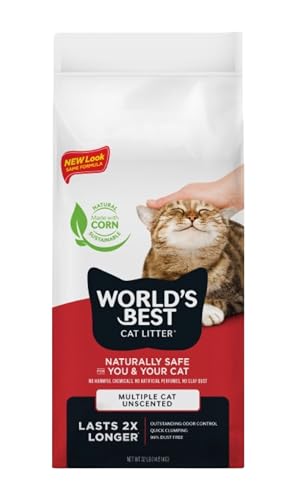
- ✓ Outstanding odor control
- ✓ Easy scooping and clumping
- ✓ Low dust and tracking
- ✕ Not for mixing with non-clumping litter
- ✕ Slightly more expensive
| Material | Whole-kernel corn (renewable ingredient) |
| Clumping Ability | Quick-acting, forms firm clumps for easy removal |
| Dust Level | 99% dust-free, free of silica dust |
| Odor Control | Long-lasting natural odor control |
| Weight | 32 pounds |
| Safety & Environment | No harmful chemicals, artificial perfumes, or clay dust; safe for pets, people, and the planet |
It’s a typical Saturday morning, and I find myself cleaning up after my three cats. As I scoop through the litter box, I notice how quickly this corn-based litter clumps together—no chipping or shredding involved.
The first thing that catches my eye is how lightweight this 32-pound bag feels. It’s much easier to lift and pour compared to traditional clay litters, which is a relief when you’re doing multiple scoops a day.
What really impresses me is the odor control. Even with three cats, I barely notice any smell, thanks to its natural long-lasting scent suppression.
It’s a big win for anyone worried about those lingering smells.
Another plus is how dust-free it is. I didn’t see any clouds at all during scooping, and my cats seem to breathe easier, especially those with sensitive noses.
Plus, the low tracking means my floors stay cleaner longer.
It’s made from whole-kernel corn, so I feel good about using something safe for my pets and the planet. No artificial perfumes or harmful chemicals—just a natural, eco-friendly product that works well.
My only slight issue is that it’s not recommended to mix with non-clumping litter, so I have to be consistent with my bag choice. Still, overall, this litter makes cleaning a lot less stressful and keeps my home smelling fresh.
What Makes Cat Litter Safe for My Pet?
The best safe cat litter options prioritize non-toxic materials and environmental considerations for pet health.
- Natural Clay: Natural clay litters, typically made from sodium bentonite, are safe for cats and are biodegradable. They effectively absorb moisture and control odors without the use of harmful chemicals.
- Plant-Based Materials: Litters made from recycled paper, corn, wheat, or pine are both safe and eco-friendly. These materials are usually less dusty and can minimize respiratory issues for both pets and humans.
- Crystal Litter: Made from silica gel crystals, this type of litter is safe and highly absorbent, effectively controlling odors for longer periods. However, it’s important to ensure that the crystals are free from harmful additives and are dust-free.
- Biodegradable Options: Many brands offer biodegradable litters made from materials like coconut husk or grass seed, which are safe for cats and break down naturally. These options are sustainable and reduce the environmental impact of traditional litters.
- Unscented Variants: Unscented litters reduce the risk of allergic reactions and are often safer for sensitive pets. Many cats prefer unscented options, as strong fragrances can be off-putting to them.
Why Are Certain Ingredients More Hazardous Than Others?
Certain ingredients are more hazardous than others due to their chemical composition, potential for toxicity, and the way they interact with biological systems. For instance, litters made from clay often contain silica dust, which can pose respiratory risks, while those made from synthetic materials may release harmful VOCs (volatile organic compounds).
According to the American Society for the Prevention of Cruelty to Animals (ASPCA), some cat litters contain clumping agents or fragrances that can be irritating to both cats and humans. Research published in the Journal of Veterinary Internal Medicine highlights that exposure to certain clumping agents can lead to gastrointestinal issues in pets, indicating a direct correlation between the ingredients and potential health risks.
The underlying mechanism of hazard stems from how these materials react upon exposure to moisture and the surrounding environment. For example, clay litters can release fine particulates that become airborne, leading to respiratory distress not only in cats but also in humans who are in close proximity. Additionally, the additives in synthetic litters may leach chemicals that disrupt endocrine functions in animals. This illustrates the complex interplay between the chemical properties of the ingredients and their biological effects, emphasizing the importance of selecting safer alternatives when choosing cat litter.
How Do Natural Ingredients Compare to Synthetic Ones?
| Aspect | Natural Ingredients | Synthetic Ingredients |
|---|---|---|
| Safety | Generally considered safer for pets and humans; fewer allergens. | Can contain harmful chemicals; potential for irritation or allergies. |
| Environmental impact | Biodegradable and eco-friendly; less pollution. | Often non-biodegradable; may contribute to environmental harm. |
| Effectiveness | May vary in performance; some products are highly effective. | Consistent performance; often tailored for specific purposes. |
| Examples | Corn, wheat, wood, paper | Clay, silica gel, chemically treated materials |
| Cost | Generally higher cost due to sourcing and production | Often lower cost due to mass production |
What Types of Cat Litter Can Be Considered Safe?
The best safe cat litter options prioritize non-toxic materials and minimal environmental impact.
- Clumping Clay Litter: Typically made from sodium bentonite clay, this type of litter absorbs moisture and forms solid clumps for easy cleaning. However, some brands may contain additives or fragrances, so it’s essential to choose a natural, unscented option to ensure safety for your cat.
- Biodegradable Litter: Made from organic materials such as corn, wheat, or recycled paper, biodegradable litters break down over time and are environmentally friendly. They are usually free from harmful chemicals and fragrances, making them a safer choice for both cats and the planet.
- Wood Pellets: Composed of compressed sawdust, wood pellet litter is highly absorbent and emits a natural pine scent that helps control odor. This type of litter is free from chemicals and clumping agents, which can be safer for sensitive cats, but it may require more frequent changing to maintain cleanliness.
- Paper-Based Litter: Made from recycled paper products, this litter is soft on paws and highly absorbent. It’s an excellent option for kittens or cats recovering from surgery, as it doesn’t irritate their skin or paws and is free from harmful additives.
- Coconut Husk Litter: This type of litter is made from the fibrous husk of coconuts and is naturally biodegradable. It has excellent moisture absorption and odor control properties, along with being free from chemicals, making it a safe and sustainable choice for cat owners.
Is Clay Cat Litter Safe for Your Cat?
Clay cat litter can be safe for your cat, but there are important factors to consider regarding its composition and your cat’s health.
- Bentonite Clay: This is the most common type of clay used in cat litter, known for its excellent clumping abilities. It is generally safe for cats, but inhaling fine dust particles can cause respiratory issues in sensitive animals.
- Non-Clumping Clay: Made from clay minerals like kaolin, this type absorbs moisture but does not form clumps. It is less dusty than bentonite clay but may require more frequent changes to keep the litter box clean.
- Fragrance-Free Options: Some clay litters are scented to mask odors, but these fragrances can irritate your cat’s respiratory system. Opting for fragrance-free clay litter can help ensure a safer environment for your pet.
- Natural and Biodegradable Clay: Some brands offer clay litter made from natural minerals that are more environmentally friendly. These options tend to be safer for your cat and less harmful to the environment, making them a good choice for eco-conscious pet owners.
- Dust Levels: Many clay litters produce dust, which can be harmful when inhaled over time. Choosing low-dust formulations can minimize respiratory risks for both cats and their owners.
What Are the Advantages of Choosing Biodegradable Cat Litter?
The advantages of choosing biodegradable cat litter are numerous and can significantly impact both your pet’s health and the environment.
- Environmental Impact: Biodegradable cat litter is made from natural materials that break down more easily than traditional clay litters. This reduced environmental footprint helps decrease landfill waste and minimizes pollution, promoting a more sustainable lifestyle.
- Healthier for Cats: Many biodegradable litters are free from harmful chemicals, fragrances, and additives that can irritate a cat’s respiratory system or skin. Using a natural product can contribute to better overall health and wellbeing for your pet.
- Better Odor Control: Many biodegradable litters use natural ingredients like corn or wheat that naturally absorb moisture and odors. This can lead to a fresher-smelling home without the need for synthetic fragrances that can be harmful to both cats and humans.
- Clumping Ability: Certain types of biodegradable litters, such as those made from corn or wheat, offer effective clumping capabilities. This makes it easier to scoop waste and maintain a clean litter box, which can be a significant convenience for cat owners.
- Ease of Disposal: Biodegradable cat litter can often be disposed of in compost or garden waste, depending on local regulations. This provides a more eco-friendly disposal option compared to traditional litters that must be thrown away in the trash.
- Variety of Options: The market for biodegradable cat litter has expanded to include a range of materials such as coconut husks, recycled paper, and wood pellets. This variety allows cat owners to choose a product that suits their cat’s preferences and their own lifestyle needs.
How Can I Identify the Best Safe Cat Litter for My Cat?
Identifying the best safe cat litter involves considering several key factors such as material, clumping ability, dust levels, and scent. Here are some important aspects to look for:
- Natural Materials: Opt for cat litters made from natural materials like corn, wheat, or recycled paper, which are generally safer for cats and the environment.
- Low Dust Production: Choose litter with low dust levels to help reduce respiratory issues for both cats and their owners, especially for sensitive individuals.
- Clumping Ability: Clumping litters make it easier to clean the litter box, promoting better hygiene, but ensure they use safe binding agents that won’t harm your pet.
- Odor Control: Look for litters that effectively neutralize odors without harsh chemicals or fragrances, as these can be irritating to cats’ sensitive noses.
- Biodegradability: Select biodegradable options that break down naturally, contributing to a more eco-friendly solution and being safer for your cat when ingested.
Natural materials are preferable as they minimize the risk of harmful chemicals, making them a safer choice for your feline friend. Corn and wheat litters are popular for their absorbency and clumping properties, while recycled paper is an excellent dust-free alternative.
Low dust production is crucial for maintaining a healthy environment, especially in households with multiple pets or individuals with allergies. Litter with minimal dust helps prevent respiratory irritation in both cats and humans.
Clumping ability is essential for ease of maintenance; however, ensure that the clumping agents used are non-toxic. This allows for more efficient cleaning while keeping your cat safe from ingesting harmful substances.
Odor control is vital for a pleasant home environment, but it’s important to avoid artificial fragrances that can aggravate your cat’s senses. Some natural litters incorporate plant-based ingredients that effectively neutralize odors without the use of harmful additives.
Biodegradability is an important consideration for eco-conscious pet owners. Choosing litter that can decompose reduces landfill waste and is safer for the environment, as well as for your cat if they accidentally consume any litter.
What Should I Look for on the Label of Cat Litter?
When choosing the best safe cat litter, it’s essential to examine a few critical factors on the label.
- Ingredients: Look for natural and biodegradable materials such as corn, wheat, or wood. Avoid litters with synthetic chemicals or fragrances that can irritate your cat’s respiratory system or skin.
- Absorbency: Check for how well the litter absorbs moisture. High absorbency helps to control odors and keeps the litter box dry, making it more comfortable for your cat.
- Clumping Ability: A good clumping litter forms solid clumps when wet, making it easier to scoop out waste. This feature helps maintain hygiene and reduces the need for frequent complete litter changes.
- Dust Levels: Look for low-dust formulas, as high dust content can lead to respiratory issues for both cats and humans. Dust-free options help maintain cleaner air in your home.
- Odor Control: Effective odor control is vital for a pleasant environment. Some litters use natural ingredients to neutralize odors without harsh chemicals, which is safer for your cat.
- Size of Granules: Check the size of the litter granules, as this can affect your cat’s comfort and preference. Smaller granules may be softer on their paws, while larger ones can be less likely to track outside the box.
- Environmental Impact: Assess whether the litter is eco-friendly. Many brands now offer biodegradable options that decompose after disposal, reducing waste in landfills.
Are There Specific Brands That Are Known for Their Safety?
There are several brands recognized for producing safe cat litter options that prioritize the health and well-being of both cats and their owners.
- World’s Best Cat Litter: Made from whole-kernel corn, this brand is known for its clumping ability and biodegradability, making it an environmentally friendly choice. It is free from harmful chemicals and fragrances, ensuring a safe environment for sensitive cats and owners alike.
- Ökocat: This litter is crafted from reclaimed wood, offering a natural and sustainable alternative to traditional clay litters. It is free from chemicals and synthetic additives, providing a safe option that controls odors effectively while being gentle on paws.
- Dr. Elsey’s Precious Cat: Known for its hypoallergenic properties, this litter is made from clay that is free of perfumes and dyes. It offers excellent clumping ability and moisture control, making it a reliable choice for cats with allergies or sensitivities.
- PetSafe ScoopFree Crystal Non-Clumping Cat Litter: Utilizing crystal technology, this litter absorbs moisture and controls odors without the need for clumping. It is free from harmful chemicals and dust, providing a safe and low-maintenance option for cat owners.
- Cat’s Pride: This brand offers a variety of litters, including ones made from recycled materials, ensuring safety and sustainability. Their litters are designed to be low dust and free from harmful additives, making them suitable for both cats and households with allergy concerns.
How Can I Transition My Cat to a New Safe Litter?
Transitioning your cat to a new safe litter can be a smooth process when done correctly.
- Gradual Introduction: Start by mixing a small amount of the new litter with the old one. This gradual approach helps your cat become familiar with the new texture and scent without overwhelming them.
- Monitor Preferences: Observe your cat’s behavior during the transition. If they hesitate to use the litter box or show signs of discomfort, it may indicate they are not yet ready for the new litter, and you might need to slow the process down.
- Positive Reinforcement: Encourage your cat by rewarding them with treats or affection whenever they use the new litter. This creates a positive association with the new litter, making them more likely to accept it.
- Maintain Cleanliness: Ensure that the litter box is kept clean during the transition. Cats are sensitive to odors, and a dirty box can deter them from using it, regardless of the type of litter.
- Provide Multiple Boxes: If possible, have two litter boxes available—one with the old litter and one with the new. This allows your cat to choose their preference and gradually adjust to the new litter without feeling forced.
- Be Patient: Give your cat time to adapt to the new litter. Some cats may take longer than others to get used to a change, so it’s important to be patient and not rush the process.
What Steps Should I Take to Make the Transition Smooth?
To ensure a smooth transition to the best safe cat litter, consider the following steps:
- Research Safe Options: Look for cat litters that are specifically labeled as safe for pets and the environment. Materials like corn, wheat, or recycled paper are often safer alternatives to traditional clay litters, reducing the risk of harmful chemicals for both your cat and the environment.
- Gradual Introduction: To help your cat adapt, mix a small amount of the new litter with their current litter. Gradually increase the proportion of the new litter over a week or two, allowing your cat to become accustomed to the new texture and scent without overwhelming them.
- Monitor Your Cat’s Behavior: Pay attention to how your cat reacts to the new litter. Look for signs of discomfort or refusal to use the litter box, which may indicate that they are not comfortable with the change. If you notice any issues, consider adjusting the type or texture of the litter.
- Maintain Consistency: Keep the litter box in the same location and maintain a consistent cleaning routine. Cats prefer a clean environment, so regularly scooping and changing the litter will help them feel more comfortable and less stressed during the transition.
- Encourage Positive Reinforcement: Reward your cat with treats or praise when they use the new litter successfully. This positive reinforcement can help create a positive association with the new litter and encourage them to continue using it.
Are There Signs That Indicate My Cat is Adjusting Well?
When determining if your cat is adjusting well, there are several signs to look for:
- Playfulness: A cat that begins to engage in play is a good indicator that they are feeling comfortable in their environment. Play is a natural behavior that helps cats relieve stress and express their energy.
- Curiosity: If your cat starts exploring their surroundings, sniffing different areas, and investigating new objects, it shows they are becoming more confident and secure in their space. Curiosity is a sign that your cat is feeling safe enough to venture out and learn more about their environment.
- Affectionate Behavior: Cats that are adjusting well may seek out more interaction with their owners, such as sitting on laps, purring, or rubbing against you. This behavior indicates that they are forming bonds and feel a sense of trust towards you.
- Eating and Drinking Regularly: A healthy appetite is crucial for a cat’s well-being. If your cat is consistently eating and drinking, it suggests they are settling in and are not overly stressed in their new environment.
- Grooming: Cats are generally clean animals, and if you notice your cat grooming itself regularly, it’s a sign of comfort and self-care. Stress can lead to decreased grooming or excessive grooming, so regular grooming habits indicate a positive adjustment.
- Using the Litter Box Appropriately: A cat that consistently uses the litter box without accidents is a sign they are feeling secure. This behavior confirms they are comfortable with their litter environment, which is crucial for their overall well-being.