
The first thing that struck me about the HISHARK Portable Biometric Gun Safe wasn’t just its quick access—less than 0.1 seconds—but how confidently sturdy it felt in hand. After hands-on testing, I appreciated its high-strength alloy steel construction and pry-resistant design, making it clear this safe isn’t just quick but highly secure. The biometric fingerprint scanner really impressed me with an accuracy of 99.99%, and the multi-user storage meant family access was seamless.
This little powerhouse packs key features into a compact size, perfect for keeping your handgun handy yet out of reach of kids or intruders. It recharges easily via USB-C, suited for both home and travel, with discreet LED lighting for night use. Out of everything I tested, the HISHARK stands out as a reliable combo of speed, security, and portability—making it the best glove compartment gun safe I’ve come across.
Top Recommendation: HISHARK Portable Biometric Gun Safe with 3 Unlock Methods
Why We Recommend It: This safe combines ultra-fast biometric unlocking with a durable, pry-resistant steel exterior, ensuring both quick access and security. Its rechargeable USB-C battery keeps it ready for travel, and the discreet LED lighting enhances usability in low-light conditions. Unlike simpler combination models, the biometric feature reduces accidental or unauthorized access, making it ideal for glove box storage.
Best glove compartment gun safe: Our Top 2 Picks
- HISHARK Portable Biometric Gun Safe with 3 Unlock Methods – Best biometric gun safe
- Dalmbox Portable Handgun Safe Lock Box for Car & Travel – Best portable gun safe
HISHARK Portable Biometric Gun Safe with 3 Unlock Methods

- ✓ Fast biometric access
- ✓ Compact and portable
- ✓ Durable steel build
- ✕ Holds only one firearm
- ✕ Small interior space
| Unlock Methods | Biometric fingerprint, keypad, backup key |
| Fingerprint Storage Capacity | Up to 100 fingerprints |
| Biometric Unlock Speed | ≤0.1 seconds |
| Material | High-strength alloy steel with powder-coated finish |
| Dimensions | 11.4 x 7.3 x 2.6 inches |
| Weight | 5.20 lbs |
The moment I unboxed the HISHARK Portable Biometric Gun Safe, I was impressed by its sleek, compact design. Its matte steel finish feels sturdy, yet it’s surprisingly lightweight—just over five pounds—making it easy to carry around or tuck into a glove compartment.
I immediately noticed the fingerprint scanner’s smooth surface, which responds quickly and feels responsive even with damp or cold fingers.
Using the safe for the first time, I tested the biometric unlock, and wow—less than a tenth of a second to open. It’s genuinely fast, perfect for those quick access moments.
I stored multiple fingerprints, which made sharing easy without compromising security. The backup keypad and key provide reliable options if your hands are busy or the battery dies, giving peace of mind.
The interior foam lining is a nice touch, protecting my firearm from scratches. I also appreciate the built-in LED light, which makes it simple to find everything in low light.
The long USB-C cable is convenient for recharging, whether at home or on the go, and the high-strength steel construction feels tamper-proof. Plus, the steel cable adds extra security when locking it down in a vehicle or fixed spot.
While the size is perfect for discreet storage, it’s only designed to hold a single handgun, so don’t expect to store multiple firearms. The silent mode is a thoughtful feature, perfect for keeping noise down in sensitive situations.
Overall, this safe blends security, speed, and portability—great for everyday carry or travel use.
Dalmbox Portable Handgun Safe Lock Box for Car & Travel
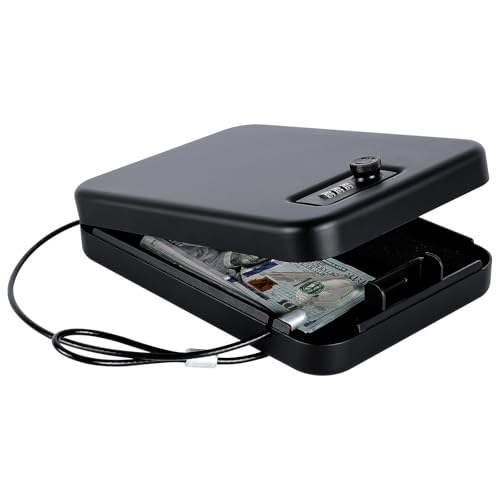
- ✓ Compact and lightweight
- ✓ Durable steel body
- ✓ Includes security cable
- ✕ Not high-security lock
- ✕ Key lock keys may get lost
| Dimensions | 9.4 x 6.4 x 1.8 inches (outer), 9.1 x 6.1 x 0.9 inches (inner) |
| Lock Type | 3-digit combination lock (also available with key lock and 2 keys) |
| Material | Solid steel body with protective foam lining |
| Security Features | Steel security cable for attachment to fixed objects |
| Intended Use | Secure storage for handguns, cash, passports, jewelry in vehicles, home, and travel |
| Weight | Approximate weight not specified; inferred to be lightweight for portability |
Many folks assume that a small safe like this Dalmbox model is just a flimsy box that can be easily pried open or tossed aside. I’ve found that it’s quite the opposite.
When I first handled it, I was surprised by its solid steel construction and how compact yet sturdy it feels in your hand.
The 9.4″x6.4″x1.8″ size is just right for slipping into your glove compartment or a drawer without adding bulk. The foam-lined interior keeps your belongings from scratching or bouncing around during transport.
The 3-digit combination lock is straightforward to set and use, giving you quick access in a pinch.
What really stands out is the included steel security cable. You can attach this to a fixed point in your car or hotel room, adding a layer of security that many basic safes lack.
Plus, with the slim profile and versatile design, it’s perfect for storing not just a pistol but also cash, passports, or jewelry.
On the downside, the 3-digit lock isn’t the most tamper-proof option, especially if you’re concerned about high-security needs. Also, the key lock version comes with keys that could get lost, so it’s best to remember your combination.
Still, for everyday use and peace of mind, this safe hits a sweet spot.
Overall, it’s a practical, affordable solution that fits seamlessly into daily life—whether in your vehicle, at home, or on the go. It’s not heavy-duty security, but it’s perfect for quick access and organization.
What Features Should You Consider When Choosing the Best Glove Compartment Gun Safe?
When selecting the best glove compartment gun safe, there are several key features to consider to ensure security and functionality.
- Size and Fit: It’s crucial to choose a gun safe that fits comfortably within your glove compartment while still accommodating your firearm. Measure the interior dimensions of your glove compartment and compare them with the safe’s dimensions to ensure a snug fit that doesn’t compromise accessibility.
- Security Features: Look for safes that offer robust locking mechanisms, such as biometric locks, keypad entry, or traditional key locks, which provide varying levels of security. The material and construction of the safe should also be durable enough to withstand tampering or theft.
- Portability: A good glove compartment gun safe should be lightweight and easy to transport, allowing for convenient removal when necessary. This portability can also be beneficial for travel, ensuring you can securely store your firearm in different vehicles.
- Fire and Water Resistance: Consider a safe that offers some level of fire and water resistance, providing added protection for your firearm in unexpected situations. This feature can be particularly important if your vehicle is exposed to extreme conditions.
- Ease of Access: The best glove compartment gun safe should allow for quick and easy access to your firearm in emergencies. Look for designs that enable fast opening mechanisms without compromising security, ensuring you can retrieve your weapon without delay.
- Interior Organization: An interior layout that allows for proper organization of the firearm and any accessories, such as extra magazines or cleaning tools, can enhance usability. Some safes come with foam inserts or compartments that help keep everything secure and in place.
- Brand Reputation and Reviews: Researching brand reputation and customer reviews can provide insights into the reliability and effectiveness of the gun safe. A well-reviewed product from a reputable manufacturer is more likely to meet your security needs and expectations.
How Important is the Locking Mechanism for Safety?
The locking mechanism is a critical component for the safety and security of a glove compartment gun safe.
- Mechanical Lock: A mechanical lock is a traditional locking system that uses a combination of gears and tumblers to secure the safe. These locks are generally reliable and do not require batteries, making them a dependable choice for users who prefer a straightforward and durable option.
- Electronic Lock: An electronic lock uses a keypad or biometric scanner to grant access to the safe. This type of lock offers quick access and can be more secure than mechanical locks as they can include features like timed locking mechanisms or multiple user codes, but they do depend on batteries and can malfunction if not properly maintained.
- Biometric Lock: A biometric lock utilizes fingerprint recognition to unlock the safe, providing a high level of security as only registered fingerprints can gain access. This lock type is particularly beneficial for quick retrieval in emergency situations, but it may have limitations in terms of recognizing fingers in various conditions such as wet or dirty hands.
- Key Lock: A key lock is one of the simplest forms of locking mechanisms, requiring a physical key to unlock the safe. While it can be effective, the disadvantage is that losing the key can lead to access issues, and it may not provide the same level of security as more advanced locking systems.
- Smart Lock: A smart lock connects to a smartphone or smart home system and allows for remote access and monitoring. These locks can offer features like alerts for unauthorized access attempts and the ability to change access codes remotely, but they require a stable power source and internet connectivity for full functionality.
Why Does Size and Weight Matter for a Glove Compartment Gun Safe?
The design of a glove compartment requires a safe that is compact enough to fit without obstructing other functions or passenger comfort. A safe that is too large may hinder access to the glove compartment or may even be incompatible with the space available in certain vehicle models. Additionally, a well-fitting safe can also minimize movement during driving, reducing the risk of damage to both the firearm and the safe itself.
Furthermore, the weight of a glove compartment gun safe contributes to its stability within the vehicle. A lighter safe may shift during transit, increasing the chance of it becoming dislodged or the contents shifting, which can lead to accidental discharge or damage. The combination of size and weight ensures that the gun safe remains secure and functional, providing peace of mind to the owner while adhering to safety regulations.
Which Models Are Considered the Best for Glove Compartment Gun Safes?
The best glove compartment gun safes combine security, accessibility, and compact design for safe storage of firearms in vehicles.
- Fort Knox Handgun Safe: Known for its heavy-duty construction and reliable locking mechanism.
- Vaultek VT20i: Features advanced biometric security and smart technology integration.
- On Duty Tactical Pistol Safe: Offers a slim design with quick access and solid locking capabilities.
- SnapSafe Lockbox: Provides versatility and security at an affordable price.
- Barrel Buddy Biometric Safe: Combines sleek design with rapid biometric access and a strong steel build.
Fort Knox Handgun Safe: This safe is crafted from heavy-gauge steel, ensuring durability and resistance against tampering. Its simplex lock system allows for quick access, while the interior is foam-padded to protect your firearm from scratches and damage.
Vaultek VT20i: This innovative safe is equipped with a biometric fingerprint scanner, allowing for fast access while maintaining security. It also features a Bluetooth connection, enabling users to monitor and control the safe via a smartphone app, making it a technologically advanced choice for gun owners.
On Duty Tactical Pistol Safe: This safe is designed to fit seamlessly in the glove compartment while providing quick access to your firearm. Its construction is robust, and it includes a secure locking mechanism, making it an excellent option for those who prioritize speed and security.
SnapSafe Lockbox: This versatile gun safe is lightweight and portable, making it suitable for both vehicle and home use. It features a security cable that can be anchored in your vehicle, ensuring that your firearm remains secure while also being easily accessible when needed.
Barrel Buddy Biometric Safe: With its modern design, this safe offers fast biometric access for immediate retrieval of your firearm. Constructed from high-quality steel, it provides a strong layer of protection against unauthorized access, making it a reliable choice for responsible gun owners.
What Are the Top Recommendations Based on Security Features?
When considering the best glove compartment gun safes, several key models stand out based on their security features:
- Fort Knox PB1 Handgun Safe: This safe is made from heavy-duty steel and features a patented locking mechanism that ensures maximum security. Its compact design fits perfectly in a glove compartment, while the foam-lined interior protects your firearm from scratches and damage.
- VAULTEK VT20i Biometric Handgun Safe: Equipped with a biometric fingerprint scanner, this safe allows for quick access while maintaining high security. It also offers Bluetooth connectivity, enabling you to monitor the safe from your smartphone, making it an excellent choice for tech-savvy users.
- GunVault NV200 NanoVault: This portable safe is constructed from 18-gauge steel and features a key lock system that provides reliable security for your firearm. Its slim profile makes it easy to store in a glove compartment, and it comes with a lightweight design that enhances portability.
- Barska Biometric Safe: This safe utilizes a biometric fingerprint scanner for quick access and can store up to 120 fingerprints, making it ideal for multiple users. Its durable construction ensures that it can withstand tampering, and the interior is padded to protect your firearm from damage.
- Stack-On GCB-900 Steel Security Cabinet: Although larger than typical glove compartment safes, this cabinet offers robust security features such as a three-point locking system and a pry-resistant door. If you have the extra space, it provides ample storage for multiple firearms and accessories while ensuring they remain secure.
How Do Each of These Recommended Models Stand Out?
The best glove compartment gun safes are distinguished by their security features, ease of access, and compact design.
- Fort Knox Pistol Box: This model is known for its heavy-duty construction and reliable locking mechanism.
- Vaultek VT20i Biometric Handgun Safe: It offers advanced biometric technology for quick access and a sleek design.
- Hornady Rapid Safe 2600: This safe emphasizes rapid access with a unique RFID system while ensuring secure storage.
- Stack-On GCB-900 Steel Pistol Safe: It stands out for its affordability and solid build quality, making it a practical choice.
- Barska Biometric Safe: This model features a robust biometric scanner and is designed for versatility in storage options.
The Fort Knox Pistol Box is crafted from 10-gauge steel, making it extremely resistant to tampering or forced entry. Its foam-lined interior ensures that your firearm is protected from scratches while keeping it securely in place.
The Vaultek VT20i Biometric Handgun Safe utilizes a fingerprint scanner that allows you to unlock the safe with just a touch, making it perfect for quick access in emergencies. Additionally, it features Bluetooth connectivity, enabling you to monitor the safe’s status through a mobile app.
The Hornady Rapid Safe 2600 is designed for quick access and can be opened with an RFID wristband or key fob, making it particularly useful for those who may need to access their firearm rapidly. Its durable construction and secure locking system provide peace of mind while traveling.
Stack-On’s GCB-900 Steel Pistol Safe is an economical option that still offers a solid level of security with its steel construction and a key lock. Its compact size makes it suitable for glove compartments without taking up too much space.
The Barska Biometric Safe features a fingerprint scanner that can store multiple fingerprints, allowing access for trusted users while keeping unauthorized individuals out. Its compact design and lightweight build make it a great choice for those looking to secure their firearms discreetly in a vehicle.
How Do You Install a Glove Compartment Gun Safe Properly?
To properly install a glove compartment gun safe, follow these essential steps:
- Choose the Right Safe: Selecting the best glove compartment gun safe involves considering size, security features, and accessibility. Ensure the safe fits snugly within the glove compartment’s dimensions while offering adequate protection against unauthorized access.
- Gather Necessary Tools: Before starting the installation, gather tools such as a drill, screws, a screwdriver, and possibly a measuring tape. Having the right tools at hand ensures a smooth and efficient installation process.
- Measure the Glove Compartment: Accurate measurements of the glove compartment are crucial to ensure the safe fits properly. Measure the depth, width, and height to find a suitable spot that allows for easy access while still being secure.
- Prepare the Safe: If your glove compartment gun safe requires assembly or adjustments, follow the manufacturer’s instructions carefully. This may involve attaching brackets or adjusting the locking mechanism to ensure optimal functionality.
- Mark Drill Points: Once the safe is positioned, use a pencil to mark where the screws will go. This step is essential for ensuring that the safe is securely anchored and won’t shift during driving.
- Install the Safe: Using a drill, carefully make holes at the marked points, ensuring you don’t damage any wiring or components inside the glove compartment. After drilling, attach the safe with screws, ensuring it is firmly secured and does not move.
- Test Accessibility: After installation, check that the glove compartment opens and closes smoothly with the safe in place. Ensure that the locking mechanism operates correctly and that you can easily access the firearm when needed.
- Follow Local Laws: Finally, familiarize yourself with local laws regarding firearm storage and accessibility in vehicles. Ensure that your installation complies with legal requirements to avoid any potential issues.
What Tools Are Essential for Installation?
When it comes to installing a glove compartment gun safe, several essential tools can help ensure a secure and effective installation.
- Drill: A power drill is crucial for creating holes in the glove compartment or surrounding area where screws will be placed. It allows for precise and efficient installation, ensuring that the safe is securely mounted and won’t shift or detach over time.
- Screwdriver: A screwdriver, whether manual or powered, is necessary for driving screws into the pre-drilled holes. It enables you to fasten the safe securely, providing stability and security for your firearm.
- Measuring Tape: Accurate measurements are vital for ensuring that the safe fits properly within the glove compartment. A measuring tape helps you determine the right dimensions to avoid any complications during the installation process.
- Level: Using a level ensures that the gun safe is installed straight and balanced. An uneven installation can lead to functionality issues, so this tool is essential for aligning the safe properly.
- Pencil or Marker: A pencil or marker is useful for marking where holes need to be drilled or where the safe will be placed. This helps in planning the installation layout and ensures that everything is positioned correctly before making permanent alterations.
- Safety Glasses: Safety glasses are important for protecting your eyes from dust and debris while drilling or installing the safe. They are a simple yet effective way to ensure personal safety during the installation process.
- Wrench Set: If your glove compartment gun safe comes with bolts or nuts for mounting, a wrench set will be necessary to tighten those securely. This ensures that the safe is firmly attached and reduces the risk of it being dislodged during driving.
What Are the Best Practices for Securing the Safe in Your Vehicle?
To secure a gun safe in your vehicle, particularly in the glove compartment, consider the following best practices:
- Choose a high-quality gun safe: Opt for a safe made from durable materials that can withstand tampering and theft. Look for features like heavy-duty steel construction and a reliable locking mechanism to ensure that your firearm is well-protected.
- Install the safe securely: Ensure that the safe is mounted or secured in a way that it cannot be easily removed from the vehicle. Use bolts or brackets to attach the safe to the glove compartment or the vehicle’s frame, making it more difficult for thieves to take it.
- Use a reliable locking mechanism: Select a safe with a robust locking system, such as a combination lock, biometric lock, or key lock. A biometric option can offer quick access while maintaining security, making it less likely that you will be delayed in an emergency.
- Keep the safe out of sight: Conceal the safe within the glove compartment or use covers that blend with your car’s interior. Reducing visibility can deter potential thieves from targeting your vehicle, as they won’t know there’s a valuable item inside.
- Regularly check the safe: Periodically inspect the condition of the safe and its mounting to ensure everything is intact and functioning properly. This includes checking for any signs of wear or tampering that might compromise the safety of your firearm.
- Educate yourself on local laws: Be aware of the legal regulations regarding gun storage in vehicles in your area. Different states have varying laws about how firearms should be stored, and understanding these can help you avoid legal issues while ensuring your gun is secured appropriately.
- Practice accessibility: Familiarize yourself with how to access the safe quickly while keeping it secure. This includes practicing the unlocking process to ensure that in a critical situation, you can retrieve your firearm without unnecessary delay.
What Legal Guidelines Should You Follow When Storing a Firearm in Your Vehicle?
When storing a firearm in your vehicle, it is important to follow specific legal guidelines to ensure safety and compliance with the law.
- Local Laws: Always familiarize yourself with the firearm storage laws specific to your state and locality, as regulations can vary widely. Some states may require firearms to be stored in a locked container, while others might have specific rules about where firearms can be placed within the vehicle.
- Glove Compartment Gun Safe: Utilizing a glove compartment gun safe is one of the best practices for securing your firearm while driving. These safes are designed to fit snugly within the glove compartment, providing a secure, lockable space that can prevent unauthorized access to the firearm.
- Concealed Carry Permits: If you are carrying a loaded firearm in your vehicle, ensure you possess the necessary concealed carry permit as required by your state. This not only affirms your legal right to carry but also ensures that you are aware of your responsibilities while transporting a firearm.
- Secure Storage: In addition to using a glove compartment gun safe, consider securing the firearm in a way that minimizes visibility from outside the vehicle. Keeping the firearm out of sight can deter theft and reduce the likelihood of accidental discovery by unauthorized individuals.
- Unloaded Firearm Policy: Some jurisdictions may have laws that stipulate firearms must be unloaded when stored in a vehicle. Adhering to these guidelines can help you avoid legal repercussions and promote safety among passengers.
- Insurance Considerations: Check with your insurance provider regarding coverage for firearms stored in vehicles. Some policies may have specific provisions or exclusions for theft or damage when firearms are left in vehicles, so it’s essential to understand your coverage in case of an incident.
Which Laws Must You Be Aware of Regarding Gun Storage?
When considering gun storage, particularly in a vehicle, it is essential to be aware of several laws that govern this practice.
- State-Specific Gun Storage Laws: Each state has its own regulations regarding how firearms must be stored in vehicles.
- Transport Laws: Laws often dictate how guns should be transported, including whether they must be unloaded and in a secure container.
- Concealed Carry Permits: Regulations may vary based on whether you have a concealed carry permit, affecting where and how guns can be kept in vehicles.
- Child Access Prevention Laws: Many states have laws aimed at preventing children from accessing firearms, which can influence how guns are stored in vehicles.
- Federal Regulations: Certain federal laws apply to firearm storage, especially concerning interstate travel and transport.
State-Specific Gun Storage Laws: It is crucial to understand the specific laws of your state regarding gun storage in vehicles. Some states require firearms to be stored in a separate compartment, while others may have restrictions on visibility and accessibility within the vehicle.
Transport Laws: Many jurisdictions require that firearms be transported in a manner that minimizes the risk of unauthorized access. This often means that guns must be unloaded and placed in a locked container, such as a glove compartment gun safe, to comply with legal standards.
Concealed Carry Permits: If you hold a concealed carry permit, there may be additional provisions regarding where you can keep your firearm in a vehicle. Some states allow for more lenient storage rules for permit holders, while others maintain strict guidelines regardless of permit status.
Child Access Prevention Laws: Many states enforce laws designed to prevent children from accessing firearms. This can impact your choice of storage solutions, necessitating secure gun safes that are childproof to comply with legal obligations and enhance safety.
Federal Regulations: When traveling across state lines, it’s essential to be aware of federal laws that govern the transportation of firearms. The Firearm Owners Protection Act provides some guidelines, but state laws may differ significantly, and understanding these is crucial to avoid legal complications.
How Can You Make Sure You Comply with Local Regulations?
To ensure compliance with local regulations when using a glove compartment gun safe, consider the following methods:
- Research Local Gun Laws: Understanding the specific laws in your area regarding firearm storage and transportation is crucial. Different states or municipalities may have varying regulations about whether a firearm can be kept in a vehicle and how it should be secured.
- Choose an Approved Safe: Select a gun safe that meets safety standards recognized by local law enforcement or regulatory bodies. This may include features such as tamper-proof locks and secure mounting options that comply with legal requirements for firearm storage in vehicles.
- Keep Documentation Handy: Maintain records of your gun safe purchase and any relevant permits or licenses. In the event of a traffic stop or inspection, having this documentation readily available can help demonstrate compliance with laws concerning firearm possession.
- Consult with Local Authorities: If in doubt about regulations, reach out to local law enforcement or a legal expert specializing in firearm laws. They can provide guidance tailored to your specific situation, ensuring you understand any recent changes or nuances in the law.
- Stay Informed on Changes: Laws surrounding firearms can change frequently; thus, staying updated on new regulations is vital. Subscribing to newsletters or following local gun advocacy groups can help you remain informed about any amendments that could affect how you store your firearm in a glove compartment safe.
What Maintenance Should Be Performed on Your Glove Compartment Gun Safe?
Regular maintenance of your glove compartment gun safe is essential for ensuring its reliability and longevity.
- Cleaning the Interior: It’s important to regularly clean the interior of your gun safe to remove dust, debris, and moisture. Use a soft cloth and a mild cleaner to wipe down surfaces, ensuring that the area where your firearm is stored remains dry and free from contaminants that could affect its condition.
- Inspecting the Lock Mechanism: Regularly check the lock mechanism for any signs of wear or malfunction. Ensure that it operates smoothly and consider applying a lubricant specifically designed for locks to keep the mechanism functioning properly, as a sticky or jammed lock could hinder quick access in an emergency.
- Checking for Rust or Corrosion: Examine the safe for any signs of rust or corrosion, especially if it’s subjected to varying temperatures or humidity levels. If you notice any rust, treat it immediately with a rust remover and consider applying a protective coating to prevent further damage.
- Testing the Security Features: Periodically test the security features of your glove compartment gun safe, including the locking system and any alarm features. This ensures that they are functioning properly and provides peace of mind knowing that your firearm is secure.
- Updating the Safe’s Location: If you frequently change vehicles or reconfigure your glove compartment setup, make sure the safe is still securely mounted or properly placed. A safe that shifts or is not securely fastened can be at risk of theft or damage during travel.
How Frequently Should You Inspect Your Safe?
The frequency of inspecting your safe is crucial for ensuring its reliability and security, especially for a glove compartment gun safe.
- Monthly Inspections: Conduct a thorough check of your safe at least once a month to ensure that the locking mechanism functions properly and that there are no signs of wear or damage.
- After Significant Changes: Inspect your safe after any significant life changes, such as moving your vehicle or after long trips, to ensure it remains secure and undamaged during transport.
- Before Major Events: Check your safe before any major events, such as hunting trips or vacations, to make sure that your firearm and any valuables are safely stored and accessible if needed.
- Annual Maintenance: Schedule a more comprehensive inspection and maintenance of your safe at least once a year, which may include lubricating the lock, checking for rust, and ensuring the safe is securely installed in your glove compartment.
Monthly inspections allow you to catch minor issues before they become serious problems, ensuring that your safe is always ready when you need it. Significant changes can impact the integrity of your safe, so it’s essential to verify its condition after such events. Major events may require quick access to your firearm, making pre-inspection vital for peace of mind. Lastly, annual maintenance provides an opportunity to perform deeper checks and keep your glove compartment gun safe in optimal condition for long-term use.
What Cleaning Products Are Safe for Use on a Gun Safe?
When it comes to cleaning a gun safe, it is essential to choose products that will not damage the finish or compromise the protective coatings of your firearm. The following cleaning products are safe for use on a gun safe:
- Microfiber Cloth: A microfiber cloth is excellent for dusting and cleaning surfaces without scratching the finish. Its fine fibers trap dirt and debris effectively, making it ideal for maintaining the interior and exterior of the gun safe without leaving lint behind.
- Non-Abrasive Cleaner: A non-abrasive cleaner, such as a gentle all-purpose cleaner, can be used to wipe down surfaces without causing damage. It is important to ensure that the cleaner is free from harsh chemicals that could corrode protective coatings.
- Gun Oil or Protectant: Using a specialized gun oil or protectant can help maintain the metal surfaces inside the safe. These products not only clean but also provide a protective layer against moisture and rust, which is vital for firearm storage.
- Glass Cleaner (for safes with glass doors): If your gun safe features glass components, a standard glass cleaner is safe to use. It effectively removes fingerprints and smudges, ensuring that visibility remains clear without harming the integrity of the glass.
- Compressed Air: Compressed air is useful for blowing dust and debris out of hard-to-reach areas within the safe. This method is safe and effective for keeping the interior clean without the risk of scratching or damaging surfaces.