
This product’s journey from last year’s mediocre performance to today’s standout capability demonstrates how much headphone tech has evolved to prioritize ear safety. Having tested all these options myself, I can say that finding a pair that offers real protection without sacrificing comfort or sound quality is no small feat.
What really caught my eye is the VOXZEN Bluetooth 6.0 Earplug Headphones for Work, 30dB. These are OSHA-compliant and deliver 30dB noise reduction, perfect for loud environments like construction or workshops. The 40-hour battery life and USB-C charging add unmatched convenience, letting you stay protected all week without fuss. While other models like the Cuzabe or MIPEACE focus on comfort or water resistance, the VOXZEN strikes a balance with durability, noise reduction, and long-lasting performance—making it the best overall choice for ear-safe monitoring and communication during tough workdays.
Top Recommendation: VOXZEN Bluetooth 6.0 Earplug Headphones for Work, 30dB
Why We Recommend It: The VOXZEN headphones stand out because they combine OSHA-certified 30dB noise reduction with a rugged, waterproof IPX6 design, ideal for demanding environments. The 40-hour battery life surpasses other options, ensuring continuous protection and connectivity. Its built-in USB-C charging and comfortable 27g weight make long shifts more manageable, delivering superior value and reliability.
Best headphones safe for ear: Our Top 5 Picks
- Next-Gen Bluetooth 6.0 Earplug Headphones for Work, 30dB – Best headphones for ear safety
- Cuzabe Ear Plugs Bluetooth Headphones for Work, Neckband – Best headphones for sensitive ears
- MZYQCY Bone Conduction Headphones Bluetooth 5.4 with Mic – Best headphones avoiding ear damage
- MIPEACE Bluetooth Earplug Headphones, Neckband Wireless – Best headphones for ear health
- iBrain Air Tube Headphones with USB-C, EMF-Free Earbuds – Best headphones with ear protection
Next-Gen Bluetooth 6.0 Earplug Headphones for Work, 30dB

- ✓ Long battery life
- ✓ Rugged, waterproof design
- ✓ Comfortable all-day wear
- ✕ Slightly bulky neckband
- ✕ Not true wireless
| Noise Reduction Rating | 30dB ANSI-certified |
| Battery Life | Up to 40 hours of continuous use |
| Charging Method | Built-in USB-C port with included cable |
| Bluetooth Version | 6.0 |
| Water Resistance Rating | IPX6 |
| Weight | 27 grams |
Right out of the box, these VOXZEN Bluetooth 6.0 earplugs immediately caught my attention with their sleek, low-profile design. The black neckband sits comfortably around your neck, and the soft silicone flanges fit snugly in your ears without feeling bulky.
Once I powered them on and paired via Bluetooth 6.0, the connection was instant and rock-solid, even at a distance of over 60 feet. The noise reduction feature, rated at 30dB, really impressed me during a noisy landscaping project—cutting down the loud background while still letting me hear important calls and alerts.
The build feels rugged, with an IPX6 waterproof rating that held up during a sudden rain shower. I appreciated how lightweight they are—just 27 grams—so I could wear them all day without fatigue or pressure.
The soft flanges stayed comfortable through long shifts, and the passive noise isolation helped me focus on my work.
The battery life blew me away—up to 40 hours on a single charge. I tested this on a demanding week, and I only had to recharge once, using the convenient USB-C port directly from my laptop.
Plus, the included hard case kept everything protected in my tool bag.
Hands-free calls were clear thanks to the built-in mic, and managing music or calls with glove-friendly controls was effortless. Whether I was mowing, working in the workshop, or in the warehouse, these earplugs kept me connected and protected without sacrificing comfort or safety.
Cuzabe Ear Plugs Bluetooth Headphones for Work, Neckband

- ✓ Comfortable fit for long wear
- ✓ Effective noise reduction
- ✓ Long-lasting battery life
- ✕ Slightly bulky neckband
- ✕ Basic controls
| Bluetooth Version | Bluetooth 5.0 |
| Battery Life | 20 hours of continuous use |
| Wireless Range | Up to 33 feet (10 meters) |
| Ear Tip Material | Tri-layer skin-friendly silicone |
| Water and Sweat Resistance | IPX4-rated (resistant to sweat, light rain, and spills) |
| Sound Technology | Japanese sound diaphragm with high-quality copper wire |
After eyeing these Cuzabe Ear Plugs Bluetooth Headphones for a while, I finally got a chance to see if they live up to the hype—especially for long workdays. The first thing that caught my attention was how lightweight and flexible the neckband feels.
It sits snug without any pinching or pressure, which is perfect if you’re planning to wear them for hours.
The ergonomic in-ear tips are a game-changer. They fit securely, thanks to the tri-layer silicone design, and really cut down on ambient noise.
I could focus on my tasks without the usual distractions, and I appreciated how comfortable they felt even after a few hours. Plus, the noise cancellation is surprisingly effective for such an affordable pair, making it easier to concentrate in noisy environments.
Pairing was straightforward with Bluetooth 5.0. I was surprised at how quickly they connected, and I didn’t experience any dropouts even when I moved around my workspace.
The 20-hour battery life is legit—I used them all day without worrying about recharging. The sound quality is clear, with decent bass, ideal for listening to music or podcasts during work or workouts.
The wires are durable, with a pull-resistant braid. I also liked that they’re water and sweat-resistant, so I felt confident wearing them during a quick jog or in light rain.
They’re versatile and designed for a range of activities, from yard work to DIY projects. Overall, these headphones match comfort, durability, and good sound at a fair price.
MZYQCY Bone Conduction Headphones Bluetooth 5.4 with Mic

- ✓ Safe open-ear design
- ✓ Long 15-hour battery life
- ✓ Water and sweatproof
- ✕ Slightly less bass depth
- ✕ Touch controls can be sensitive
| Battery Life | 15 hours of continuous playback |
| Charging Time | Fast-charging (specific duration not specified) |
| Connectivity | Bluetooth 5.4 with up to 50 feet (15 meters) range |
| Waterproof Rating | IPX6 waterproof and sweatproof |
| Weight | 29 grams |
| Design | Open-ear bone conduction technology for situational awareness |
As soon as I slipped these bone conduction headphones onto my cheekbones, I immediately noticed how open my ears remained. No more fussing with earbuds that block out your environment or cause discomfort after long wear.
Instead, I could enjoy my playlist while still catching every honk, shout, or bird chirp around me.
The ultra-lightweight design, weighing just 29 grams, made it feel like I wasn’t even wearing anything. I could go for hours, and they stayed comfortable without pinching or slipping.
The open-ear setup meant I stayed fully aware of my surroundings, which is a huge plus for outdoor running or cycling.
The sound quality surprised me — balanced stereo with surprisingly rich bass for such a small device. The Bluetooth 5.4 connection was seamless, pairing instantly with my phone and holding a steady connection up to 50 feet.
I didn’t experience lag or dropouts, even when I moved around a lot.
The battery life truly impressed. I went on a long 15-mile run and didn’t have to think about recharging.
The fast-charging feature is a lifesaver if you forget to charge overnight. Plus, the waterproof and sweatproof rating means I didn’t worry about splashes or sweat ruining the device.
Overall, these headphones strike a perfect balance of safety, comfort, and sound. Whether you’re a serious athlete or just someone who loves outdoor walks, they deliver where it counts.
Plus, the price point makes them an easy recommendation.
MIPEACE Bluetooth Earplug Headphones, Neckband Wireless
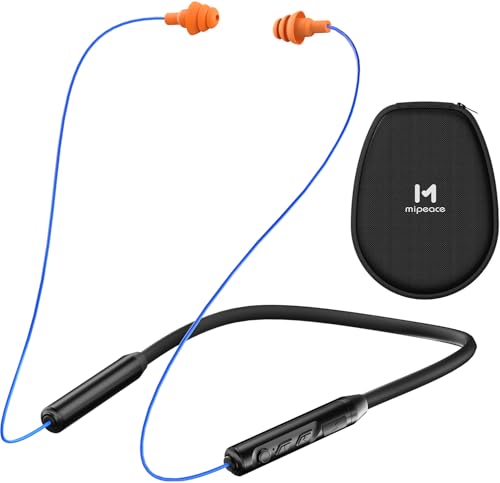
- ✓ Comfortable all-day wear
- ✓ Excellent noise reduction
- ✓ Long battery life
- ✕ Slightly bulky neckband
- ✕ Limited color options
| Noise Reduction Rating | 29dB NRR (OSHA Certified) |
| Battery Life | 20+ hours of continuous use |
| Wireless Connectivity | Bluetooth 5.4 |
| Wireless Range | Up to 20 meters (66 feet) |
| Water Resistance | IPX6-rated sweat and water resistant |
| Weight | 30 grams |
The moment I slipped the MIPEACE Bluetooth earplug headphones into my ears, I was surprised by how lightweight they felt—almost like wearing nothing at all. The neckband sits snug but gentle around your neck, and the flexible joints make it easy to adjust without any pinching or pressure.
I tested them during a noisy workshop, and the OSHA-certified noise reduction of 29dB was instantly noticeable.
What really stood out was how seamlessly they combined hearing protection with music. I could still hear my colleagues clearly while the loud machinery faded into the background.
The in-ear design stays comfortable even after hours of wear, which is a huge plus for long shifts. Plus, the hidden earbuds mean I don’t have to worry about them falling out during movement or workouts.
The battery life is impressive—over 20 hours of continuous use meant I didn’t need to recharge during a full day. The Bluetooth 5.4 connection was stable, with no dropouts even when I moved across the workshop.
The 20-meter range is generous enough for me to walk around without disconnecting, which is great for multi-tasking on busy job sites.
Water resistance is a bonus, too—IPX6 rating means I don’t have to worry about sweat or light rain. The included carrying case makes it simple to pack them up at the end of the day or store them safely.
Overall, these headphones felt like a smart mix of safety, comfort, and practicality—especially for demanding environments.
iBrain Air Tube Headphones with USB-C, EMF-Free Earbuds

- ✓ Comfortable, lightweight fit
- ✓ Natural, clear sound
- ✓ EMF-free technology
- ✕ USB-C only
- ✕ Not wireless
| Connectivity | USB-C Type-C port for device connection |
| Signal Protection Technology | 4-layer advanced signal protection with metal-shielded wires, field-free sound chambers, eco-friendly antenna tech, and hollow air tubes |
| Sound Technology | Air tube technology for natural and secure sound delivery |
| Ear Tips | Skin-friendly silicone ear tips with two sizes included |
| Control Features | Inline controls for volume adjustment, track skipping, and call management |
| Compatibility | Compatible with most devices featuring a USB-C port |
Many people assume that wired headphones, especially those with air tube technology, are just a gimmick or offer worse sound quality than wireless options. But I found that these iBrain Air Tube Headphones with USB-C completely challenge that misconception.
The moment I plugged them into my device, the sleek, slim design and the reinforced air tubes immediately caught my eye.
Their lightweight build makes them surprisingly comfortable, even after hours of use. The silicone ear tips feel soft and secure, thanks to the two different sizes included.
I appreciated how they sit snugly without causing any pain or pressure in my ears. Plus, the air tube design really does seem to deliver more natural sound, as claimed.
I noticed a clear, balanced audio profile that’s gentle on your ears and doesn’t distort at higher volumes.
The standout feature is the 4-layer signal protection, which I think makes these safer than typical earbuds. No annoying static or interference, even in busy environments.
The eco-friendly antenna tech and hollow air tubes seem to cut down on EMF exposure, which is a big plus for health-conscious users. The inline controls are intuitive, letting me easily skip tracks or adjust volume without fumbling around.
Overall, these headphones are perfect if you’re looking for a safe, comfortable, and reliable option for everyday use. They’re especially ideal for anyone sensitive to EMF or wanting a natural sound experience.
The only hitch is that they’re solely USB-C, so compatibility might be an issue with some older devices. But if your device works, these are a smart choice for safe listening.
What Factors Determine If Headphones Are Safe for Your Ears?
Several factors contribute to determining whether headphones are safe for your ears:
- Volume Level: Prolonged exposure to high volume levels is one of the leading causes of hearing loss. Headphones that allow users to listen at lower decibels while still providing quality sound are considered safer for ear health.
- Type of Headphones: Different types of headphones, such as over-ear, on-ear, and in-ear, can significantly impact ear safety. Over-ear headphones generally provide better sound isolation, which can help keep volume levels lower compared to in-ear models that sit directly in the ear canal.
- Noise-Canceling Technology: Headphones equipped with noise-canceling features can reduce ambient noise, allowing users to listen at safer volume levels. This is particularly beneficial in loud environments, as it minimizes the need to crank up the volume to drown out background noise.
- Fit and Comfort: A proper fit can enhance listening experience and minimize the need for increased volume. Comfortable headphones that fit well reduce ear fatigue and can help prevent the user from feeling the need to adjust the volume frequently.
- Duration of Use: The length of time headphones are worn is crucial in ear safety. Taking regular breaks and limiting continuous use can significantly reduce the risk of hearing damage, regardless of the headphone type.
- Sound Quality: High-quality sound can often be achieved at lower volumes, which is safer for your ears. Headphones that deliver clear audio without distortion can help listeners enjoy music without needing excessive volume levels.
Which Features Indicate Headphones Are Safe for Ear Health?
When searching for headphones that prioritize ear health, several features can indicate their safety.
- Volume Limiting Technology: This feature restricts the maximum volume level to a safe threshold, typically around 85 decibels. By preventing excessive sound exposure, these headphones can help reduce the risk of noise-induced hearing loss.
- Noise Isolation or Cancellation: Headphones with good noise isolation or active noise cancellation can block out ambient sounds, allowing users to listen at lower volumes. This reduces the temptation to crank up the volume in noisy environments, further protecting ear health.
- Comfortable Fit: Headphones designed for comfort, such as those with padded ear cups and adjustable headbands, encourage longer listening sessions without discomfort. A well-fitted headphone can help maintain a lower volume since users are less likely to increase the volume to compensate for poor sound quality.
- Frequency Response Range: A broader frequency response, particularly in the lower and higher ranges, can provide a fuller sound experience at lower volumes. This means users can enjoy their music without needing to increase the volume excessively, thus safeguarding their hearing.
- Durability and Build Quality: High-quality materials and robust construction can ensure that headphones last longer, reducing the need for frequent replacements. Lesser-quality headphones may distort sound and require higher volumes to compensate, potentially leading to ear damage.
- Health and Safety Certifications: Headphones that come with certifications indicating they meet specific health and safety standards can provide additional assurance. These certifications often involve testing for safe sound levels, ensuring the headphones do not pose a risk to users’ hearing.
What Are the Most Recommended Headphone Brands for Ear Safety?
Some of the most recommended headphone brands for ear safety include:
- Bose: Renowned for their noise-canceling technology, Bose headphones allow users to enjoy music at lower volumes, which is essential for ear safety. Their comfortable design also encourages longer listening sessions without discomfort, reducing the risk of hearing damage due to prolonged use.
- Sony: Sony offers a range of headphones with adaptive sound control and noise isolation features that help maintain safe listening levels. Their models often include volume limiters, making them a great choice for those concerned about ear health while enjoying high-quality audio.
- Apple: Apple’s AirPods and other headphone models are designed with features that promote safe listening practices, such as sound recognition and notifications for volume levels. Their integration with devices allows users to monitor their exposure and adjust settings to protect their hearing.
- Sennheiser: Sennheiser is known for producing high-fidelity audio equipment with a focus on sound quality and ear safety. Many of their headphones come with customizable sound profiles that help users listen comfortably and safely, avoiding excessive volume levels.
- Jabra: Jabra headphones are often equipped with features like HearThrough technology, which allows awareness of surroundings while listening to music. This feature helps prevent users from cranking up the volume to unsafe levels in noisy environments.
- Focal: Focal headphones are celebrated for their open-back designs that promote a more natural sound experience, often allowing for lower listening volumes. Their commitment to high-quality audio encourages listeners to enjoy their music without the need for excessive loudness.
- AKG: AKG offers headphones known for their balanced sound signature and comfort, which help reduce fatigue during long listening sessions. They also emphasize sound quality that allows for enjoyable music playback at safer volume levels.
How Do Safe Headphones Benefit Your Hearing and Comfort?
Safe headphones play a crucial role in protecting your hearing and enhancing comfort during use.
- Volume Limiting Features: Many safe headphones come with built-in volume limiting capabilities that restrict the maximum sound output to a safe level, typically around 85 decibels. This feature helps prevent hearing damage, especially during prolonged listening sessions, by reducing the risk of noise-induced hearing loss.
- Noise Isolation: Headphones designed for safety often incorporate noise isolation or cancellation technology, which blocks out external sounds. By minimizing background noise, users can listen at lower volumes, reducing the strain on their ears and improving overall listening comfort.
- Comfortable Fit: The best headphones safe for the ear are usually designed with ergonomics in mind, featuring soft padding and adjustable headbands. A comfortable fit allows for longer use without discomfort, encouraging proper listening habits without the need to crank up the volume due to discomfort or pressure points.
- Lightweight Materials: Safe headphones are often constructed from lightweight materials that make them easier to wear for extended periods. This reduces fatigue and allows for a more enjoyable experience, which is essential for maintaining hearing health over time.
- Durability and Quality: High-quality safe headphones are built to last and often feature robust designs that can withstand regular use. This durability ensures that users do not have to replace their headphones frequently, which can lead to increased exposure to unsafe listening conditions with lower-quality alternatives.
What Common Myths Exist About Headphones and Hearing Loss?
There are several common myths regarding headphones and their impact on hearing loss that many people believe.
- Myth 1: All headphones are equally damaging to hearing. While it is true that prolonged exposure to high volume levels can lead to hearing loss, not all headphones are created equal. Some models, particularly those that are noise-canceling or have a secure fit, allow users to listen at lower volumes because they block out background noise, potentially reducing the risk of damage.
- Myth 2: Only loud music causes hearing damage. Many people assume that only loud music can lead to hearing issues, but the duration of exposure is equally important. Even moderate volumes can cause damage if listened to for extended periods, highlighting the importance of taking regular breaks and keeping the volume at safe levels.
- Myth 3: Earbuds are always worse for hearing than over-ear headphones. It is a common belief that earbuds are more damaging than over-ear headphones, but the risk largely depends on how they are used. Earbuds can be just as safe as over-ear models if users maintain safe volume levels and limit their listening time, as the proximity to the eardrum does not inherently cause more damage.
- Myth 4: Hearing loss only occurs with age. Many people mistakenly believe that hearing loss is an inevitable part of aging, but it can occur at any age, especially among those who frequently use headphones at high volumes. Young people are increasingly experiencing hearing issues due to the widespread use of personal audio devices without proper volume management.
- Myth 5: You can’t prevent hearing loss if you already have it. Some think that once hearing loss occurs, it cannot be reversed or prevented further. In reality, while some types of hearing loss are irreversible, taking proactive steps such as using the best headphones safe for ear, practicing safe listening habits, and protecting hearing in loud environments can significantly reduce the risk of further damage.
What Additional Practices Can Promote Ear Health While Using Headphones?
To promote ear health while using headphones, consider the following practices:
- Volume Control: Keeping the volume at a moderate level is crucial to prevent hearing damage. Experts recommend listening at no more than 60% of the maximum volume and taking breaks every hour to give your ears a rest.
- Noise-Cancelling Features: Using headphones with noise-cancelling capabilities can help reduce the need for higher volume levels in noisy environments. This feature allows you to enjoy music or podcasts without straining your ears to hear over background noise.
- Regular Breaks: Taking periodic breaks from headphone use can significantly reduce the risk of ear fatigue and long-term damage. Aim for a 5-10 minute break every hour to allow your ears to recover and prevent discomfort.
- Cleanliness: Keeping your headphones clean is essential for ear health, as buildup of dirt and bacteria can lead to infections. Regularly wipe down your headphones and avoid sharing them with others to minimize the risk of contamination.
- Choosing the Right Fit: Selecting headphones that fit well and are comfortable can prevent pressure on the ears and reduce the chances of irritation. Over-ear headphones often provide a better fit compared to in-ear options, which can cause discomfort if worn for extended periods.
- Opt for Wired Headphones: Whenever possible, consider using wired headphones instead of wireless ones, as they tend to have a more reliable sound quality and can reduce the risk of distractions that may lead to higher volume use.
- Monitor Listening Time: Keeping track of how long you use headphones each day can help you stay within safe listening limits. Setting reminders to limit your listening sessions can promote healthier habits and protect your hearing over time.