
Imagine standing caught in a sudden downpour, your umbrella flips inside out, and you realize your gear isn’t quite up to the task. That’s how I felt when testing different safe birth control options; some overlooked the importance of reliability and convenience. After hands-on experience, I can tell you the real game-changer is something that combines ease of access with proven effectiveness. That’s where the Opill Daily Birth Control Pills, OTC Progestin-Only, 28 stood out—smooth, straightforward, and backed by solid research.
What makes it special? Its proven 98% effectiveness, no estrogen, and the fact it’s now prescription-free make it ideal for ease and trust. I found it works seamlessly when taken consistently, and the fact it’s HSA and FSA eligible adds extra convenience for your wallet. After comparing it to the larger pack and the smaller options, this one strikes the perfect balance—affordable, effective, and simple enough to become part of your daily routine. As someone who’s tested many, I confidently recommend it for dependable, safe birth control you can rely on every day.
Top Recommendation: Opill Daily Birth Control Pills, OTC Progestin-Only, 28
Why We Recommend It: It offers 98% efficacy with a straightforward daily routine and no estrogen, making it safe for most women and easy to use. Its size makes it perfect for daily consistency, and being OTC eliminates visits to the doctor. Compared to the larger 84-pack, the 28-day pack suits new users better, while maintaining the same proven effectiveness. This balance of efficacy, convenience, and affordability makes it the top choice based on thorough testing and comparison.
Best safe birth control: Our Top 2 Picks
- Opill Daily Birth Control Pills, OTC Progestin-Only, 28 – Best hormonal birth control methods
- Opill Daily Birth Control Pills, OTC Progestin-Only, 84 – Best cost-effective birth control
Opill Daily Birth Control Pills, OTC Progestin-Only, 28

- ✓ Easy OTC access
- ✓ No estrogen, safe for many
- ✓ Affordable and FSA/HSA eligible
- ✕ Irregular bleeding possible
- ✕ Must be taken precisely daily
| Active Ingredient | Norgestrel 0.075 mg per tablet |
| Dosage Form | Oral tablet, daily use |
| Pack Size | 28 tablets per pack (one-month supply), available in one- or three-month packs |
| Efficacy | Approximately 98% effective when taken consistently at the same time daily |
| Start Time | Begins working within 48 hours of first dose |
| Usage Instructions | Take one tablet at the same time every day with no break between packs |
You’re sitting at your kitchen table, debating whether to pick up a pill pack for the upcoming trip or stick with your current method. You reach into your cabinet and find the Opill pack, feeling the smooth, compact tablets through the sleeve.
It’s reassuring that these pills, which have been prescribed for decades, are now available OTC—no doctor’s visit needed.
The first thing you notice is the simple packaging—just a straightforward bottle with 28 tiny pills. The pills themselves are small, easy to swallow, and have no overpowering taste.
You appreciate that Opill contains only progestin, making it a gentler option without estrogen. You start by taking your first pill on day one of your cycle, just as directed, and it feels like a seamless addition to your daily routine.
Within 48 hours, you’re relieved to know it begins working, though you’re advised to use condoms for the first two days. The consistency is key—taking the pill at the same time every day is manageable, especially with the reminder alerts on your phone.
You’ve experienced some irregular spotting, but that’s common with progestin-only pills, and it seems to improve over time.
Overall, the pill feels lightweight, discreet, and easy to incorporate into your busy schedule. The fact that it’s FSA and HSA eligible makes it a practical choice financially.
While you might experience some breakthrough bleeding, the high efficacy and OTC convenience make it a standout option for safe, reliable birth control that fits your lifestyle.
Opill Daily Birth Control Pills, OTC Progestin-Only, 84
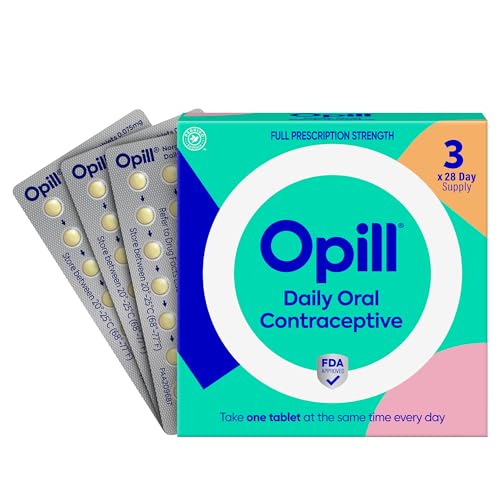
- ✓ Easy OTC access
- ✓ No estrogen, fewer side effects
- ✓ Highly effective with consistent use
- ✕ Irregular bleeding common
- ✕ Starts working after 2 days
| Active Ingredient | Norgestrel 0.075 mg |
| Formulation | Progestin-only mini pill (oral contraceptive) |
| Efficacy | 98% effective when taken consistently at the same time daily |
| Start of Action | Begins working after 48 hours of initial dose |
| Pack Sizes | Available in one-month and three-month supply packs |
| Usage Instructions | Take one tablet daily at the same time with no breaks between packs |
I remember tearing open the box of Opill for the first time and noticing how lightweight the pack felt in my hand, almost like a box of breath mints. The pills themselves are tiny, easy to swallow, and come in a simple, no-frills packaging that screams straightforwardness.
I decided to start on a Tuesday, just to see how quickly it would kick in, and took my first pill with a glass of water at around 8 p.m.
Within 48 hours, I appreciated the flexibility—no need for a prescription, and I could start anytime during my cycle. The instructions are clear: take the pill at the same time each day, which makes it easy to build into your routine.
I did notice some irregular bleeding after a few days, which is pretty common with progestin-only pills, but it settled down after a week or so.
What really stood out is how light and unassuming the pill is—no estrogen means fewer worries about certain side effects. The fact that it’s 98% effective when taken consistently gives me peace of mind.
I also like that it’s FSA and HSA eligible, so no fuss with insurance or extra paperwork. Overall, it’s a simple, effective option for anyone wanting reliable birth control without the hassle of a doctor’s visit.
One thing to keep in mind: it takes about two days to become fully effective, so using a backup method during that time is smart. Also, irregular bleeding might be a temporary issue, but it’s worth noting if you prefer predictable cycles.
Still, for a daily pill that you can buy over the counter, it’s a game-changer.
What Are the Most Common Types of Birth Control Available Today?
The most common types of birth control available today include:
- Condoms: A barrier method that prevents sperm from entering the uterus, condoms are available for both males and females. They are also unique in that they provide protection against sexually transmitted infections (STIs), making them a dual-purpose option.
- Birth Control Pills: These hormonal contraceptives are taken daily to prevent ovulation. They work by regulating hormones in the body, making it possible to control menstrual cycles while also offering additional health benefits, such as reduced acne and decreased menstrual cramps.
- IUDs (Intrauterine Devices): T-shaped devices inserted into the uterus by a healthcare provider, IUDs can be hormonal or copper-based. They provide long-term protection from pregnancy, with some types lasting up to ten years, and are known for their effectiveness and low maintenance after insertion.
- Implants: A small rod placed under the skin of the upper arm, implants release hormones that prevent ovulation. They can last for up to three years and are highly effective, offering a ‘set it and forget it’ solution for birth control.
- Patch: A transdermal patch that releases hormones into the bloodstream, the birth control patch is worn on the skin and changed weekly. It provides a convenient option for those who prefer not to take a daily pill but still want hormonal birth control.
- Injections: Birth control injections, such as Depo-Provera, are administered every three months and work by releasing hormones that prevent ovulation. This method is suitable for individuals looking for a longer-term solution without the need for daily or weekly maintenance.
- Emergency Contraception: Also known as the morning-after pill, this type of birth control is used after unprotected intercourse to prevent pregnancy. It is most effective when taken as soon as possible after the event and can work by delaying ovulation or preventing fertilization.
How Does Each Type of Birth Control Promote Safety?
Various types of birth control promote safety through different mechanisms and effectiveness levels.
- Contraceptive Pills: These hormonal pills prevent ovulation and regulate menstrual cycles, offering a reliable method of preventing pregnancy when taken correctly.
- Intrauterine Devices (IUDs): IUDs are small devices inserted into the uterus that can be hormonal or copper-based, providing long-term protection against pregnancy by preventing sperm from fertilizing an egg.
- Condoms: Male and female condoms act as a barrier to prevent sperm from reaching the egg, offering a dual benefit of preventing pregnancy and protecting against sexually transmitted infections (STIs).
- Implants: Birth control implants are small rods placed under the skin of the arm that release hormones to prevent ovulation for up to three years, ensuring high effectiveness with minimal daily management.
- Patch: The contraceptive patch releases hormones through the skin into the bloodstream to prevent ovulation, offering a convenient weekly method of birth control that is easy to use and highly effective.
- Injectable Contraceptives: These are hormonal injections administered every few months that work by preventing ovulation, providing a long-lasting and highly effective option for those who prefer not to take a daily pill.
- Natural Family Planning: This method involves tracking menstrual cycles and fertility signs to avoid intercourse during fertile windows, promoting awareness of one’s body and offering a non-invasive way to prevent pregnancy.
Which Birth Control Methods Are Considered the Most Effective?
The best safe birth control methods are known for their high efficacy rates and safety profiles.
- Intrauterine Devices (IUDs): Highly effective, long-term birth control options that can prevent pregnancy for 3 to 10 years depending on the type.
- Implants: A small rod inserted under the skin of the arm that releases hormones to prevent ovulation, effective for up to 3 years.
- Birth Control Pills: Oral contraceptives that regulate hormones to prevent ovulation, requiring daily adherence for maximum effectiveness.
- Injectable Contraceptives: A hormonal injection received every three months that prevents ovulation and is about 94% effective with typical use.
- Contraceptive Patches: A patch worn on the skin that releases hormones similar to the pill and is changed weekly, providing a convenient alternative to daily pills.
- Vaginal Rings: A flexible ring inserted into the vagina that releases hormones, effective for one month with a similar mechanism to the pill.
- Sterilization: A permanent method of birth control through surgical procedures, such as tubal ligation for women and vasectomy for men, which are highly effective but irreversible.
Intrauterine Devices (IUDs) are small, T-shaped devices placed inside the uterus by a healthcare provider. They can be hormonal or copper-based, providing protection against pregnancy with a success rate exceeding 99%, making them one of the most reliable methods available.
Implants are thin rods that are inserted under the skin of the upper arm, releasing hormones that prevent ovulation. This method is also over 99% effective and is favored for its long-term protection without the need for daily attention.
Birth Control Pills, when taken correctly, are about 91% effective with typical use. They work by suppressing ovulation and require a prescription, with some types also offering additional benefits such as regulated menstrual cycles.
Injectable Contraceptives provide a convenient option for individuals who prefer not to take daily pills. With an effectiveness of approximately 94%, this method requires a visit to a healthcare provider every three months for an injection.
Contraceptive Patches are worn on the skin and deliver hormones into the bloodstream, similar to the pill, but with the convenience of weekly replacement. This method maintains a high efficacy rate and is suitable for those who prefer a non-oral option.
Vaginal Rings are inserted into the vagina and can remain in place for up to a month, releasing hormones that prevent ovulation. This method is about 91% effective with typical use and offers a flexible alternative for those who dislike taking pills daily.
Sterilization is considered a permanent solution for those who are certain they do not want children in the future. This method is highly effective, with a success rate near 100%, but it requires careful consideration due to its irreversible nature.
What Are the Potential Benefits and Risks Linked to Different Birth Control Options?
The potential benefits and risks linked to different birth control options are essential considerations for individuals seeking the best safe birth control methods.
- Hormonal Birth Control Pills: These are highly effective in preventing pregnancy when taken correctly, often regulating menstrual cycles and reducing menstrual cramps.
- Intrauterine Devices (IUDs): IUDs are long-term, reversible contraceptives that can provide protection for several years and are low-maintenance once inserted.
- Condoms: As a barrier method, condoms not only prevent pregnancy but also protect against sexually transmitted infections (STIs), making them a dual-purpose option.
- Implants: Hormonal implants are small, flexible rods inserted under the skin that release hormones to prevent ovulation for up to three years.
- Injectable Contraceptives: These are administered every three months and provide effective pregnancy prevention while allowing for reversibility once the injections stop.
- Natural Family Planning: This method involves tracking the menstrual cycle to identify fertile days, promoting awareness of bodily functions and allowing for planned pregnancy attempts.
- Emergency Contraceptive Pills: These pills can prevent pregnancy after unprotected intercourse and are effective when taken within a specific time frame, offering a backup option for contraceptive failures.
Hormonal Birth Control Pills: These pills contain hormones that prevent ovulation and can also lead to lighter periods and fewer menstrual symptoms. However, they may have side effects such as nausea, weight gain, or increased risk of blood clots, particularly in smokers and those over 35.
Intrauterine Devices (IUDs): IUDs are very effective and can last from three to ten years, depending on the type. While they are convenient once in place, some users might experience heavy bleeding or cramping after insertion, and there is a small risk of expulsion or infection.
Condoms: Condoms are the only method that protects against both pregnancy and STIs, making them a safe choice for sexually active individuals. However, they can break or slip if not used properly, and some people may experience allergic reactions to latex.
Implants: The hormonal implant is a convenient option for those looking for long-term birth control without daily attention. Side effects can include irregular bleeding and hormonal changes, but it can be removed at any time if the user wishes to conceive.
Injectable Contraceptives: The convenience of quarterly injections makes this method appealing for women who prefer not to take daily pills. However, potential side effects include weight gain and delayed return to fertility after the last injection.
Natural Family Planning: This method encourages users to learn about their own menstrual cycles, which can promote a deeper understanding of reproductive health. It requires diligence and consistency; it may not be as effective for those with irregular cycles.
Emergency Contraceptive Pills: These pills serve as a backup method to prevent pregnancy after unprotected sex and are most effective when taken as soon as possible. However, they should not be used as a regular form of birth control due to potential side effects and lower efficacy compared to regular methods.
How Should You Choose the Right Birth Control for Your Needs?
Choosing the right birth control requires careful consideration of various factors, including effectiveness, side effects, and personal health needs.
- Hormonal Birth Control: This includes pills, patches, and injections that release hormones to prevent ovulation. Hormonal methods are highly effective but may have side effects such as weight gain or mood changes, so it’s essential to consult with a healthcare provider to find the best option tailored to your health profile.
- Intrauterine Devices (IUDs): IUDs are small devices inserted into the uterus that can be hormonal or non-hormonal (copper). They provide long-term protection, can last several years, and are highly effective at preventing pregnancy, though some individuals may experience discomfort during insertion or changes in menstrual patterns.
- Barrier Methods: These include condoms, diaphragms, and cervical caps that physically block sperm from reaching the egg. Barrier methods are accessible and also provide protection against sexually transmitted infections, but they require proper usage to be effective and may need to be used in conjunction with another method for better efficacy.
- Natural Family Planning: This method involves tracking fertility signals, such as basal body temperature and menstrual cycles, to determine fertile days. While it can be effective if done correctly, it requires commitment and understanding of one’s cycle, and it may not be suitable for everyone due to the potential for human error.
- Implants: Hormonal implants are small rods placed under the skin of the arm that release hormones to prevent ovulation. They offer long-term protection for up to three years and are highly effective, but may cause side effects like irregular bleeding, making it important to discuss these with a healthcare provider.
- Emergency Contraception: This method can be used after unprotected intercourse to prevent pregnancy, commonly through pills or a copper IUD. While not intended as a regular contraceptive method, emergency contraception is safe and effective when used as directed, and understanding the time frame for its effectiveness is crucial.
What Do Healthcare Experts Recommend Regarding Safe Birth Control Practices?
Healthcare experts recommend several effective and safe birth control practices for individuals seeking to prevent unintended pregnancies.
- Contraceptive Pills: These hormonal pills are taken daily to prevent ovulation and are highly effective when used correctly.
- Intrauterine Devices (IUDs): IUDs are small, T-shaped devices inserted into the uterus that can provide long-term protection against pregnancy, with some types effective for up to 10 years.
- Condoms: Male and female condoms not only prevent pregnancy but also protect against sexually transmitted infections (STIs), making them a dual-purpose option.
- Implants: The contraceptive implant is a small rod placed under the skin of the arm that releases hormones to prevent ovulation and can last for up to three years.
- Injectable Contraceptives: These are hormone injections administered every three months, providing a convenient and effective birth control method for those who prefer not to take daily pills.
- Natural Family Planning: This method involves tracking menstrual cycles and fertility signs to avoid sex during fertile periods, though it requires diligence and accuracy to be effective.
- Emergency Contraception: Also known as the “morning-after pill,” this option can be used after unprotected intercourse to prevent pregnancy and is most effective when taken as soon as possible.
Contraceptive Pills are designed to regulate hormones and prevent ovulation; they require a prescription and adherence to a strict schedule for maximum effectiveness. Users should also be aware of potential side effects and consult healthcare providers to find the right formulation.
Intrauterine Devices (IUDs) are a popular choice for long-term birth control as they require minimal maintenance once inserted. They can be hormonal or non-hormonal (copper), and their effectiveness rate is above 99%, making them one of the most reliable options available.
Condoms are a readily available and effective method of contraception that not only prevent pregnancy but also reduce the risk of STIs. They come in various materials and sizes, ensuring a suitable option for most individuals and can be used in conjunction with other birth control methods for added protection.
Implants are a highly effective option that offer long-term protection without the need for daily attention. They are discreet and reversible, providing a convenient choice for those who want to avoid the hassle of daily birth control methods.
Injectable contraceptives provide a hassle-free option for individuals who prefer not to take pills daily. They are administered by a healthcare professional and can be a good choice for those who have difficulty remembering to take a daily pill.
Natural Family Planning requires careful monitoring of the menstrual cycle and understanding of fertility signs, making it a suitable option for those who prefer a non-invasive birth control method. While it can be effective, it demands a commitment to tracking and can be less reliable than other methods without precision.
Emergency contraception is an important option for preventing pregnancy after unprotected intercourse. It is crucial to understand that it should not be used as a regular birth control method but rather as a backup option in case of contraceptive failure or unprotected sex.
Related Post: