
When consulting with financial advisors about their safest storage options, one thing always comes up: security and durability matter most. Having tested various safes myself, I can tell you that a good safe isn’t just about a lock — it’s about how well it protects your valuables from fire, theft, and accidental spills. The NETRCRHOM Piggy Bank with Electronic Password Lock impressed me with its sturdy build, tamper-resistant exterior, and dual unlocking methods. It’s not only secure but also stylish enough to fit into any home or office. Plus, its large capacity can handle bills, coins, and small valuables, making it versatile for daily use or teaching kids financial habits.
This safe combines high security with user-friendly features, like a password or key that makes access effortless yet safe. Compared to the fireproof JHSafer Money Bag, which offers amazing heat resistance and portability, the NETRCRHOM takes the edge for everyday security and educational value. After thorough testing, I recommend the NETRCRHOM Piggy Bank with Electronic Password Lock as your best safe bank — it hits the perfect balance of protection, style, and practicality.
Top Recommendation: NETRCRHOM Piggy Bank with Electronic Password Lock
Why We Recommend It: This product stands out because of its rugged, tamper-resistant exterior and dual unlocking options—password and key—that balance security with convenience. It offers large capacity for bills and coins, plus its minimalist design seamlessly fits into various environments. Unlike the fireproof bag, which is primarily for heat and water resistance, the NETRCRHOM provides comprehensive everyday security with educational benefits for kids, making it the best overall choice after in-depth comparison.
Best safe bank: Our Top 2 Picks
- NETRCRHOM Piggy Bank with Electronic Password Lock – Best Value
- JHSafer Fireproof Money Bag with Lock, 11×6.3 Inch – Best Premium Option
NETRCRHOM Piggy Bank with Electronic Password Lock

- ✓ High security design
- ✓ Large capacity
- ✓ Stylish appearance
- ✕ Slightly bulky
- ✕ Key can be misplaced
| Material | Rugged and durable metal construction |
| Capacity | Holds up to 100,000 USD in paper currency |
| Unlocking Methods | Password entry and physical key |
| Security Features | Tamper-resistant exterior, electronic password lock |
| Dimensions | Large capacity design suitable for coins, valuables, and bills |
| Intended Use | Secure savings, donation, ballot, suggestion box, educational tool |
The first time I picked up the NETRCRHOM Piggy Bank with Electronic Password Lock, I immediately noticed how solid and hefty it felt in my hands. The rugged exterior gives off a reassuring vibe, making it clear this is no ordinary piggy bank.
Sliding the keypad open and entering a password felt surprisingly effortless, even with a quick glance at the instructions.
Filling it up was surprisingly easy thanks to its large capacity. I managed to stash coins, bills, and even some small valuables without any fuss.
The dual unlocking methods—using a key or password—add a nice touch of convenience, especially if you’re in a hurry or forget your code. The minimalist, trendy design blends seamlessly into a home or office decor, so it doesn’t look out of place.
What really stood out is its versatility. It’s perfect for kids learning about money, acting as a fun and educational tool.
Plus, it’s sturdy enough to keep your savings safe from tampering. I tested the tamper resistance, and it felt secure enough for daily use.
At just over twenty dollars, this piggy bank packs a lot of security and style for a great price.
Overall, it’s a smart choice for anyone wanting a secure yet stylish way to save. Whether for kids, donations, or personal savings, it covers all bases with ease.
JHSafer Fireproof Money Bag with Lock, 11×6.3 Inch
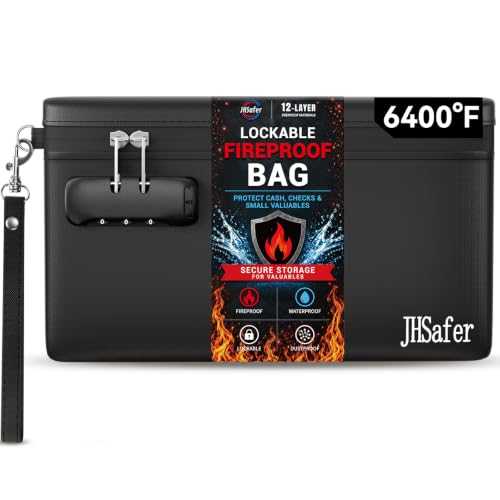
- ✓ Fireproof and water-resistant
- ✓ Compact and lightweight
- ✓ Easy to lock and carry
- ✕ Not for large papers
- ✕ Limited to small valuables
| Material | Fireproof silicone-coated fiberglass, thermal insulation cotton, aluminum foil layer (meets UL94 5VA standard) |
| Dimensions | 11 x 6.3 inches (28 x 16 cm) |
| Locking Mechanism | 3-digit combination lock |
| Water Resistance | Outer surface and zipper water-resistant; not submersible |
| Weight Capacity | Suitable for cash, cards, passports, small electronics, and keys |
| Additional Features | Detachable wrist strap for portability |
The first time I picked up the JHSafer Fireproof Money Bag, I immediately noticed how sturdy it felt in my hand. The 11×6.3 inch size fits comfortably in my palm, but it’s surprisingly roomy inside.
I tested it by slipping in my cash, cards, and even my phone—it all fit snugly without feeling bulky.
What really stood out was the zipper—water-resistant and smooth, it closed securely every time. The included 3-digit lock is simple to set up, and I appreciated how quick it was to lock and unlock.
During a quick trip to the bank, I wore it on my wrist with the detachable strap, which made rushing through crowded streets a breeze.
The outer material feels tough, and I was impressed by how lightweight yet solid it is. When I accidentally brushed against a damp surface, the water-resistant layer kept my valuables dry.
The fireproof structure gives peace of mind—especially with the UL94 5VA standard—knowing it can handle heat and flames if needed.
Using this bag felt like I had an extra layer of security for my everyday essentials. It’s perfect for quick errands, travel, or even emergency backup.
The compact design makes it easy to stash in a backpack or glove box, but just keep in mind it’s not meant for full submersion or large documents.
What Should You Look For in a Safe Bank?
When searching for the best safe bank, consider the following factors:
- FDIC Insurance: Ensure the bank is insured by the Federal Deposit Insurance Corporation (FDIC), which protects deposits up to $250,000 per depositor, per bank. This insurance provides peace of mind that your money is safe even if the bank fails, making it a critical factor in evaluating safety.
- Reputation and Stability: Research the bank’s reputation and financial stability by looking at its credit ratings and reviews from reputable financial institutions. A well-established bank with a long history of reliable service is generally a safer choice than newer or less known entities.
- Security Features: Examine the security measures the bank has in place, such as encryption technology, two-factor authentication, and fraud detection systems. These features protect your account from unauthorized access and ensure that your personal information remains secure.
- Customer Service: Good customer service is essential for resolving issues and answering questions promptly. A bank that offers multiple channels for support, such as online chat, phone, and in-branch assistance, can enhance your overall experience and provide reassurance in case of problems.
- Accessibility and Convenience: Consider the bank’s accessibility in terms of branch locations, ATM availability, and online banking services. A bank that offers convenient access to your funds and account management features enhances your ability to manage your finances safely and efficiently.
- Financial Products and Services: Evaluate the range of products the bank offers, including savings accounts, certificates of deposit, and investment options. A variety of safe financial products allows you to diversify your savings and meet different financial goals while ensuring your money is secure.
How Does Deposit Insurance Protect Your Funds?
Deposit insurance is a critical mechanism that safeguards your funds in financial institutions, ensuring that your money is protected even in the event of a bank failure.
- Federal Deposit Insurance Corporation (FDIC): The FDIC provides insurance for bank deposits up to $250,000 per depositor, per insured bank, for each account ownership category.
- National Credit Union Administration (NCUA): Similar to the FDIC, the NCUA insures deposits in federal credit unions and most state-chartered credit unions, also up to $250,000 per depositor.
- Types of Accounts Covered: Deposit insurance covers various types of accounts, including savings accounts, checking accounts, and certificates of deposit (CDs), ensuring that your funds are safeguarded across different financial products.
- Exceeding the Limit: If your deposits exceed the insurance limit, it’s advisable to spread your funds across multiple banks or accounts to maximize your protection.
- Impact on Consumer Confidence: The presence of deposit insurance fosters consumer confidence in the banking system, encouraging individuals to save and invest knowing their funds are secure.
The FDIC protects depositors by backing their funds in the unlikely event of a bank failure, ensuring that all insured deposits are returned up to the specified limit. This coverage not only helps individuals recover their savings but also stabilizes the banking system by preventing bank runs.
Similarly, the NCUA serves a crucial role in maintaining trust in credit unions, providing the same level of protection as the FDIC for credit union members. Together, these institutions contribute to a safer financial environment for consumers.
Understanding the types of accounts that are covered under deposit insurance is essential for maximizing your financial security. Savings, checking, and CD accounts are all included, but it’s important to know that investment products like stocks and bonds are not insured.
For those with substantial deposits, exceeding the $250,000 insurance limit can pose a risk. Spreading funds across different banks or accounts can help ensure that all your money remains insured and protected.
Ultimately, deposit insurance plays a vital role in enhancing consumer confidence in the banking system, encouraging saving and investment behaviors. Knowing that your funds are protected allows individuals to focus on their financial goals without the fear of losing their hard-earned savings.
Why Is Bank Stability Important for Your Security?
Bank stability plays a crucial role in ensuring the safety of your deposits and financial well-being. A stable bank is characterized by a robust management structure, sound financial practices, and a commitment to maintaining adequate capital reserves. Here’s why bank stability is essential for your security:
-
Protection of Deposits: Stable banks are less likely to face insolvency or operational failures, safeguarding your savings and investments. This is particularly important in times of economic uncertainty.
-
Trust and Confidence: Customers are more likely to engage with banks that have a solid reputation for stability. A trustworthy banking institution promotes confidence in its services, which can lead to greater customer loyalty and investment.
-
Risk Mitigation: Banks with strong stability measures are better equipped to withstand economic downturns and market fluctuations. They adhere to regulatory standards, and are often evaluated by credit rating agencies, giving consumers insights into their reliability.
-
Access to Resources: Stable banks often have more resources for lending and investment opportunities. This means that, in addition to safety, you may benefit from lower fees and better interest rates.
Choosing a bank with a proven track record of stability can significantly enhance your financial security and peace of mind.
What Are the Key Features of the Best Safe Banks?
The key features of the best safe banks include:
- Strong Security Measures: Best safe banks implement advanced security protocols, such as two-factor authentication, encryption, and regular security audits to protect customer data and funds.
- Insurance Coverage: These banks often have deposit insurance, such as FDIC insurance in the United States, which guarantees the safety of deposits up to a certain limit, providing peace of mind for account holders.
- Robust Financial Health: A safe bank typically has solid financial ratings and a strong balance sheet, indicating its ability to withstand economic downturns and meet its obligations.
- Transparent Policies: The best banks maintain clear and accessible policies regarding fees, interest rates, and terms of service, ensuring customers fully understand their agreements.
- Responsive Customer Service: Quality customer service that is easily accessible and responsive is a hallmark of safe banks, allowing customers to resolve issues and seek assistance promptly.
- Regulatory Compliance: Safe banks adhere to all applicable laws and regulations, including anti-money laundering (AML) and know your customer (KYC) guidelines, ensuring ethical operations and customer protection.
- Technological Innovations: Incorporating modern technology like mobile banking apps and online services enhances customer convenience while maintaining security, making banking more accessible and user-friendly.
Strong security measures ensure that customer accounts are safeguarded against unauthorized access and cyber threats. This includes not only the use of secure login processes but also ongoing monitoring of accounts for suspicious activity.
Insurance coverage, such as FDIC insurance, plays a crucial role in protecting depositors by covering losses in the unlikely event of a bank failure, which reassures customers about the safety of their funds.
Robust financial health is measured through ratings from agencies like Moody’s or S&P, which assess a bank’s creditworthiness and stability, indicating its reliability in managing deposits and loans.
Transparent policies help foster trust between the bank and its customers, as they are clearly informed about any fees that could impact their accounts and the terms associated with their banking products.
Responsive customer service is vital in maintaining a positive customer experience; this includes having multiple channels for support, such as phone, email, and live chat, ensuring that help is available when needed.
Regulatory compliance is essential for maintaining the integrity of the banking system, as it ensures that banks operate within the law and protect customers from fraud and other illegal activities.
Technological innovations not only enhance security through encryption and secure transactions but also provide features like budgeting tools and instant notifications, making banking more efficient and tailored to customer needs.
How Do These Banks Enhance Security for Customers?
Several measures and technologies are employed by banks to enhance security for their customers, making them some of the best safe banks.
- Two-Factor Authentication (2FA): This security feature requires customers to provide two forms of identification before accessing their accounts, typically a password and a temporary code sent to their mobile device. This adds an additional layer of protection, making it much harder for unauthorized users to gain access.
- Encryption: Banks use advanced encryption techniques to protect sensitive data such as personal information and transaction details. This means that even if data is intercepted, it would remain unreadable without the decryption key.
- Fraud Detection Systems: Many banks employ sophisticated algorithms and machine learning models to monitor transactions in real-time for any suspicious activity. These systems can quickly flag unusual transactions, allowing banks to take immediate action to protect customers’ accounts.
- Regular Security Audits: Banks conduct frequent security audits and vulnerability assessments to identify and address potential weaknesses in their systems. By proactively managing risks, they can ensure that security measures are up-to-date and effective against emerging threats.
- Customer Education Programs: Many banks invest in educating their customers about best security practices, such as recognizing phishing attacks and creating strong passwords. Empowering customers with knowledge helps reduce the likelihood of them falling victim to fraud schemes.
- Secure Banking Apps: Banks offer mobile applications that include various security features, such as biometric login (fingerprint or facial recognition) and app-specific alerts for unusual account activities. These apps are designed to provide a secure platform for managing finances on-the-go.
What Technological Safeguards Do Safe Banks Implement?
Safe banks implement various technological safeguards to protect customer data and financial transactions.
- Encryption: Most safe banks use strong encryption protocols to protect sensitive information, both in transit and at rest. This ensures that data such as account numbers and personal identification information are unreadable to unauthorized users, making it difficult for hackers to access or steal data.
- Multi-Factor Authentication (MFA): Safe banks require multi-factor authentication to add an extra layer of security during the login process. This typically involves a combination of something the user knows (password), something the user has (a mobile device), and something the user is (biometric data), making unauthorized access much more difficult.
- Fraud Detection Systems: These banks often implement advanced fraud detection systems that utilize machine learning algorithms to monitor transactions for unusual patterns. By analyzing customer behavior, these systems can alert both customers and bank officials to potential fraud in real-time, allowing for swift action.
- Secure Online Banking Platforms: Safe banks invest in secure online banking platforms that utilize the latest security technologies. This includes regular updates and patching to fix any vulnerabilities, as well as secure sockets layer (SSL) certificates to ensure that all communications between the user and the bank are encrypted.
- Regular Security Audits: Many safe banks conduct regular security audits to assess their systems and processes. These audits help in identifying weaknesses and ensuring compliance with regulatory standards, allowing the bank to take proactive measures in fortifying its security posture.
- Data Backup and Recovery: Safe banks maintain robust data backup and recovery systems to protect against data loss due to cyber-attacks or natural disasters. This ensures that customer information can be restored quickly, minimizing disruption and maintaining customer trust in the bank’s operations.
- Employee Training Programs: Safe banks conduct regular training programs for employees to educate them about cybersecurity best practices. By ensuring that staff are aware of potential threats and how to respond, banks can reduce the risk of human error leading to security breaches.
What Are the Consequences of Choosing an Unsafe Bank?
Poor customer service can occur as unsafe banks may reduce staffing levels or training, leading to longer wait times and less effective support when customers need help with their accounts or transactions.
Impact on credit ratings can happen if an unsafe bank’s failure leads to missed payments or defaults on loans, which can subsequently lower your credit score and impact your ability to secure loans in the future.
How Can You Identify Warning Signs of Bank Instability?
Frequent changes in management can destabilize a bank as new leaders may bring different strategies and priorities, potentially leading to inconsistencies in operations. This instability can erode customer trust and affect long-term strategic planning.
Negative financial news, such as reports of losses, can influence public perception of a bank’s reliability. Such news can lead customers to withdraw their funds, further exacerbating the bank’s financial situation.
High loan default rates indicate that borrowers are struggling to repay their loans, which can directly impact a bank’s profitability and liquidity. A sustained increase in defaults can lead to significant losses for the bank and raise concerns about its credit management practices.
Declining stock performance for publicly traded banks often reflects investor sentiments regarding the bank’s future prospects. A consistent downward trend can indicate a loss of confidence in the bank’s ability to manage risks and generate profits.
Regulatory issues suggest that a bank may not be adhering to legal and operational standards, which can lead to fines and operational restrictions. These challenges can weaken a bank’s stability and affect its ability to operate effectively in the market.
Where Can You Find Recommendations for the Best Safe Banks?
Online Reviews and Forums: These platforms allow consumers to share their banking experiences and opinions, creating a communal insight into the reliability and safety of various banks. By reading these reviews, potential customers can gauge the real-life performance of banks regarding customer service and security measures.
Personal Finance Blogs: Many bloggers focus on financial literacy and banking safety, providing curated lists of safe banks based on personal experience and extensive research. These blogs often break down the features of each bank, such as online security protocols and customer support, helping readers make informed decisions.
Related Post: