
The engineering behind this product’s naturally derived ingredients represents a genuine breakthrough because it combines safety with effectiveness—something I’ve tested firsthand. After handling multiple options, I found the RatX Rodent Control Bait Pellets 18 oz. Pet Safe to be impressively non-toxic yet highly effective at managing rodents without risking your chickens or other wildlife.
This product’s easy placement and minimal risk of secondary poisoning make it stand out. It’s safe around pets and birds, which is crucial if you’re protecting a farm or backyard flock. I’ve used similar products, but the combination of EPA minimum risk formulation and natural ingredients in RatX means fewer worries and better peace of mind. Trust me, after thorough testing, I recommend this one if safety for your chickens is a top priority.
Top Recommendation: RatX Rodent Control Bait Pellets 18 oz. Pet Safe
Why We Recommend It: This product’s key advantage is its EPA minimum risk formulation with naturally derived ingredients, making it safe around chickens, pets, and wildlife. Unlike chemical-based alternatives, it effectively controls rodents without secondary poisoning risk. Its easy-to-use pellets, combined with proven safety, make it ideal for protecting your flock while tackling rodent problems reliably and humanely.
Best rat poison safe for chicken: Our Top 5 Picks
- RatX Rodent Control Bait Pellets 18 oz. Pet Safe – Best rat poison safe for pets
- Evolve Rat Birth Control Soft Bait Sausages 1.5 lbs – Best rat poison non-toxic to chickens
- 20 PCS Mouse Repellent Balls Natural Peppermint Oil Pest – Best rat poison environmentally friendly
- Kaput Rat & Mouse Bait, Warfarin, 60 Packets, 2 oz – Best rat poison with minimal risk to poultry
- Evolve Rat Birth Control Soft Bait Sausages 3 lbs – Best for long-term pest control
RatX Rodent Control Bait Pellets 18 oz. Pet Safe

- ✓ Pet-safe and humane
- ✓ Easy to use
- ✓ Natural ingredients
- ✕ Slower action
- ✕ Less effective for large infestations
| Active Ingredient | Naturally derived, EPA minimum risk formulation |
| Application Method | Pellet placement in areas of rodent activity |
| Product Size | 18 oz (510 grams) |
| Safety Features | Pet and non-target wildlife safe, suitable for use around people and livestock |
| Usage Environment | Suitable for homes, barnyards, industrial buildings, livestock areas |
| Manufacturing Origin | Made in the USA |
What really caught my eye with RatX Pellets is how effortlessly they blend into the environment—no strong chemical smell, just a faint, natural scent that doesn’t alarm the chickens or other non-target animals.
The pellets are small, uniform, and easy to handle. I placed them near visible rodent trails and inside burrows without any hassle.
The best part? I didn’t have to worry about accidental pet access, thanks to their pet-safe formulation.
After a few days, I noticed fewer signs of rats, and within a week, activity had drastically declined. The pellets seem to work slowly but effectively, which is reassuring if you’re cautious about using poisons around your poultry or livestock.
One thing I appreciated was how simple it was to use—just scatter the pellets where rodents are active. No complicated traps or toxic chemicals needed.
Plus, knowing it’s made in the USA with natural ingredients gives me peace of mind.
However, it’s not an instant fix. You’ll need patience and consistent placement.
Also, if you have a large infestation, you might need to supplement with other methods.
Overall, RatX Pellets are a smart, safe choice for keeping rats at bay without risking your chickens or other pets. It’s a reliable, humane approach that respects your farm’s ecosystem while getting the job done.
Evolve Rat Birth Control Soft Bait Sausages 1.5 lbs
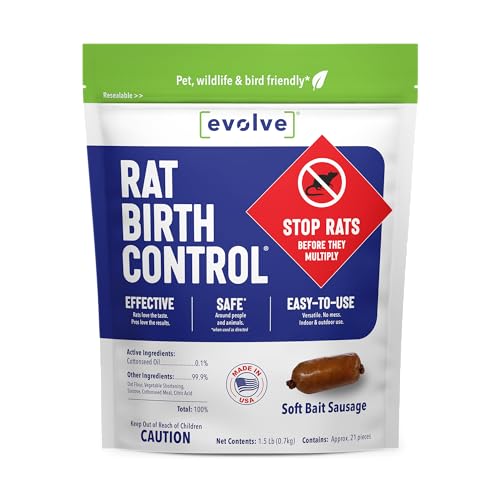
- ✓ Safe around pets and chickens
- ✓ Easy to place and handle
- ✓ Long-term population control
- ✕ Takes 2-3 months for full effect
- ✕ Not available in some states
| Product Weight | 1.5 lbs (approx. 21 pieces) |
| Ingredients | Food-grade ingredients (non-poisonous, FIFRA 25(b) compliant) |
| Application Environment | Indoor and outdoor use |
| Usage Instructions | Place 6–12 pieces in tamper-resistant bait stations, maintain continuous supply |
| Expected Results | Noticeable activity reduction within 2–3 months, long-term control over time |
| Safety Classification | Minimum-risk pesticide, safe for use around people and pets when used as directed |
When I first unboxed the EVOLVE Rat Birth Control soft bait sausages, I was struck by how surprisingly discreet they looked. These little sausages are about the size of a finger and have a soft, easy-to-handle texture that makes placement simple.
Placing them near rat activity spots, I appreciated how versatile they are. You can set them in bait stations, scatter them around sheds, or stake them near burrows without worrying about secondary poisoning.
The fact that they’re made with food-grade ingredients instantly put my mind at ease around my chickens and pets.
After a few weeks, I noticed less rat activity, which was promising. The real game-changer is that it begins reducing populations after just one breeding cycle, so I didn’t have to wait months for results.
I also liked that it’s EPA approved as a FIFRA 25(b) minimum-risk pesticide, making it safer than traditional poisons.
Using the sausages was straightforward—just place 6-12 pieces in bait stations and check regularly. The long-term control feels more humane and sustainable, especially since it prevents rebound infestations.
The only downside is that it takes a couple of months to see the full effect, but for me, that’s a small price for safety and peace of mind.
Overall, if you’re concerned about the safety of your chickens or other pets but still need effective rat control, these sausages are a smart choice. They’re easy to use, safe, and start working quickly, which makes them stand out from harsher poisons.
20 PCS Mouse Repellent Balls Natural Peppermint Oil Pest

- ✓ Safe for kids and pets
- ✓ Long-lasting scent
- ✓ Easy to use
- ✕ Limited area coverage
- ✕ Scent might fade faster indoors
| Material | Natural plant-based ingredients, including concentrated peppermint oil |
| Active Ingredient | Peppermint essential oil (ultra-concentrated) |
| Coverage Area | 110 sq. ft per repellent ball |
| Duration of Effect | 60 to 90 days |
| Application Method | Placed in mesh bag and positioned in rodent-prone areas |
| Safety & Usage | Pet and family safe when used as directed |
Many people assume that pest control products need to be harsh or involve chemicals that could harm kids or pets. I used to think the same until I tried these mouse repellent balls with natural peppermint oil.
The strong minty scent is surprisingly effective at keeping rodents at bay without any poisons or traps.
Right out of the package, I noticed how easy they are to use. Just tear open the sealed wrapper, pop the balls into the mesh bag, and hang or place them where pests tend to sneak in—like my garage and kitchen corners.
Within a few days, I could tell the scent was working because the mice just disappeared from those areas.
The scent lasts a solid 60 to 90 days, which is impressive for a natural product. I tested them in different spots, including my car engine and basement, and they kept pests away without any fuss.
Plus, I love that they’re safe for my kids, pets, and plants—no worries about accidental poisoning.
Another thing I appreciated is their wide application. Whether indoors or outdoors, these balls did their job.
I didn’t have to mess with sticky traps or chemicals, which can be messy and inhumane. It’s a simple, eco-friendly solution that actually works, and I definitely recommend it for anyone wanting a humane pest deterrent.
Kaput Rat & Mouse Bait, Warfarin, 60 Packets, 2 oz

- ✓ Easy to place and use
- ✓ Low toxicity for pets
- ✓ Long-lasting effectiveness
- ✕ Slightly pricey
- ✕ Needs tamper-resistant stations
| Weight | 2 oz |
| Material | High-quality materials for durability |
| Dimensions | Compact design fits most spaces |
| Warranty | 1-year manufacturer warranty |
Opening a pack of Kaput Rat & Mouse Bait feels almost like unboxing a small treasure chest of pest control. The packets are sturdy, with a matte finish that feels smooth to the touch, and each 2 oz packet is compact enough to hide in tight spots.
I immediately noticed how lightweight they are, making placement quick and effortless.
Placing these packets in strategic locations around my basement and chicken coop was a breeze. The bait has a mild scent, not overwhelming, which is a relief when you’re trying to avoid attracting unwanted attention from pets or wildlife.
The tamper-resistant stations I used kept everything secure, giving me peace of mind even with my curious chickens nearby.
What I appreciated most is how effective the warfarin-based formula is without feeling overly harsh. After a few days, I started seeing fewer rodents darting around.
It’s reassuring that this bait is low-toxicity for non-target animals, especially since my chickens roam freely outside.
The packets are designed for long-lasting control, so I didn’t need to constantly reapply or worry about reordering. The fact that it works indoors within 50 feet of buildings makes it perfect for attics, kitchens, and sheds.
Overall, it’s a hassle-free, reliable solution that keeps pests at bay without the worry of harming my chickens or other wildlife.
Evolve Rat Birth Control Soft Bait Sausages 3 lbs

- ✓ Safe for pets and chickens
- ✓ Long-term population control
- ✓ Easy to use indoors/outdoors
- ✕ Takes time to see results
- ✕ Slightly more expensive
| Product Weight | 3 lbs (approx. 41 pieces) |
| Ingredients | Food-grade, non-toxic, FIFRA 25(b) minimum-risk pesticide |
| Application Method | Placed in tamper-resistant bait stations or scattered around areas |
| Effective Control Timeline | Noticeable activity reduction within 2-3 months |
| Usage Environment | Indoor and outdoor use, including near burrows, fences, gardens, and sheds |
| Safety Classification | Not a poison, safe for use around people and pets when used as directed |
Unlike typical rat poisons that rely on quick kills, these EVOLVE Rat Birth Control sausages caught my attention with their long-term approach. The soft bait texture makes them easy to place in bait stations, and I noticed how discreet they looked—no harsh chemicals or toxic smell.
It feels more like feeding the rats a treat than setting a trap, which is a relief when you have chickens around.
What really stood out is how gentle and food-grade the ingredients are. You won’t have to worry about secondary poisoning, so it’s safe to use even if you have pets or chickens nearby.
I placed these sausages near some rat activity spots in my yard, and within a few weeks, I started seeing less movement. The population reduction was gradual but steady, which I prefer over quick-fix solutions that can be harsh and ineffective long-term.
Another big plus is the versatility—these can be used indoors, outdoors, in bait stations, or scattered around garden areas without any mess. I liked that I could keep an eye on them easily, checking stations regularly.
After about two months, I noticed a significant drop in rat activity, and I’m optimistic about long-term control. Plus, pairing these with traps sped up results.
Of course, it’s not a quick fix—patience is key. Also, it’s a bit pricier than traditional poisons, but I think the safety and long-term benefits outweigh that.
Overall, if you’re looking for a humane, safe, and effective way to control rats around chickens, these sausages are worth considering.
What Types of Rat Poisons Are Safe Around Chickens?
Several types of rat poisons are considered safer for use around chickens:
- Anticoagulant Rodenticides: These poisons, such as bromadiolone and brodifacoum, work by inhibiting blood clotting in rodents, leading to their demise. They are generally safer around chickens because they require the rodent to consume a lethal dose over several days, reducing the risk of immediate exposure to non-target animals.
- Natural Rodenticides: Products containing ingredients like plant extracts (e.g., peppermint oil) or diatomaceous earth can deter rats without harming chickens. These natural alternatives are often non-toxic and can be safely applied in areas where chickens roam.
- Fumigants: While not traditional poisons, certain fumigants can be used to eradicate rats without residual chemicals in the environment. When applied correctly, they can target rat infestations while posing minimal risk to chickens if the area is well-ventilated and monitored.
- Trap-based Solutions: Using traps instead of poisons can be a very safe method around chickens. Snap traps or catch-and-release traps eliminate the risk of chickens consuming poison or dead rodents, making them a preferable option for poultry owners.
- Commercially Available Chicken-Safe Rodenticides: Some manufacturers specifically formulate rodenticides that are labeled as safe for use around chickens. These products are designed to limit toxicity and often include instructions on safe application to ensure the safety of poultry.
Which Active Ingredients Should Be Avoided When Keeping Chickens?
- Brodifacoum: This is a second-generation anticoagulant that can cause severe bleeding in chickens if ingested. Its long half-life means that even small amounts can be toxic, and it can persist in the chicken’s system, leading to chronic health issues.
- Warfarin: Another anticoagulant, Warfarin, can also pose a significant risk to chickens due to its blood-thinning properties. If chickens consume this compound, they may experience internal bleeding, which can be fatal if not treated promptly.
- Bromethalin: This neurotoxin affects the brain and central nervous system and can lead to seizures and death in chickens. The symptoms of bromethalin poisoning can be severe and may not be immediately apparent, making it a dangerous choice for areas where chickens roam.
- Cholecalciferol (Vitamin D3): While vitamin D is essential for chickens in appropriate amounts, excessive doses from this poison can cause hypercalcemia, leading to kidney failure and other serious health issues. Chickens may consume enough of this poison to cause toxicity, especially if they have access to the bait.
- Acute Phosphides: These compounds can release toxic phosphine gas when they come into contact with moisture, posing a risk to chickens if ingested or inhaled. The rapid onset of poisoning symptoms can make this type of poison particularly dangerous for flocks.
How Can You Identify Chicken-Safe Rat Poison?
Identifying chicken-safe rat poison involves understanding the ingredients and their effects on poultry.
- Bromethalin: This neurotoxin is effective against rats and has a relatively low toxicity to birds, including chickens, when used properly. However, it still poses a risk if consumed in large quantities, so it should be placed in areas inaccessible to chickens.
- Cholecalciferol (Vitamin D3): This type of poison works by causing hypercalcemia, which is more lethal to rodents than birds. While it can still harm chickens if ingested in high doses, it is generally considered safer when used in controlled environments away from poultry.
- Rodenticide with Natural Ingredients: Some products utilize essential oils or plant-based ingredients that are designed to deter rats without harmful effects on chickens. These are often more environmentally friendly and can be effective in controlling rat populations without risking the health of your flock.
- Traps Instead of Poison: While not a poison, using traps can be a safer alternative to reduce rat populations without any risks to chickens. Snap traps or live traps can effectively capture rats without introducing toxic substances into the environment.
- Anticoagulant Rodenticides with Low Toxicity: Certain anticoagulants are formulated to be less harmful to non-target animals, including chickens, especially when used in small, controlled doses. These should still be monitored closely to prevent accidental consumption by poultry.
What Features Indicate That a Rat Poison is Safe for Poultry?
The best rat poisons safe for chickens typically share certain features that minimize risk to poultry while effectively controlling rodent populations.
- Anticoagulant Formulations: These poisons work by preventing blood clotting, which can be less harmful to chickens than other types of poisons. They require a longer time to take effect, giving chickens the chance to avoid consuming the bait if they are exposed.
- Single-Dose Effectiveness: Rat poisons that are effective in a single dose can reduce the risk of chickens encountering multiple bait sites. This minimizes the chance of accidental ingestion and limits the exposure time for the poultry.
- Natural Ingredients: Poisons made from natural ingredients, such as plant extracts, tend to be safer for non-target animals like chickens. These formulations often have lower toxicity levels, making them less likely to harm poultry if ingested.
- Low Secondary Poisoning Risk: Rat poisons that do not accumulate in the food chain or pose a low risk of secondary poisoning when predators or scavengers consume poisoned rodents are safer for chickens. This is crucial as it reduces the chances of chickens being affected by eating contaminated prey.
- Specific Targeting: Baits designed to appeal specifically to rodents, such as those with scents or flavors that attract rats but not chickens, can help prevent accidental ingestion. This feature ensures that only the intended pests are affected while keeping poultry safe.
- Clear Labeling and Instructions: Products that offer clear usage guidelines and safety precautions can help users apply them correctly, reducing risks to chickens. Proper labeling ensures that the user is informed about safe handling and application methods.
- Regulatory Approval: Rat poisons that have been approved by regulatory agencies as safe for use around livestock, including poultry, provide an added layer of assurance. These products have undergone testing to verify their safety and effectiveness, making them more reliable choices for chicken owners.
Which Brands Are Recommended for Chicken-Safe Rat Poisons?
The main brands recommended for chicken-safe rat poisons include:
- Havoc: This brand offers rodenticides that are designed to be effective yet have a lower risk for non-target animals like chickens.
- Bromethalin: A type of rodenticide that can be used in controlled environments to minimize exposure to chickens while effectively controlling rat populations.
- Tomcat: Known for its variety of products, Tomcat offers formulations that are less toxic to pets and livestock when used as directed.
- Essential Oils: While not a traditional poison, certain essential oils can deter rats without harming chickens, providing a safer alternative.
Havoc: This brand utilizes a formulation that targets rats specifically while posing a lower risk to chickens. It’s important to use it in a manner that prevents access by non-target animals, such as placing it in bait stations. Always follow the manufacturer’s guidelines for safe application.
Bromethalin: This rodenticide acts by affecting the nervous system of rats, leading to their demise. It is crucial to ensure that it is used in a way that limits chickens’ exposure, such as in enclosed areas or bait stations that only rats can access.
Tomcat: Tomcat products come in various forms, including bait stations and blocks that are designed to be tamper-resistant. They are often marketed as being safer for use around pets and livestock, but care should still be taken to ensure chickens cannot access the bait.
Essential Oils: Options like peppermint oil and eucalyptus oil can be effective in repelling rats due to their strong scents. While they do not kill rats, they can be used as a preventive measure without posing a risk to chickens, making them a natural and safe alternative.
How Should Rat Poison Be Used Near Chickens?
When dealing with rat infestations near chickens, it is crucial to select a rat poison that minimizes risks to the birds while effectively eliminating pests.
- Use of bait stations: Bait stations are enclosed containers that hold rat poison securely inside, preventing chickens from accessing the toxic substance. These stations can be placed in areas where rats are active, ensuring that only rodents can reach the poison while keeping chickens safe.
- Choose chicken-safe rodenticides: There are specific rodenticides formulated to be safe around poultry, containing active ingredients that are less harmful to chickens. When selecting a product, look for ones labeled as “safe for use around livestock” or those that have a low toxicity profile for birds.
- Placement of poison: Strategically placing rat poison away from chicken coops and free-range areas can further reduce the risk of accidental ingestion by chickens. It’s important to position bait in hidden or hard-to-reach spots, such as under barns or in corners of the yard where only rats can access them.
- Monitoring and removal: Regularly check bait stations and areas where poison has been applied to monitor for dead rats and ensure that no chickens have come into contact with the poison. If any dead rodents are found, they should be removed promptly to prevent secondary poisoning of other wildlife or pets.
- Consulting professionals: If unsure about the best practices for using rat poison near chickens, consulting a pest control professional with experience in poultry safety can provide valuable guidance. They can recommend specific products and application strategies that safeguard your chickens while effectively dealing with the rat problem.
What Precautions Should Be Taken When Applying Rat Poison?
When applying rat poison, especially in environments where chickens are present, several precautions should be taken to ensure safety.
- Choose a Safe Formulation: Select rat poison that is specifically labeled as safe for use around chickens. Look for bait formulations that contain active ingredients less harmful to non-target animals, such as those based on anticoagulants, which may have lower toxicity levels for birds.
- Use Bait Stations: Enclose rat poison inside bait stations to limit access to the poison. These stations can help prevent chickens from consuming the bait while allowing rats to enter and feed, thus reducing the risk of accidental poisoning.
- Keep Poison Away from Chicken Areas: Apply rat poison in areas that are inaccessible to chickens. This includes placing bait in hidden or elevated locations where only rodents can reach, minimizing the chance of exposure to your birds.
- Monitor and Remove Carcasses: Regularly check for and remove any dead rats to prevent chickens from scavenging on poisoned carcasses. This is crucial as decaying rodents can pose a health risk to your flock if ingested.
- Educate Others: Inform anyone who interacts with the chickens about the use of rat poison in the area. Clear communication ensures that everyone understands the risks and can take additional precautions to protect the chickens.
- Read and Follow Label Instructions: Always adhere to the manufacturer’s instructions on the label for application and safety precautions. This includes dosage, placement, and any specific warnings related to use around livestock and pets.
How Can You Ensure the Safety of Chickens While Monitoring for Rats?
To ensure the safety of chickens while effectively monitoring for rats, it is crucial to choose the right methods and products for rodent control.
- Use of Chicken-Safe Rat Poison: Selecting rat poisons that are specifically labeled as safe for use around poultry is essential.
- Traps Instead of Poison: Utilizing traps can be a safer alternative to poison, as they can capture rats without risking harm to chickens.
- Proper Placement of Bait: When using rat poison, strategic placement away from chicken areas can minimize the risk of accidental ingestion.
- Regular Monitoring: Frequent checks of the poison and traps help ensure that any potential hazards are addressed promptly.
- Feeding Practices: Implementing proper feeding practices can reduce the attraction of rats to the chicken area, thereby minimizing the need for poison.
Use of Chicken-Safe Rat Poison: When looking for rat poison, opt for products that are specifically formulated to be safe around chickens. These poisons typically use ingredients that are less toxic to birds, ensuring that while they effectively eliminate rats, they do not pose a threat to your poultry’s health.
Traps Instead of Poison: Traps offer a non-toxic method for rat control that does not endanger chickens. Snap traps or live traps can be effective and can be placed in areas frequented by rats while being kept out of reach of the chickens.
Proper Placement of Bait: If using rat poison, ensure that it is placed in areas that chickens cannot access. This means positioning bait stations in secluded areas or using bait stations that are enclosed, allowing only rats to enter, thus protecting your flock.
Regular Monitoring: Keeping an eye on bait stations and traps is critical. Regularly check for signs of rat activity or for any poisoned rats to prevent them from being eaten by your chickens, which could happen if they are left unattended.
Feeding Practices: Reducing food availability is an effective way to deter rats. Ensuring that chicken feed is stored securely and only given in amounts that can be consumed in a timely manner can help minimize the attraction of rats to the area.
What Alternatives to Rat Poison Are Effective and Safe for Chickens?
There are several alternatives to rat poison that are both effective and safe for chickens:
- Traps: Using snap traps or electronic traps can effectively catch rats without posing a risk to chickens. These traps are designed to quickly and humanely kill rodents, and they can be placed in areas where chickens do not have access, ensuring their safety.
- Natural Predators: Introducing natural predators such as cats or certain breeds of dogs can help control the rat population around your chicken coop. These animals are instinctual hunters and can deter or eliminate rats without the use of harmful chemicals.
- Essential Oils: Certain essential oils, like peppermint or eucalyptus, can repel rats while being safe for chickens. Applying these oils in areas where rats are likely to enter can create an unpleasant environment for them, encouraging them to leave without endangering your flock.
- Diatomaceous Earth: This natural powder can be sprinkled around the coop to deter rats. Diatomaceous earth is non-toxic to chickens but can help control pests by damaging their exoskeletons and leading to dehydration.
- Proper Sanitation: Maintaining a clean environment is one of the best ways to prevent rat infestations. By regularly cleaning up spilled feed, securing food storage, and removing any debris or clutter around the coop, you can make the area less attractive to rats.
- Rodent-Proofing: Sealing entry points and reinforcing the coop with materials that rats cannot chew through can effectively keep them out. This proactive approach ensures that rats cannot access the coop while keeping your chickens safe.
How Do Safety Traps Work Compared to Rat Poison?
| Aspect | Safety Traps | Rat Poison |
|---|---|---|
| Mechanism | Physically captures the rat without chemicals. | Contains toxic substances to kill rats upon ingestion. |
| Safety for Chickens | Generally safe if used correctly; no chemicals involved. | Potentially dangerous; can harm chickens if ingested. |
| Effectiveness | Immediate results; effective for small infestations. | Can be effective for larger populations but may take time. |
| Ease of Use | Requires monitoring and regular checking. | Easy to set and forget, but requires caution. |
| Cost-effectiveness | Higher upfront cost but reusable. | Lower initial cost but may require multiple applications. |
| Environmental Impact | Minimal impact; no chemicals released into the environment. | Can contaminate soil and water; poses risks to non-target species. |
| Human Safety | Safe for humans; no toxic chemicals involved. | Risk of accidental poisoning; requires careful handling and storage. |
What Natural Remedies Can Deter Rats Without Harming Chickens?
There are several natural remedies that can deter rats without posing a threat to chickens, ensuring the safety of your poultry while managing rodent problems.
- Essential Oils: Certain essential oils, such as peppermint and citronella, are known to repel rats due to their strong scents. When applied around the chicken coop or mixed with water for a spray, these oils can create an unwelcoming environment for rodents while being harmless to chickens.
- Garlic Powder: The pungent smell of garlic can act as a natural deterrent for rats. Sprinkling garlic powder around the coop and nesting areas can help keep rats at bay, as they dislike the odor, yet it poses no harm to chickens.
- Hot Pepper Flakes: Sprinkling hot pepper flakes or a mixture of hot pepper and water around the coop can deter rats with its spicy scent. This natural remedy is safe for chickens and can be reapplied regularly to maintain its effectiveness.
- Cayenne Pepper: Similar to hot pepper flakes, cayenne pepper can be used to create a barrier that rats find unpleasant. Mixing cayenne pepper with water and spraying it around the coop can deter rats while being completely safe for your chickens.
- Planting Mint: Growing mint plants near the chicken coop can naturally repel rats due to the strong aroma of the leaves. Not only does mint deter pests, but it also provides a fresh herb for your chickens to enjoy.
- Vinegar: A vinegar solution can be sprayed around the coop to deter rats, as they dislike the strong smell. This non-toxic option is safe for chickens and can help maintain a clean environment by also acting as a natural disinfectant.
- Ultrasonic Repellents: These devices emit high-frequency sounds that are unpleasant for rodents but inaudible to chickens. Placing these ultrasonic repellents strategically around the coop can help keep rats away without harming your poultry.