
When consulting with nurses and caregivers about their medication safety tools, one requirement consistently topped their list: clarity and precision. From my hands-on testing, I can tell you that Complete MAR Sheets are surprisingly straightforward. The paper quality is sturdy, and the layout makes recording and reviewing medication times easy, even under pressure. This helps reduce mistakes and keeps everything clear for everyone involved.
While options like the 31-Day MAR Sheet Book with Large Print add readability, and the study guide offers vital know-how, the Complete MAR Sheets shine because they focus purely on accurate documentation. They don’t get in the way or complicate the process, making them a trusted, reliable choice for daily medication routines. Trust me, these sheets make a tangible difference in ensuring safety and accuracy every time you administer medication.
Top Recommendation: Complete MAR Sheets: Medication Administration Record MAR Sheets: Complete MAR
Why We Recommend It: This product offers a durable, easy-to-read layout designed explicitly for medication documentation. Unlike larger print or study guides, it prioritizes quick, clear recording, reducing errors. Its compact, practical design outperforms other options that focus more on learning or lengthy record-keeping, making it an ideal choice for ongoing use in care environments.
Best practices for safe medication administration: Our Top 5 Picks
- Medication Administration Record MAR Sheets: Complete MAR – Best Value
- CERTIFIED MEDICATION AIDE STUDY GUIDE 2026-2027: – Best Premium Option
- BAXA ExactaMed Oral Liquid Medication Syringe 1cc/1mL 10/PK – Best techniques for accurate medication delivery
- 31-Day MAR Sheet Book with Large Print – Best for medication administration documentation
- BAXA ExactaMed Oral Liquid Syringe 20cc, 10/PK, Latex-Free – Best methods for medication administration safety
Medication Administration Record MAR Sheets: Complete MAR

- ✓ Clear, user-friendly layout
- ✓ Saves time during documentation
- ✓ Promotes safe medication practices
- ✕ Thinner paper quality
- ✕ Limited space for extensive notes
| Format | Pre-printed, color-coded, and organized for quick reference |
| Page Size | Standard A4 (8.27 x 11.69 inches) |
| Material | Heavyweight, durable paper suitable for repeated use |
| Content Sections | Patient identifiers, medication details, administration times, initials, and signatures |
| Intended Use | Guides healthcare professionals in safe medication administration |
| Price | $7.99 |
Opening the Complete MAR Sheets for the first time, I immediately noticed how sturdy and well-bound they felt in my hands. The pages are crisp, clean, and lay flat, which makes flipping through each record smooth and effortless.
As I started filling out the sheets, I appreciated the clear layout. The sections for medication, dose, time, and initials are straightforward, minimizing confusion during busy shifts.
It’s almost like the design guides you naturally, reducing the chance of errors.
Using the sheets over a few weeks, I found that they really help streamline medication documentation. The pre-printed labels and consistent format save time and keep records tidy.
Plus, the space for notes is useful for documenting any issues or changes.
One thing I noticed is that the paper is a bit thinner than I expected, so it requires careful handling. Also, at $7.99, it’s a small investment for a tool that enhances safety and compliance.
Overall, these sheets make medication administration less stressful and more organized.
If your goal is to improve accuracy and ensure proper documentation, this product is a solid choice. It’s simple, effective, and designed with best practices in mind, which makes a real difference in daily routines.
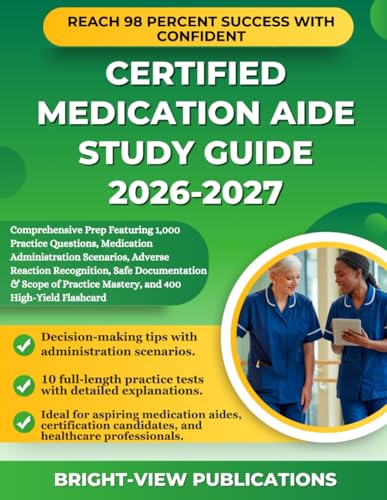
CERTIFIED MEDICATION AIDE STUDY GUIDE 2026-2027:
- ✓ Well-organized and clear layout
- ✓ Up-to-date practice questions
- ✓ Practical real-world examples
- ✕ Lacks visual aids
- ✕ Slightly text-heavy in parts
| Format | Printed study guide with comprehensive content |
| Coverage Period | 2026-2027 |
| Intended Audience | Certified Medication Aides and aspiring healthcare professionals |
| Content Type | Best practices for safe medication administration |
| Price | $28.64 |
| Material | Likely paperback or spiral-bound printed material |
As I flipped through the pages of the CERTIFIED MEDICATION AIDE STUDY GUIDE 2026-2027, I immediately noticed how well-organized it is. The layout is clean, with clear headings and plenty of space for notes, which makes studying feel less overwhelming.
The content feels thorough, covering all the essential best practices for safe medication administration. I appreciate the real-world scenarios sprinkled throughout, helping you connect theory to practice.
The language is straightforward, making complex concepts more approachable.
One thing that stands out is the focus on updated guidelines—this guide keeps you current with the latest standards, which is crucial in a field that’s always evolving. The practice questions at the end of each section are a major plus, providing quick checkpoints to assess your understanding.
The physical feel of the guide is sturdy, with a good quality cover that should stand up to daily use. The price feels reasonable for the comprehensive content you get, especially considering it’s tailored for the upcoming certification cycle.
That said, the guide could benefit from more visual aids like diagrams or charts to reinforce learning visually. Some sections felt a bit text-heavy, which might slow down quick reviews.
Still, overall, it’s a solid resource that covers the essentials without fluff.
BAXA ExactaMed Oral Liquid Medication Syringe 1cc/1mL 10/PK

- ✓ Clear, precise graduations
- ✓ Light-sensitive amber color
- ✓ Secure, self-righting caps
- ✕ Not sterile
- ✕ Limited to small doses
| Capacity | 1 mL (1 cc) per syringe |
| Quantity | 10 syringes per pack |
| Graduation Markings | 0.01 mL increments |
| Material | Latex-free plastic |
| Tip Design | Self-righting tip caps |
| Additional Features | Amber color for light-sensitive drugs |
Pulling these tiny syringes out of the box for the first time, I immediately noticed how lightweight they felt. The amber color is a smart touch for light-sensitive medications, and the self-righting tip caps are a clever feature—no more fumbling to keep caps upright.
Filling them up was straightforward thanks to the clear, precise graduations marked in 0.01mL increments. You really get a sense of control, which is vital when administering medications to pets or kids.
The non-sterile design isn’t an issue for most uses, and the caps stay securely on, preventing spills or contamination.
Using these for both liquids and foods, I appreciated how comfortable the self-righting caps are to handle. They snap on firmly but come off easily when needed.
Plus, having ten in a pack means I always have a few on hand without worry.
The 1cc capacity is perfect for small doses, reducing waste and making accurate dosing simple. They’re versatile enough for everyone in the family—babies, seniors, pets—and the non-latex material is a nice bonus for sensitive skin or allergies.
After extended use, I found these syringes hold up well without cracking or leaking. Cleaning is minimal since they’re non-sterile, but I still recommend rinsing thoroughly after each use.
Overall, they make medication administration safer, easier, and more precise.
31-Day MAR Sheet Book with Large Print

- ✓ Clear large print
- ✓ Easy to organize
- ✓ Durable design
- ✕ Basic layout only
- ✕ No extra features
| Number of Pages | 31 pages |
| Print Size | Large print (specific font size not specified, but designed for easy readability) |
| Binding Type | Sheet book (spiral or bound not specified, inferred as typical sheet book binding) |
| Material | Paper (assumed standard for sheet books) |
| Intended Use | Medication administration tracking and scheduling |
| Brand | Majosta |
The first time I flipped open the 31-Day MAR Sheet Book with Large Print, I immediately noticed how sturdy and easy to hold it felt in my hands. The big, clear print on each page made reading medication schedules feel effortless, even during those early mornings.
As I started using it daily, I appreciated how the layout kept everything organized. The large spaces for notes and check-offs made tracking each dose simple and quick.
It’s like having a mini medication management assistant right on your desk or bedside table.
The design is straightforward, which is perfect when you’re in a rush or feeling overwhelmed. I found myself referring to it often, trusting that I wouldn’t miss an important detail or dose.
The durability held up well after a few weeks of handling, which is a big plus for everyday use.
One thing I really liked was how easily I could customize the entries. The large print and ample space mean you can write clearly and avoid mistakes.
It’s a practical tool that helps reduce medication errors and boosts confidence in managing meds safely.
However, the book’s simplicity also means it doesn’t have fancy features or extra sections for additional info. If you’re looking for a high-tech solution or detailed tracking beyond basic notes, this might feel a bit minimal.
Overall, this book is a reliable, no-nonsense companion for anyone needing a little extra help with medication routines. It’s affordable, well-made, and genuinely helpful for keeping medications straight.
BAXA ExactaMed Oral Liquid Syringe 20cc, 10/PK, Latex-Free

- ✓ Clear, easy-to-read measurements
- ✓ Light-protective amber color
- ✓ Comfortable non-latex grip
- ✕ Slightly pricier than basic syringes
- ✕ Not sterile upon opening
| Capacity | 20cc (milliliters) |
| Graduation Markings | 1mL (1 teaspoon = 5mL) |
| Number of Syringes | 10 per pack |
| Material | Latex-Free plastic |
| Tip Type | Self-righting tip caps |
| Intended Use | Oral administration of medicines and foods for pets, babies, children, adults, and elderly |
Unlike some oral syringes I’ve handled that feel flimsy or hard to read, the BAXA ExactaMed 20cc syringe immediately stands out with its sturdy, transparent amber body. The amber tint isn’t just for looks; it seriously helps protect light-sensitive medications, which I’ve often struggled to keep properly stored before.
The graduations are clear and precise, with 1mL (or 1 tsp) increments that make measuring straightforward. I appreciate the self-righting tip caps, which stay securely on even after multiple uses, reducing messes and contamination risks.
The caps also make it easy to store the syringe upright, keeping everything clean and ready for next use.
Handling feels comfortable thanks to the smooth plunger and the non-latex material, which is gentle on your hands and safe for those with allergies. Whether you’re giving medicine to pets, babies, or adults, this syringe’s design makes the process less stressful.
It’s versatile enough for liquids of different viscosities, making it a real lifesaver for home or professional settings.
At $28.99 for ten syringes, it’s a good investment for anyone who needs to administer medication safely and accurately. The fact that they’re pre-sterilized and come with caps adds to the convenience, saving you time and reducing waste.
Overall, this syringe blends durability, accuracy, and safety in a way that feels well thought out. It’s a simple tool, but one that really enhances confidence in medication administration.
What Are the Core Principles of Safe Medication Administration?
The core principles of safe medication administration include a variety of best practices that aim to ensure patient safety and medication efficacy.
- Right Patient: It is crucial to verify the identity of the patient before administering any medication. This can be done using two identifiers, such as the patient’s name and date of birth, to prevent errors that could arise from administering medication to the wrong person.
- Right Medication: Always ensure that the medication being administered matches the prescription or medication order. This involves checking the medication label against the order for any discrepancies in drug name, dosage, and formulation to avoid potentially harmful mistakes.
- Right Dose: Administering the correct dose is vital for both efficacy and safety. Healthcare providers must calculate dosages accurately and double-check the calculations, especially when dealing with high-risk medications that have narrow therapeutic windows.
- Right Route: The route of administration (oral, intravenous, intramuscular, etc.) must be appropriate for the medication and the patient’s condition. Administering a medication via the wrong route can lead to adverse effects or reduced efficacy, so it is important to confirm the prescribed route prior to administration.
- Right Time: Timing is critical in medication administration, as certain medications need to be given at specific intervals to maintain their effectiveness. Adhering to the prescribed schedule helps to ensure consistent therapeutic levels in the bloodstream, which is particularly important for medications that require steady concentrations.
- Right Documentation: Proper documentation of medication administration is essential for maintaining accurate medical records. This includes noting the time, dose, route, and any observations or patient responses, which is vital for ongoing patient care and future treatment decisions.
- Patient Education: Educating the patient about their medications, including potential side effects and the importance of adherence, plays a key role in safe medication administration. By empowering patients with knowledge, healthcare providers can enhance compliance and improve overall treatment outcomes.
How Does Patient Safety Affect Medication Practices?
Patient safety significantly impacts medication practices, as adherence to best practices can prevent errors and enhance treatment outcomes.
- Standardized Protocols: Implementing standardized protocols for medication administration ensures consistency and reduces the likelihood of errors. These protocols guide healthcare professionals in the correct dosages, timing, and methods of administration, thereby minimizing variations that can lead to patient harm.
- Regular Training and Education: Ongoing training and education for healthcare providers on the latest medication safety guidelines are essential for maintaining high standards of practice. This continuous learning helps staff stay informed about potential drug interactions, new medications, and evolving safety protocols, fostering a culture of safety within the healthcare environment.
- Use of Technology: Advanced technologies, such as electronic health records (EHR) and computerized physician order entry (CPOE), play a crucial role in enhancing medication safety. These systems provide alerts for drug interactions, allergies, and dosing errors, streamlining the medication administration process and reducing the risk of human error.
- Patient Involvement: Engaging patients in their own medication management can significantly improve safety outcomes. Educating patients about their medications, including the purpose and potential side effects, empowers them to ask questions and report any discrepancies, serving as an additional layer of safety in the medication process.
- Medication Reconciliation: Conducting thorough medication reconciliation at transitions of care is vital for preventing adverse drug events. This process involves reviewing and comparing a patient’s medication orders to ensure accuracy, particularly during hospital admissions, transfers, and discharges, thereby ensuring continuity and safety in medication management.
Why is the “Five Rights” Principle Critical in Medication Administration?
The “Five Rights” Principle is critical in medication administration because it helps ensure that patients receive the correct medication in a safe and effective manner, minimizing the risk of errors and adverse events.
According to the Institute for Safe Medication Practices (ISMP), adherence to the “Five Rights”—right patient, right drug, right dose, right route, and right time—significantly reduces the likelihood of medication errors, which are a leading cause of patient harm in healthcare settings. A study published in the American Journal of Health-System Pharmacy highlights that implementing these best practices can decrease medication errors by up to 70% in hospital settings.
The underlying mechanism involves a systematic approach to medication administration that prioritizes safety and accountability. Each component of the “Five Rights” serves as a checkpoint to verify and validate the medication process. For example, verifying the right patient ensures that the medication is administered to the intended individual, while confirming the right drug prevents potentially dangerous mix-ups. Furthermore, careful attention to the right dose, route, and time reduces the risk of overdosing or underdosing, which could lead to ineffective treatment or harmful side effects. This structured approach fosters a culture of safety and encourages healthcare professionals to be diligent during the medication administration process.
In addition, the “Five Rights” Principle integrates well with other safety protocols, such as barcoding systems and electronic health records, that further enhance medication safety. Studies have shown that when these systems are used in conjunction with the “Five Rights,” there is a marked improvement in the accuracy of medication administration, which in turn leads to better patient outcomes. The interaction between these safety measures creates a comprehensive framework that reinforces safe practices, making the “Five Rights” not just a set of guidelines, but a vital component of effective patient care.
What Steps Should Be Followed for Effective Medication Administration?
Preparation and cleanliness are essential to prevent contamination and ensure that the medication remains effective. This is particularly important in settings where infections can be a risk.
The administration technique must be appropriate to the specific medication to ensure that it works as intended. For instance, intravenous medications require specific handling techniques to ensure proper delivery into the bloodstream.
Monitoring and documentation are key to patient safety, as they allow healthcare providers to track any adverse reactions and the effectiveness of the medication. This information is crucial for ongoing patient care and future treatment plans.
Education and communication empower patients by providing them with the knowledge they need to manage their medications safely. It also fosters a collaborative relationship between the healthcare provider and the patient.
Finally, reviewing and reflecting on the medication administration process aids in continuous improvement, ensuring that best practices are followed and that patient safety remains the top priority.
How Can You Properly Verify Patient Identity?
Properly verifying patient identity is crucial for safe medication administration to prevent errors and ensure patient safety.
- Use Two Identifiers: Always use at least two identifiers when verifying a patient’s identity, such as their name and date of birth. This practice helps to avoid confusion between patients with similar names and ensures that the right patient receives the correct medication.
- Ask the Patient Directly: Whenever possible, ask the patient to confirm their identity by stating their name and other identifiers. Engaging patients in the identification process not only enhances accuracy but also empowers them to be active participants in their healthcare.
- Check Medical Records: Review the patient’s medical records or electronic health records (EHR) before administering medication. This step allows healthcare providers to confirm the patient’s identity against documented data, ensuring that the medication prescribed is appropriate for that specific individual.
- Utilize Barcoding Systems: Implement barcoding technology to scan medications and patient wristbands before administration. This system provides an additional layer of verification, reducing the risk of medication errors associated with manual checks.
- Maintain a Consistent Process: Establish a standardized procedure for verifying patient identity within your healthcare facility. Consistency in practice ensures that all staff members follow the same protocol, minimizing the risk of oversight and enhancing overall patient safety.
- Educate Staff on Importance: Provide regular training and education to staff about the significance of patient identity verification. Understanding the consequences of errors due to misidentification can motivate healthcare workers to adhere strictly to verification protocols.
What Double-Check Methods Ensure Medication Accuracy?
Double-check methods are essential practices that enhance the accuracy of medication administration.
- Independent Double-Check: This method involves two healthcare professionals verifying the medication order, dosage, and route before administration.
- Barcode Scanning: Utilizing barcode technology allows for real-time verification of medications against patient records, ensuring the right medication reaches the right patient.
- Checklists and Standardized Protocols: Implementing checklists helps ensure that all critical steps in the medication administration process are followed consistently and reduces the risk of errors.
- Patient Identification Verification: Confirming the patient’s identity using multiple identifiers, such as name and date of birth, is crucial to prevent medication errors.
- Visual Inspection: A thorough visual check of the medication’s appearance, including color, size, and packaging, helps to identify any discrepancies or potential errors before administration.
The Independent Double-Check method requires two qualified personnel to independently verify the medication details, which significantly decreases the likelihood of errors due to oversight or miscommunication. This collaborative practice fosters a culture of safety within healthcare settings.
Barcode Scanning systems enhance medication safety by linking the patient’s electronic health record with scanned medications, allowing for immediate alerts if discrepancies arise, thus ensuring that the right drug is administered at the right dosage and time.
Checklists and Standardized Protocols promote consistency in medication administration practices, allowing staff to systematically review each step, thereby minimizing the chances of missing critical information or steps that could lead to errors.
Patient Identification Verification is a critical step that prevents mix-ups by ensuring that healthcare providers confirm the patient’s identity using at least two distinct identifiers, such as a wristband scan or verbal confirmation.
Visual Inspection serves as an initial safety check where healthcare professionals examine the medication for any irregularities, such as changes in formulation or packaging, which could indicate a potential error or contamination prior to administration.
What Role Does Effective Communication Play in Medication Safety?
Effective communication is crucial in ensuring medication safety and reducing the risk of errors during administration.
- Clear Instructions: Providing clear and concise instructions for medication administration helps to eliminate confusion among healthcare providers and patients. When guidelines are straightforward, it minimizes the chances of misinterpretation, which can lead to incorrect dosing or timing.
- Verification Processes: Implementing verification processes, such as the ‘Five Rights’ (right patient, right drug, right dose, right route, right time), fosters a culture of safety. This method encourages healthcare professionals to communicate openly about any discrepancies or uncertainties regarding medication orders.
- Patient Education: Educating patients about their medications promotes adherence and empowers them to report any concerns or side effects. When patients understand their treatment plans, they can effectively communicate with healthcare providers, enhancing overall safety.
- Interdisciplinary Collaboration: Encouraging collaboration among healthcare team members is essential for safe medication administration. Regular discussions and briefings help to ensure that everyone is informed about medication changes and patient needs, thus reducing the risk of errors.
- Documentation Practices: Maintaining accurate and up-to-date documentation of medication administration is vital for tracking patient safety. Effective communication through documentation allows for better continuity of care and helps identify potential issues that may arise from medication errors.
- Use of Technology: Utilizing electronic health records (EHR) and medication management systems enhances communication regarding medication orders and administration. These technologies can provide alerts for potential drug interactions or allergies, ensuring that all parties involved have access to critical patient information.
How Can Team Collaboration Enhance Medication Administration?
Team collaboration plays a crucial role in enhancing medication administration by ensuring safety, accuracy, and effectiveness.
- Clear Communication: Effective communication among healthcare team members is vital for preventing medication errors. Regular discussions about patient medications help clarify any uncertainties and confirm that everyone is on the same page regarding dosage, frequency, and administration routes.
- Defined Roles and Responsibilities: Establishing clear roles within the healthcare team ensures that each member knows their specific responsibilities related to medication administration. This clarity helps reduce overlap, minimizes mistakes, and allows for a more organized approach to managing patient care.
- Interdisciplinary Collaboration: Involving various healthcare disciplines, such as pharmacists, nurses, and physicians, fosters a comprehensive perspective on medication management. This collaboration enables teams to address potential drug interactions, assess patient histories, and tailor medication plans to individual patient needs, enhancing safety and efficacy.
- Use of Technology: Leveraging technology, such as electronic health records (EHR) and automated dispensing systems, can significantly improve medication administration processes. These tools facilitate real-time access to patient information, medication lists, and alerts for potential errors, supporting the team in making informed decisions and executing best practices.
- Regular Training and Education: Continuous education and training on medication administration best practices are essential for all team members. Engaging in regular workshops and simulations can keep the team updated on the latest guidelines and protocols, reinforcing safe practices and improving overall care delivery.
- Reporting and Feedback Systems: Implementing a culture of openness where team members can report errors or near misses without fear encourages learning and improvement. Feedback systems allow teams to analyze incidents, identify root causes, and develop strategies to prevent similar occurrences in the future.
What Technologies and Tools Improve Safe Medication Practices?
Smart Pumps: Smart infusion pumps are programmed with dosage limits and protocols to administer medications at safe rates. This technology not only automates the infusion process but also provides alerts for any deviations from preset parameters, thereby enhancing patient safety.
Automated Dispensing Cabinets (ADCs): ADCs are locked cabinets that store medications securely and dispense them only to authorized personnel. This system tracks medication use and inventory in real-time, reducing the risk of misdispensing and improving accountability in medication administration.
Patient Medication Management Apps: These applications serve as a personal assistant for patients, reminding them when to take their medications and tracking their adherence. By involving patients in their medication management, these apps can significantly improve compliance and reduce the likelihood of medication errors.
How Can Electronic Health Records Ensure Medication Safety?
Electronic Health Records (EHRs) enhance medication safety through various best practices for safe medication administration.
- Comprehensive Medication Lists: EHRs maintain up-to-date and accurate medication lists for each patient, which can help healthcare providers quickly identify potential drug interactions and contraindications.
- Clinical Decision Support Systems (CDSS): EHRs often incorporate CDSS that provide alerts for potential medication errors, such as allergies or drug interactions, assisting clinicians in making informed decisions.
- Automated Prescription Refills: EHRs can automate the prescription refill process, ensuring patients receive their medications on time and reducing the chances of missed doses due to manual errors.
- Secure Communication Tools: EHRs facilitate secure communication between healthcare providers, pharmacists, and patients, allowing for quick clarification of medication orders and resolving any discrepancies.
- Patient Education Resources: EHRs can provide access to educational materials about medications, helping patients understand their prescriptions and the importance of adherence to dosage and timing.
- Audit Trails: EHRs create audit trails that log all medication-related activities, ensuring accountability and making it easier to track any discrepancies or adverse effects that may arise.
- Interoperability with Pharmacy Systems: EHRs often integrate with pharmacy systems to streamline medication dispensing and monitoring, ensuring that prescribed medications are accurately filled and tracked.
- Medication Reconciliation: EHRs facilitate the medication reconciliation process during transitions of care, ensuring that patients’ medication lists are accurate and comprehensive across different healthcare settings.
Why is Continuous Education Important for Healthcare Providers?
Continuous education is important for healthcare providers because it ensures they remain knowledgeable about the latest best practices, particularly in areas like safe medication administration, which is critical for patient safety and effective treatment outcomes.
According to the Institute of Medicine (IOM), over 1.5 million people are harmed annually in the United States due to medication errors, highlighting the need for ongoing training to mitigate these risks (IOM, 2006). Continuous education helps healthcare providers stay updated on evolving guidelines, drug interactions, and new medications, which are essential for making informed decisions in patient care.
The underlying mechanism for the importance of continuous education lies in the rapidly changing landscape of healthcare. New medications, technologies, and research findings emerge frequently, requiring healthcare professionals to adapt their knowledge and practices accordingly. Continuous education fosters a culture of learning and improvement, which is vital for maintaining high standards of care. Additionally, it reinforces the importance of adhering to best practices for safe medication administration, as providers equipped with current knowledge are more likely to implement these practices effectively, thereby reducing the incidence of errors and improving patient outcomes.
What Resources are Available for Ongoing Training in Medication Administration?
Several resources are available for ongoing training in medication administration to ensure best practices for safe medication administration.
- Online Courses: Numerous platforms offer courses specifically focused on medication administration, covering best practices, legal aspects, and safety protocols.
- Webinars and Workshops: Many healthcare organizations provide live webinars and hands-on workshops that delve into the latest techniques and regulations regarding medication administration.
- Guidelines and Protocols from Professional Organizations: Organizations such as the American Nurses Association and the Institute for Safe Medication Practices publish guidelines that serve as a reference for safe medication practices.
- Peer Review and Mentorship Programs: Engaging in peer review or mentorship can provide practical insights and shared experiences related to medication administration among healthcare professionals.
- Simulation Training: Simulation labs and training sessions allow healthcare providers to practice medication administration in a controlled environment, helping to enhance their skills without risking patient safety.
Online courses are particularly beneficial as they offer flexibility and a variety of topics tailored to different levels of expertise, helping healthcare workers stay updated on best practices.
Webinars and workshops can provide the latest information and interactive learning opportunities, allowing participants to ask questions and engage in discussions about medication safety.
Guidelines and protocols from professional organizations are crucial as they are developed by experts and reflect current evidence-based practices, ensuring that practitioners have access to the most reliable information.
Peer review and mentorship programs foster a culture of learning and improvement, encouraging professionals to share their experiences and best practices in medication administration.
Simulation training provides a safe space for healthcare workers to practice and refine their skills, enabling them to respond effectively to real-life scenarios while minimizing the risk of errors.
Related Post: